
EasyJet accepts unexpected acquisition offer as competing US company moves in swiftly
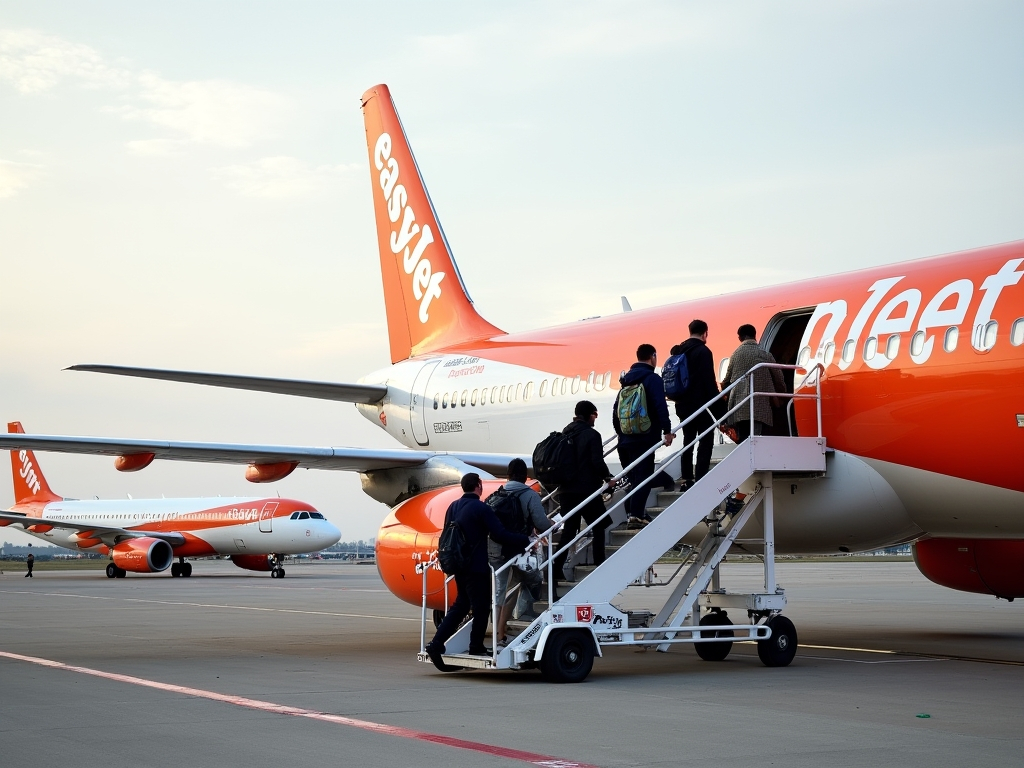
Budget carrier EasyJet has announced that it has reached an agreement in principle on a £5.7bn takeover approach from US private equity group Apollo Global Management, only days after backing a proposal from a competing bidder.
The airline stated that Apollo’s proposal offered “a superior outcome” for shareholders compared with the earlier bid from US investment firm Castlelake, which EasyJet had provisionally supported over the weekend.
EasyJet ranks among Europe’s biggest airlines. It employs over 19,000 staff and operates approximately 1,200 routes spanning 35 countries across the continent.
The company was established in 1995 by Sir Stelios Haji-Ioannou with the aim of providing affordable flights within Europe. Alongside rivals such as Ryanair, it has played a major role in reshaping the UK’s aviation market.
Its inaugural services launched in November 1995, connecting Luton with Glasgow and Edinburgh, followed by its first international routes a year later.
Sir Stelios and the Haji-Ioannou family continue to hold roughly a 15% shareholding in the airline.
EasyJet said Apollo’s indicative offer values the company at £7.15 per share, exceeding Castlelake’s £6.90 per share proposal, which it now said it was “no longer minded” to recommend. Castlelake declined to comment on the latest developments.
Market analysts note that EasyJet represents an appealing acquisition target due to its profitability, sizable aircraft fleet, and valuable take-off and landing slots at key hubs including Gatwick and Paris Charles de Gaulle. Prime airport slots can command tens of millions of pounds in airline-to-airline transactions.
Susannah Streeter, head of investment strategy at Wealth Club, said Apollo appeared to be targeting EasyJet’s long-term growth prospects.
“Although the airline has recently faced pressures from rising fuel prices and geopolitical instability, it has established a durable European network, maintains a solid balance sheet and, importantly, has a rapidly expanding holidays division. That segment is likely to be especially attractive to Apollo.”
She added: “Package holidays typically produce stronger margins and steadier income streams compared with ticket sales alone.
“For customers, operations continue as normal for the time being, with flights, reservations and loyalty programmes unchanged while any potential transaction undergoes regulatory review.”
The airline emphasised that the announcement does not confirm a completed deal. Apollo has until 17:00 on 7 August to submit a firm offer or withdraw. Castlelake faces a deadline of 3 August to make a binding bid.
Apollo’s intervention followed a series of approaches from Castlelake, which EasyJet had initially rejected, accusing the firm of attempting to acquire the business at an undervalued price.
However, on Sunday, EasyJet revealed it had reached a preliminary agreement with Castlelake regarding a possible takeover valued at about £5.2bn.
One major regulatory challenge for any acquisition is the European Union requirement that airlines operating within the bloc must be majority-owned by EU nationals.
Castlelake had proposed partnering with EU businessmen Peter Bellew and Mark Breen, who would hold a controlling interest through an EU-based entity overseeing the airline.
Apollo stated it would take “all necessary steps” to ensure compliance with EU ownership rules.
EasyJet shares surged nearly 15% on Friday, trading at approximately 673p.
The company said Apollo’s proposal represents an 81% premium to its closing share price of £3.94 on 28 May, the final trading day before Castlelake’s takeover interest became public knowledge.
Before reaching provisional terms with Castlelake, EasyJet had criticised the firm’s earlier offers — starting at 560p per share — as “highly opportunistic,” arguing that its stock had been “temporarily depressed,” partly due to the impact of the Iran conflict on the travel sector.
“The contest now centres on price,” said Dan Coatsworth, head of markets at AJ Bell.
“Attention shifts back to the original bidder to see whether it is prepared to increase its offer to outbid Apollo. Shareholders are likely to watch developments closely and welcome the competitive tension.”



