
Q&A: Anna Gomez stands as the only Democrat on the FCC. She has a cautionary message for major media corporations
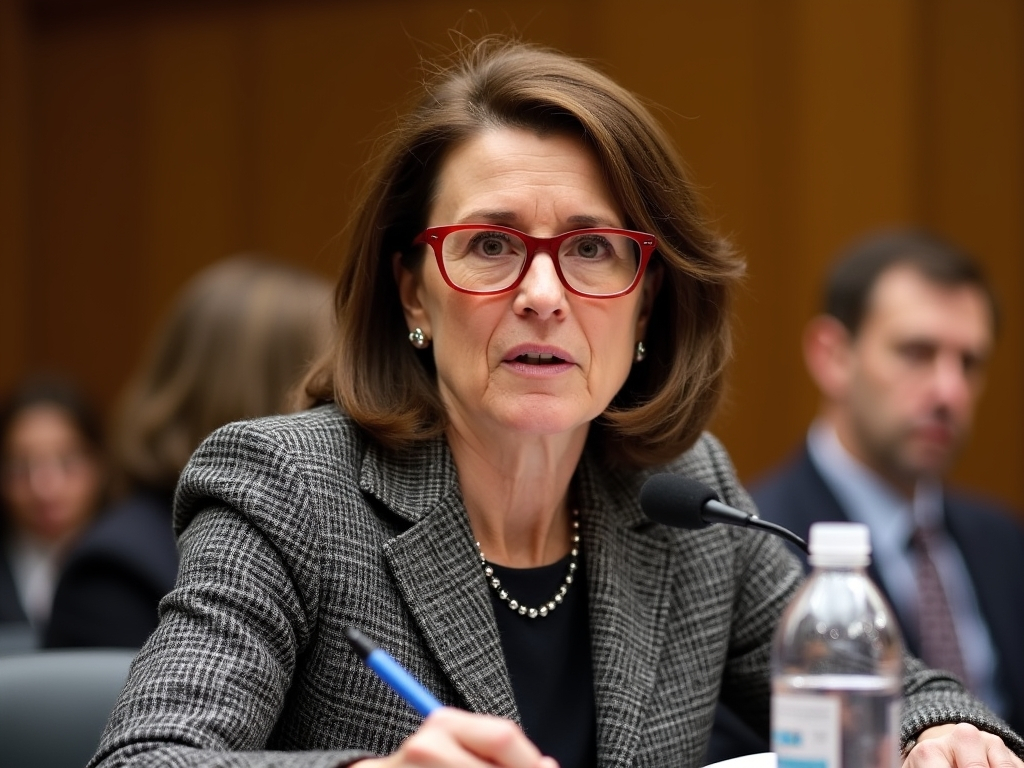
WASHINGTON (AP) — Each morning, Anna Gomez reaches for her phone with a single question in mind: Has President Donald Trump dismissed her yet?
For the moment, she remains the only Democrat serving on the Federal Communications Commission. From that position, she has taken on what she views as an urgent responsibility — urging media organizations to resist what she describes as an administration determined to restrict free expression.
Her most immediate concern is Disney, the parent company of ABC. The media giant is facing several investigations initiated by FCC Chairman Brendan Carr, an ally of Trump.
In a striking four-page letter sent earlier this month to Disney CEO Josh D’Amaro, Gomez accused the FCC of conducting what she called a “sustained, coordinated campaign of censorship and control” aimed at the company. She pointed to inquiries involving diversity initiatives, ABC’s handling of a 2024 presidential debate, guest selections on “The View,” and public pressure from the administration targeting late-night host Jimmy Kimmel.
She is especially troubled by the FCC’s decision to move up the review of ABC’s broadcast licenses in markets where it owns local stations. In her view, the action is designed to pressure the network. She described it as “the most egregious assault on the First Amendment this FCC has taken to date.”
Her message to Disney was direct: stand firm. Gomez argued that the company’s decision to agree to a $15 million defamation settlement shortly before Trump returned to office brought little benefit and risked encouraging similar concessions across the industry.
“That settlement did not buy you peace,” she wrote, later sharing the letter publicly. “It only bought you time.”
D’Amaro has not issued a public reply. However, in a recent filing, the company suggested the FCC’s actions could discourage legally protected speech, signaling a more assertive stance.
Speaking from her Washington office, Gomez said she found Disney’s response encouraging and urged other broadcasters to prepare for comparable challenges. In a capital where many Democratic officials at independent agencies have been dismissed, she is among the few who remain after Trump sought to reshape the federal bureaucracy.
The Supreme Court is weighing the legality of the president’s removal efforts and could rule soon.
Meanwhile, Gomez’s current term ends June 30. Unless she is removed, she may continue serving, preserving the quorum that allows Carr to advance his policy priorities. With a narrowly divided Senate and limited time before midterm elections, confirming a replacement could prove difficult.
Below are selected excerpts from the interview, edited for clarity and length.
A letter to Disney ... and a warning
AP: What led you to write to Disney?
GOMEZ: Early in this administration, I became increasingly concerned about what I saw as efforts to control and suppress speech. I traveled around the country speaking with journalists, local station owners, constitutional scholars and advocates for press freedom. Those conversations reinforced my belief that action was necessary.
Then I watched companies begin to yield. CBS resolved its lawsuit with the president and agreed to conditions requiring oversight of its content in order to secure FCC approval for a transaction. ABC also settled its case. Each of these steps deepened my concern that once one company gives in, others may follow.
My letter had two purposes. First, to document what I believe are attempts by this FCC to pressure Disney. Second, to encourage Disney and other broadcasters to show resolve. Historically, when this administration’s actions affecting press freedom are challenged in court, they do not prevail.
AP: Are you hoping for a legal challenge to reach the courts?
GOMEZ: Ultimately, I want companies to defend themselves. If these matters are litigated, I believe those challenging the FCC’s actions would succeed.
Regulation in a changing media environment
AP: Given how dramatically media has evolved since the FCC’s creation, what role should the government play today?
GOMEZ: The FCC’s traditional responsibility has been to license local broadcast stations — specifically the public airwaves they use for television and radio. That authority has rested on three guiding principles: competition, localism and viewpoint diversity.
Competition benefits audiences and strengthens markets. Localism ensures stations genuinely serve their communities, not just fill airtime but provide meaningful local programming. And viewpoint diversity promotes a wide range of perspectives rather than narrowing them.
That, in my view, remains the proper function of the FCC. Acting as a censor does not.
Life as the FCC’s sole Democrat
AP: You’ve spent decades in and around the FCC and are known as a policy-focused lawyer. Did you ever imagine taking such a public stand against your own agency and an administration?
GOMEZ: No. At no point in my career did I expect to be speaking so forcefully in defense of the First Amendment and democratic principles.
I’ve typically focused on technical matters — spectrum policy, broadband access, infrastructure details that most people would consider dry topics. Media policy was not an area I anticipated becoming central to my work. But the direction of this administration compelled me to adjust.
AP: Despite deep disagreements, you and Chairman Carr maintain a cordial relationship. How?
GOMEZ: We do maintain a professional rapport and collaborate where possible. He has previously served in the minority and understands the need to express dissenting views. I speak openly, aware that it may carry consequences. Still, we make an effort to remain respectful.
AP: By consequences, you mean the possibility of dismissal?
GOMEZ: Yes. After seeing Democratic members of other commissions removed, I began checking my email every day. Truly, each morning I ask myself whether I’ll still be reporting to work. So far, I am.
AP: Your term runs through June 30 and your presence is necessary for a quorum. If you are not removed, what happens next?
GOMEZ: Even after my term expires, I can continue serving for roughly another year and a half if no successor is nominated and confirmed. I plan to keep working — and speaking out — for as long as I am able.



