Unusual, dreamlike, and provocative: 31 photos that transformed our perception of the human body
The human form, bare and unadorned, has always fascinated us. Across millennia, evolution and desire, empathy and curiosity have wired us to gaze. The sight triggers primal reactions—it is intimate yet forbidden, innocent yet sinful. Each morning, our own reflection greets us in the bathroom mirror, yet catching a glimpse of another’s body feels like unraveling a deeply kept secret. This shared human experience of nudity, linked to a subtle web of ethics, differs wholly from appreciating, say, a serene watercolor landscape. When portrayed in art history, the nude has often exposed stark truths—sometimes honest, other times exploitative, and occasionally both simultaneously.
Photography, unlike charcoal sketches or oil paintings, is embedded in our everyday lives. When nudity enters the realm of photography, the emotional intensity naturally escalates. Gone is the polite detachment of an art gallery; photography demands visceral reactions. Simply put, there's a raw magnetism to nude photography that grips and compels.
The cultural significance of the body shifts through the ages. Fertility dominated early art, later replaced by the valorization of masculine heroism during the classical era. As gender roles began to diverge, certain female beauty ideals took center stage. Every era imbues the body with unique meanings—a reminder that nudity, despite its apparent simplicity, is incredibly nuanced.
Beyond these interpretations, however, the human form is breathtakingly beautiful. In Richard Avedon’s 1961 portrait of Rudolf Nureyev, the delicate interplay between his finely defined ribs and taut musculature captivates. From the elegance of his arms—reflecting his transformative approach to ballet—to the defiant tilt of his chin foreshadowing his renowned defection from the Soviet Union, every detail speaks volumes about his persona. Nureyev’s nakedness feels like a premonition of the sexual revolution, an allure that even influenced Mick Jagger’s legendary stage movements.
The body also serves as political battlegrounds, where race, gender, and societal taboos unabashedly surface. The history of photographing nude women—often by male photographers—is inextricably linked to objectification debates. Jean-Paul Goude’s iconic portrait of Kim Kardashian, for example, celebrates her figure in a way that repositions cultural standards of beauty. Her unapologetic confidence and choice to confront the camera signal power and self-agency, underlining her control over the empire she built around her body.
At its core, photography challenges societal boundaries of beauty and normality. Portraits like those of conjoined twins Chang and Eng Bunker, who once faced exploitation as sideshow attractions, invite us to see humanity in its diversity. Similarly, contemporary models like Winnie Harlow (who has vitiligo) and Adam Pearson (whose features are shaped by neurofibromatosis) prompt us to question ingrained assumptions. Through quiet yet striking portraits, both demand recognition as equals, forcing us to unlearn historically ingrained biases and beauty standards.
Sometimes the act of looking is itself part of the artwork. Haley Morris-Cafiero’s "Wait Watchers" series captures spectators’ judgmental stares, flipping the gaze back onto society. Similarly, Elliott Erwitt’s photograph of Arnold Schwarzenegger mesmerizes viewers with his immense physique, but soon their attention shifts—hundreds of faces in the image, enthralled by Arnold, mirror our own gaze at the constructed spectacle.
The human body, a marvel of resilience and complexity, continues to captivate throughout diverse narratives. Oliviero Toscani’s newborn image with its visceral rawness provokes contemplation of life’s genesis, while Joe McNally’s portrait of napalm survivor Phan Thi Kim Phuc tenderly explores healing and maternal love. Not all imagery is solemn—Aleksei Goloborodko’s uncanny contortions strike a balance between wonder and humor, his flexibility a testament to human possibility.
Nude photography also taps into surreal and transcendental realms. Edward Weston’s image of Charis likens her pose to a swan’s graceful retreat. Meanwhile, Ren Hang’s playful yet subversive portraits of queer Chinese youth defy censorship, capturing a jubilant rebellion. Arno Rafael Minkkinen’s whimsical self-portrait seamlessly intertwining with birch trees suggests a world where humanity and nature coexist harmoniously, evoking the fantastical.
Such imagery doesn’t merely celebrate the physical form—it challenges, provokes, and redefines it. Through these striking representations, our perceptions of bodies evolve, each photograph serving as a portal to new understandings of identity, agency, and beauty.
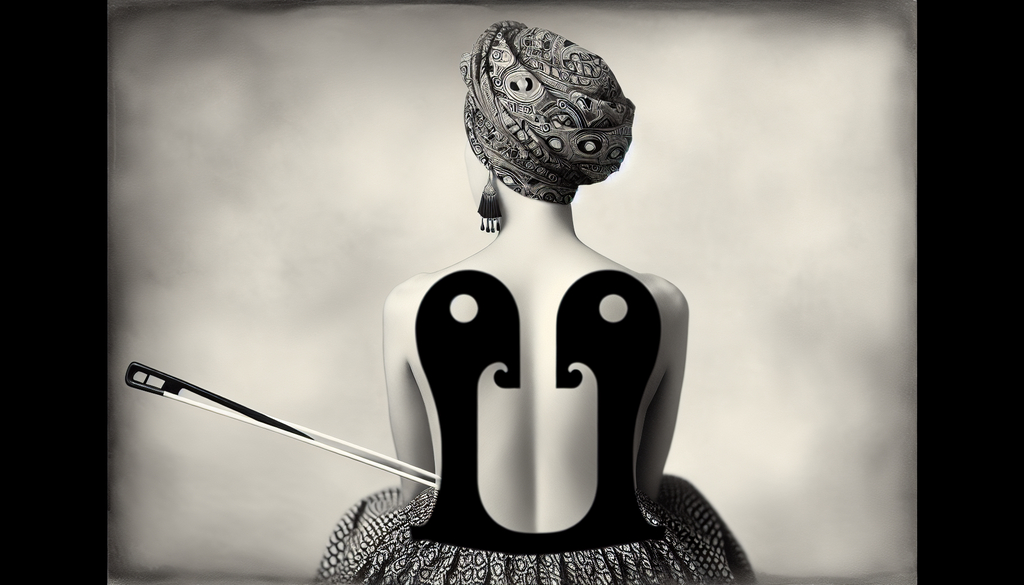
Le Violon d'Ingres, 1924
By Man Ray
This surrealist classic features Kiki de Montparnasse’s back, layered with a violin’s f-shaped holes, transforming her body into a musical instrument. The image still sparks debate over the artist-muse dynamic. Almost a century later, its cultural resonance endures, as evidenced by tattoos and a record-breaking £9.8m auction sale.
Generation Wealth, 1998
By Lauren Greenfield
Known for her explorations of excess, Greenfield examines body image and societal vanity in this poignant series. A post-surgery portrait of Sydelle captures the vulnerability behind beauty standards, with Sydelle lamenting a culture that devalues age and repeatedly prizes youth over wisdom.
Winnie Harlow for Vogue Netherlands, 2023
By Nikki Esser
Canadian supermodel Winnie Harlow’s cover shoot for Vogue Netherlands champions diversity in beauty, marking progress in an industry that once felt alien to her as a child. Her reflection on seeing increased vitiligo representation mirrors society’s shift toward inclusivity.
Kim Kardashian Breaks the Internet, 2014
By Jean-Paul Goude
Kim Kardashian’s provocative Paper magazine cover went viral, recontextualizing ideals of beauty while sparking debates around its racial implications. The champagne glass perched on her iconic figure echoes Goude’s earlier works and cemented Kardashian’s role in reshaping pop culture.
Rudolf Nureyev, 1961
By Richard Avedon
Avedon’s minimalist portrait captures Nureyev’s significance—his defiance both in dance and geopolitics. The stark background emphasizes his groundbreaking physique and the transformational energy he brought to the stage.
Adam Pearson, 2024
By Nadav Kander
Through his portrait of actor Adam Pearson, Kander explores intersections of appearance and perception. Pearson’s own assertion—that his condition is the least interesting aspect of him—echoes the message of acceptance the image conveys.
Nude (Charis, Santa Monica), 1936
By Edward Weston
Charis Wilson’s pose evokes abstraction and sensuality intertwined. Weston’s clear admiration transforms her physical presence into an eternal sculpture through his lens.
Untitled, 2012
By Ren Hang
Defying censorship, Ren Hang turned bodies into playful compositions. Often featuring queer youth, Hang’s provocative shoots oscillated between tender intimacy and provocative rebellion, pushing boundaries in his politically constrained environment.
Untitled, 1999
By Alison Lapper
An artist whose body and life defied convention, Alison Lapper’s self-portraits confront societal perceptions of beauty and normality, all while empowering those with disabilities to embrace their identities without concession.
Oscar Pistorius on Time’s Cover, 2013
By Pieter Hugo
This haunting image, taken before Pistorius’s shocking fall, captures his ascent as a global icon of overcoming adversity—now serving as a poignant reminder of the complexities of heroism and accountability.
Sunscreen, 2014
By Haley Morris-Cafiero
Morris-Cafiero’s socially driven imagery examines how society interacts with body image, using silent, observational photography to provoke conversations about judgment and perception in public spaces.
Newborn Baby (Giusy), 1991
By Oliviero Toscani
Toscani’s brutally honest image of an umbilical-clad baby stirred controversy but reflected his commitment to powerfully unfiltered social commentary in advertising.
Property of Jo Spence?, 1982
By Jo Spence
Diagnosed with cancer, Jo Spence challenged the medical establishment with deeply personal yet political imagery, asserting her autonomy and vulnerability through a moving series of images.
Väisälänsaari, Finland, 1998
By Arno Rafael Minkkinen
Merging body and nature, Minkkinen’s serene self-portraits evoke a sense of unity with the natural world, challenging us to reimagine the boundaries between human forms and landscapes.
Sonam, 2023
By Steph Wilson
Wilson’s playful portrait explores the complexities of motherhood by focusing on cultural dualities and unexpected gender presentations, sparking controversy yet broadening our understanding of maternal identity.
The Most Flexible Man in the World, 2018
By Heidi’s Bridge
Capturing contortionist Aleksei Goloborodko defying anatomical norms, this image reminds us of the infinite possibilities and artistry of the human physique, eliciting awe and disbelief alike.
Two Men Fencing, 1887
By Eadweard Muybridge
Muybridge’s pioneering motion studies revolutionized our understanding of movement, creating an enduring visual lexicon that bridged science and art.
Lisa Lyon, 1982
By Robert Mapplethorpe
Mapplethorpe’s striking monochrome of Lyon exudes strength and beauty, encapsulating her vision of redefining feminine power through bodybuilding.
Serena Williams in the Pirelli Calendar, 2016
By Annie Leibovitz
Leibovitz’s study of Serena Williams as a symbol of athleticism and empowerment rejects objectification, instead celebrating her unparalleled strength and influence.
Sydney 1 (Opera House), 2010
By Spencer Tunick
Gathering 5,200 naked bodies around Sydney’s iconic Opera House, Tunick’s ambitious project transformed individual nudity into a collective human statement, reshaping public dialogue on vulnerability and strength.
The Pregnant Man, 2008
By Kristian Dowling
Documenting Thomas Beatie, a transgender man bearing a child, this image democratizes family narratives, advocating for love and parenthood beyond traditional norms.
The Man Behind Body Worlds, 2003
By Murdo MacLeod
Gunther von Hagens’s preserved anatomical sculptures push the boundaries of life and death, forcing viewers to confront their physical fragility and resilience simultaneously.
Untitled, 1985
By Rotimi Fani-Kayode
Fani-Kayode's intimate portraits of Black, queer life defy societal marginalization, asserting both beauty and defiance in Thatcher-era England amidst the AIDS crisis.
Humanae: Work in Progress, Ongoing
By Angélica Dass
Dass’s inclusive "Humanae" series categorizes humanity’s skin tones to challenge reductive racial stereotypes, fostering an expansive narrative on global identity.
Self-Portrait (Back with Arms Above), 1984
By John Coplans
Coplans’s aged body becomes the centerpiece of this powerful self-portrait, debunking societal stigmas around aging and artfully celebrating its intrinsic worth.
Phan Thi Kim Phuc with Her Son, 1995
By Joe McNally
This tender portrait captures Phuc’s evolution from napalm survivor to mother, threading themes of trauma, resilience, and enduring love.
Diana Nyad, 2011
By Catherine Opie
Opie’s portrait of Nyad, marked by her meditative gaze and jellyfish stings, highlights strength and the seemingly limitless potential of human perseverance.
Arnold Schwarzenegger at the Whitney Museum, 1976
By Elliott Erwitt
Schwarzenegger’s commanding physique embodies evolving ideals of masculinity. The awe of his onlookers captures society's complex relationship with power and perfection.
Untitled (Body of Dominick Didato), 1936
By Weegee
Weegee’s crime-scene photography, while macabre, reveals the haunting allure of 1930s urban grit, infusing raw realities with narrative intrigue.
Humanly Impossible, 1932
By Herbert Bayer
Bayer’s surreal photomontage, distorting his own arm, touches on themes of identity and perception, foreshadowing today’s discussions on photo manipulation versus authenticity.
These 31 images collectively chart the evolving dialogue surrounding the body—its representation, idealization, and societal implications. Which images resonate most with you? Share your thoughts at [email protected].