
Brews, rugs, and the echo of prayer: a ground trek to North Macedonia
The trains no longer roll into Belgrade’s old main station by the riverside, nestled below the same limestone cliffs that inspired the city’s name. Today, this yellow-stuccoed relic faces a towering, modern addition to the skyline: an eight-story statue that looms above the square once filled with Syrian refugees in the late 2010s.
Our train-free journey from London to the Balkan region saw us cover ground in just 24 hours—Eurostar to Brussels, a sleeper train to Vienna, and onward to Budapest. But now we stand here at a dusty bus station, peering at the colossal Grand Prince Stefan Nemanja, which rises 23 meters (75ft) above us. We’d hoped for a final, smooth train ride into Belgrade’s Prokop station to continue south to Skopje. Yet in 2024, international trains southbound into Serbia—and further into North Macedonia—remain suspended.
Change, however, is on the horizon. Next year, a shiny high-speed railway will connect Budapest and Belgrade, reducing today’s six-hour bus journey to just three and a half hours by train—formerly an all-day affair. Fast train services onward to Skopje and Thessaloniki are also planned to return in time. But for this trip, we won’t wait. While the formal excuse for our travel to Skopje is a series of book launches, the truth is simpler: North Macedonia continually draws us back. This compact country, about the size of Slovenia, is a hidden gem among the West Balkans. It’s rich in nature, history, and culture—offering all the allure of its famed neighbors on a more intimate scale.
The six-hour bus ride from Belgrade to Skopje meanders past endless fields of maize, storks perched atop telegraph poles, and half-constructed red-brick villas with peppers drying on sunlit balconies. Traveling by bus has its downsides, but there’s much to gain. Beyond its environmental benefits, overland travel invites us to witness the gradual, nuanced transitions between cultures. It’s not merely at borders where change occurs. We share moments with strangers—sipping slivovitz (a local fruit brandy), breaking flaky burek stuffed with cheese or meat, and engaging in unplanned conversations.
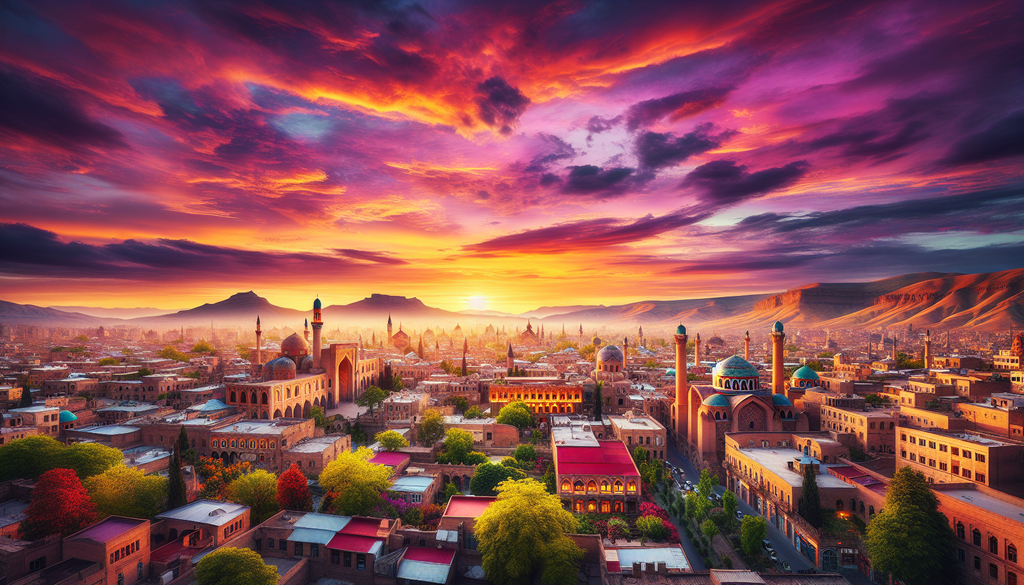
By the time we arrive in Skopje, farewells are being exchanged. The bus door opens to a warm night filled with the mingled scents of dust, petrol, orange peel, and cigarettes. It’s mid-September, and even past 9pm, the air remains warm in the mid-20s. A taxi blares turbo-folk music. Across the river, the chant of the muezzin calling for the Isha prayer echoes over rooftops, drawing our eyes to the majestic silhouette of Kale Fortress, floodlit on its rocky perch.
Much of this small city, tucked between mountains, was reshaped after the 1963 earthquake that destroyed 80% of its structures. Today, strolling through Skopje is like walking through an eclectic patchwork of history. Jugendstil (German art nouveau) storefronts mingle with bold, Communist-era concrete designs like the Central Post Office, making the traditional pastime of promenading all the more enjoyable. The streets near the bus station are lined with trees, their shaded cafes alive with chatter. Our first stop is one such terrace: beneath linden trees, we sip light, refreshing Skopsko beer and dig into ćevapčići, the region’s spicy, skinless sausages, grilled to perfection.
We’ve chosen the Stone Bridge Hotel for our stay—my usual favorite, positioned beside the historic Stone Bridge that spans the River Vardar. The Vardar flows south to the Aegean Sea, but here in Skopje, its cement channel offers the sterile practicality of a canal. Close by, the Art Bridge adds a more decorative touch, lined with statues of Macedonia’s cultural icons—though they veer into the kitschy side. Standing tall nearby is the commanding figure of the Horseman Warrior statue, draped in attire evocative of Alexander the Great. This hero’s legacy is a sensitive topic, tied as it is to heated political debates between North Macedonia and Greece.
Beyond the Art Bridge lies the Archaeological Museum, where my favorite exhibits include ancient votive figurines and gilded Celtic burial masks, artifacts that whisper of Europe’s untamed past. Nearby, contemporary cultural landmarks like the Macedonian Philharmonic and the Macedonian Opera and Ballet take their place on Mother Teresa Square, commemorating Skopje’s most notable native—a celebrated Albanian Catholic saint born in this multifaceted city. Here in the Balkans, national identities overlap in fascinating ways, and North Macedonia exemplifies it. With about 2 million citizens, Orthodox Christian Slavs form the majority, followed by significant populations of Muslim Albanians, Turks, Roma, and Serbs.
Despite its complex history and geopolitical neighbors—including Bulgaria, Albania, Kosovo, and Serbia—North Macedonia’s diverse communities have achieved remarkable coexistence. A walk across Skopje’s Stone Bridge serves as a metaphor, uniting the vibrant cafes and galleries of Macedonia Square with the bustling Turkish bazaar on the other side. Bright awnings line the old bazaar’s pretty streets, full of local crafts and vintage treasures. Seekers of something unique will find woven kelims, silver jewelry, handcrafted ceramics, and traditional textiles. Artists also thrive here, their studios within sight of the Museum of Contemporary Art on Kale Hill. The area is dotted with mosques, among them the beautifully preserved 15th-century Mustafa Pasha mosque and the tranquil courtyard of the Ottoman-era caravanserai, Kuršumli An.
Post-pandemic Skopje buzzes with new energy. We reconnect with friends over countless cups of thick, sludgy coffee—never referred to as Turkish here. The annual Pro-Za Balkan literature festival is in full swing, its events held at the Daut Pasha Hamam, a converted 15th-century Ottoman bathhouse now serving as the National Gallery. Elsewhere, thriving venues like the Youth Cultural Centre, a hub of creativity run by Sašo Ognenovski, host an array of events. Over meals of rosemary-laced roast lamb and glasses of T’ga za jug—a rich local red wine inspired by Macedonia’s most famous poem—we soak up the city’s vibrant artistic spirit.
After two days, I board a bus to Tetovo, the informal heartland of Macedonia’s Albanian community, less than 30 miles west of Skopje. My visit is primarily to see Shaip Emerllahu, a cultural pillar who’s established Albanian-language institutions, from universities to media outlets. We sit at the Hotel Lirak, admiring its view of Tetovo’s tree-lined central garden before moving on to the Painted Mosque. This ornately decorated marvel recalls the intricate trompe l’oeil seen in 18th-century European estates. Later, we visit the 16th-century Arabati Baba Tekke, home to the Bektashi Sufi community. Here, the baba serves us lokum (Turkish delight) and lemonade while regaling us with jovial tales—fitting for a faith where joy is considered as spiritual as poetry, music, and wine.
The next morning, I carry this joyful reminder with me on a bus southward through the jagged mountains skirting Mavrovo National Park—an emerald wilderness alive with eagles, wolves, and even European lynx. My destination is Ohrid, one of the oldest lakes in existence and a UNESCO World Heritage site, about 100 miles away.
By the time I arrive for lunch, the aroma of freshly cooked Ohrid trout wafts from lakeside restaurants. The town’s modern marina and waterfront are pristine, but I’m drawn to the old town’s cobbled streets. They wind through Ottoman-era houses and past fascinating landmarks—a Roman amphitheater among them—leading to Plaošnik Hill. There, with lizards scurrying on sandy paths, the layers of Macedonia’s history unfold in ruins: from the remnants of Samuil’s Castle to ancient Byzantine mosaics. As I descend, the iconic Sveti Jovan Kaneo church comes into view, perched on a bluff above the shimmering lake, its cypress trees and 13th-century dome framed perfectly against the horizon.
Three days later and 1,500 miles away from home, it’s this view that lingers in my memory. Blue-tinged mountains fade into the distance, while the lake shimmers invitingly. Across the water lies Albania, a boat ride away from Saint Naum’s monastery, where the Cyrillic script took form. By the reeds at the lake’s edge, water snakes dart gracefully, just as they have during my many swims in summers past. T’ga za jug, or as the locals say, “Longing for the South.” Without question, I’ll be back next year.
Fiona Sampson’s book Limestone Country is reissued this month in paperback by Little Toller (£14). You can support the Guardian and the Observer by ordering a copy at guardianbookshop.com. Additional delivery fees may apply.



