The future of Florida's renowned Key deer is unclear as sea levels increase
BIG PINE KEY, Fla. (AP) — The Key deer, a charming and unique animal, is the tiniest subspecies of white-tailed deer. It calls the piney, marshy landscapes of the Florida Keys its home, nestled between the Atlantic Ocean and Gulf of Mexico. For decades, their primary danger came from speeding vehicles along U.S. Highway 1 or local roads.
Now, however, it is the surrounding waters that pose the gravest long-term threat to this population of roughly 800 deer, with rising sea levels threatening their already scarce habitat.
These petite deer were listed as endangered nearly 60 years ago after their population plummeted to about 50 due to hunting and poaching. Since then, the herd has experienced an incredible recovery, reaching up to 1,000 deer in the mid-2010s before suffering setbacks from a harmful parasite and the devastation of Hurricane Irma.
A Key Deer, the smallest subspecies of white-tailed deer found in the pine forests and wetlands of the Florida Keys, meanders through a neighborhood in Big Pine Key, Fla., on Tuesday, Oct. 15, 2024. (AP Photo/Lynne Sladky)
However, in the face of climate change, experts and advocates now warn that the species' survival story may be unraveling. Rising seas are already reshaping the terrain of Big Pine Key and the surrounding 20-plus islands that the deer depend on for survival.
The majority of these deer reside on Big Pine Key, a soggy island 30 miles (48 kilometers) north of Key West. They wander through residential areas housing about 4,500 people, nibbling on gardens and relying on buckets of water that locals provide as natural freshwater sources dwindle.
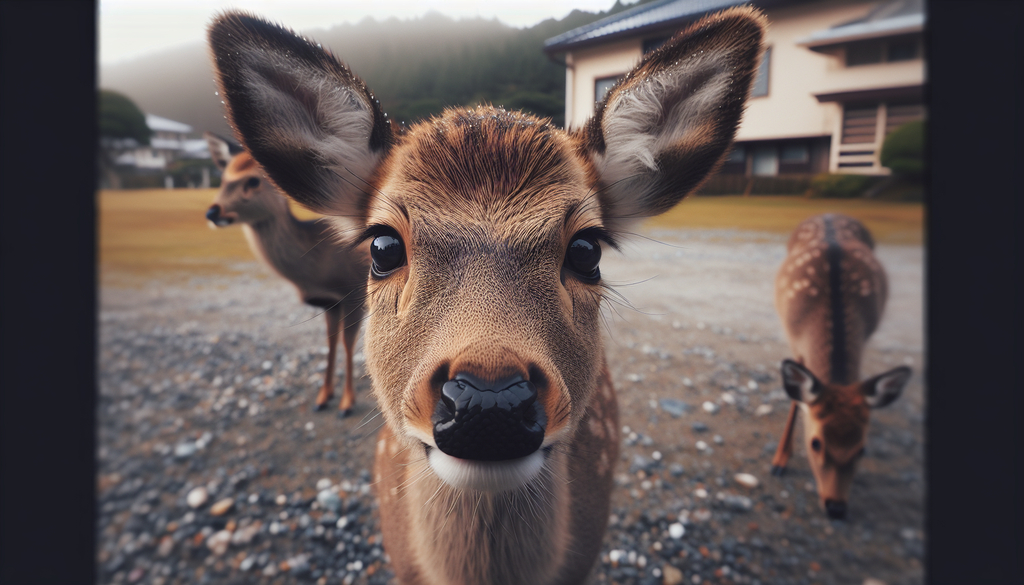
Standing less than 3 feet (1 meter) tall at the shoulder, with the largest bucks weighing around 75 pounds (34 kilograms), Key deer are much smaller than their mainland relatives.
“These deer have always been vulnerable,” explains Chris Bergh, South Florida program manager for the Nature Conservancy, who lives in Big Pine Key and directs sea level rise efforts. “Now, they’re more vulnerable than ever, and with rising seas encroaching on their habitat, their situation will only worsen.”
A road sign advises drivers to slow down, cautioning them about the presence of Key Deer, the smallest white-tailed deer subspecies, in Big Pine Key’s wetlands on Wednesday, Oct. 16, 2024. (AP Photo/Lynne Sladky)
Deer casualties on the highway
Big Pine Key hosts a mix of small bars, restaurants, gas stations, and motels, all along bustling U.S. 1. The local economy thrives on water-based activities like boating, fishing, and diving, as well as vacation rentals.
To counter the threat of vehicle collisions, signs alert drivers as they enter deer territory. A 2-mile (3.2-kilometer) stretch of U.S. 1 features an elevated road and fencing to allow deer to cross safely beneath. Speed limits are stringently enforced, frustrating some tourists on their way to Key West.
Despite these safety measures, deer continue to be struck by cars. “We estimate that 90 to 120 deer are killed by vehicles each year,” says Jan Svejkovsky, chief scientist at Save Our Key Deer.
Authorities continually urge residents and visitors to avoid feeding the deer, fearing that handouts encourage the animals to approach roadways and cars.
Despite the road casualties, the population has remained relatively stable. Yet a much larger danger overshadows these collisions.
Key Deer, their endurance tested, still roam residential areas in Big Pine Key, as captured on Wednesday, Oct. 16, 2024. (AP Photo/Lynne Sladky)
Climate effects on the Key deer
According to projections from the National Oceanic and Atmospheric Administration, sea levels may rise between 1.5 feet to 7 feet (0.5 to 2 meters) in the Florida Keys by the year 2100. This poses a severe risk for low-lying islands like Big Pine Key, where the highest point stands at just 8 feet (2.4 meters) above sea level.
Experts believe that a continued rise in sea levels will drastically reduce the freshwater and vegetation that Key deer rely on for survival.
“As the sea rises, the availability of freshwater, palatable plants, and birthing grounds decreases,” said Bergh from the Nature Conservancy. “This puts the deer in greater direct competition with humans occupying these shrinking high ground areas.”
In addition to rising seas, climate change exacerbates the frequency and intensity of hurricanes, which could severely damage deer habitats and diminish freshwater sources through storm surges.
Furthermore, saltwater intrusion has contributed to the death of many Florida slash pines—the very trees that gave Big Pine Key its name. In their place, salt-tolerant mangroves are spreading, further limiting the fragile environment that the deer depend on.
The ever-evolving ecosystem of the Florida Keys is home to the threatened Key Deer, the smallest white-tailed deer, seen here on Tuesday, Oct. 15, 2024. (AP Photo/Daniel Kozin)
Deer face shrinking habitat, encroach on neighborhoods
As their natural habitat diminishes, Key deer have increasingly wandered into backyards, forming bonds with residents who may even recognize individual animals.
“They’re incredibly gentle,” says longtime local Connie Ritchie, who often sees up to 30 deer a day. “Living here, you grow an intense desire to protect them because they’re so harmless.”
According to Ritchie, federal wildlife refuge programs have even hosted events to distribute native plants that deer are less inclined to eat, helping locals cultivate more deer-friendly gardens.
Dead pine trees, stripped of their needles, dominate parts of the deer’s wetland habitat in Big Pine Key, a sobering sign of environmental shifts. (AP Photo/Lynne Sladky)
Development on Big Pine Key surged during the 1970s and 80s, “when large tracts of land that supported deer were developed into suburbs with canal networks for easier water access,” says Svejkovsky of Save Our Key Deer.
While the area remains mostly rural, featuring cozy Florida bungalows alongside more upscale homes, such development has claimed much of the deer’s natural range.
“Here, people and wildlife inhabit a very concentrated space,” explains Katy Hosokawa, a ranger at the National Key Deer Refuge, a sanctuary established in 1957 and covering 8,542 acres (3,457 hectares) of Big Pine Key. “As we build more homes or protect less land, the safe spaces for deer shrink.”
The deer freely roam between undisturbed wildernesses and backyards. “They spend their day grazing,” Hosokawa says. “Our soil doesn’t provide rich nutrients, so they have to eat a lot. And trust me—if it’s soft and tender, they’ll give it a try.”
Key Deer, interacting in residential neighborhoods amid their otherwise wild surroundings, were seen on Thursday, Oct. 17, 2024. (AP Photo/Lynne Sladky)
The uncertain future of Key deer
The future remains uncertain, and the outlook is grim.
A relatively modest sea rise of just 6 inches (15 centimeters), projected to occur by 2030, would result in a 16% reduction in freshwater sources on Big Pine Key itself, explains Nova Silvy, an emeritus professor at Texas A&M University who has studied Key deer since 1968.
By 2050, more than 84% of Big Pine Key’s remaining 1,988 acres (805 hectares) of ideal deer habitat could be submerged, Silvy warns—at which point “the deer will already be gone.”
What happens if the deer are no longer able to live in the Keys?
“For now, we should focus on buying more time for them to thrive here,” says Bergh. “If that’s no longer possible, then housing them in zoos would be the most responsible step, though far from ideal. Nobody wants that future for a wild species.”
In rare situations, scientists have relocated endangered species threatened by climate change, but this option carries significant risks. “Relocating them to areas with other deer could lead to interbreeding, erasing the distinctiveness of the Key deer,” Silvy adds.
As the sun sets over Big Pine Key, it’s a reminder of the precarious future for the Key Deer, the smallest of the white-tailed subspecies, facing new and mounting threats. (AP Photo/Lynne Sladky)
____
Frisaro contributed from Fort Lauderdale, Fla.
____
The Associated Press’ coverage of climate change and environmental issues receives funding from private philanthropies. All content is produced independently by AP journalists, following AP’s standards. Find details about AP’s support and philanthropic partnerships on AP.org.