"‘I had the whole beach to myself’: four stunning hidden gems in France away from the crowds"
The vastness of the nation means it still holds unexpected gems – Roman artifacts you never expected, scenic coastal train rides, expansive deserted shores…
Guéthary on the Basque Coast
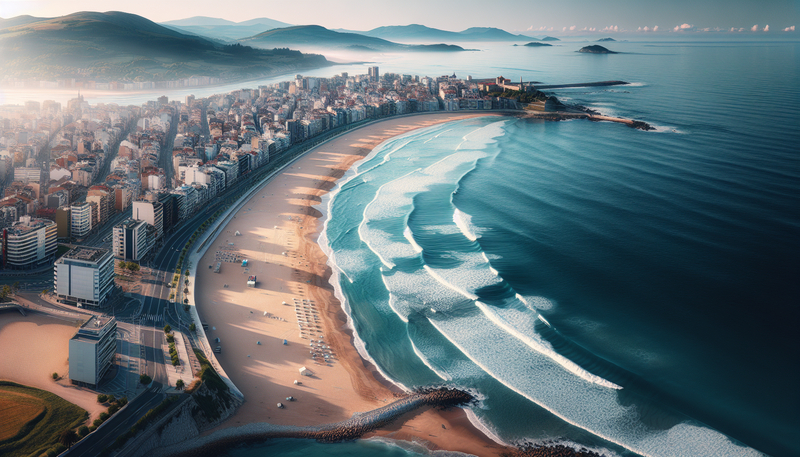
Sitting between the glitzy Biarritz and the rustic charm of Saint-Jean-de-Luz with its tuna boats and timbered homes, there is a tranquil section of the Basque coast. Even during the peak summer season, Guéthary stays relatively undiscovered by most tourists.
“It’s the wild Atlantic waves that keep the crowds at bay,” says Amaia Urruty, who has vacationed in Guéthary since her teenage years. “Everything here remains serene, except the sea itself.”
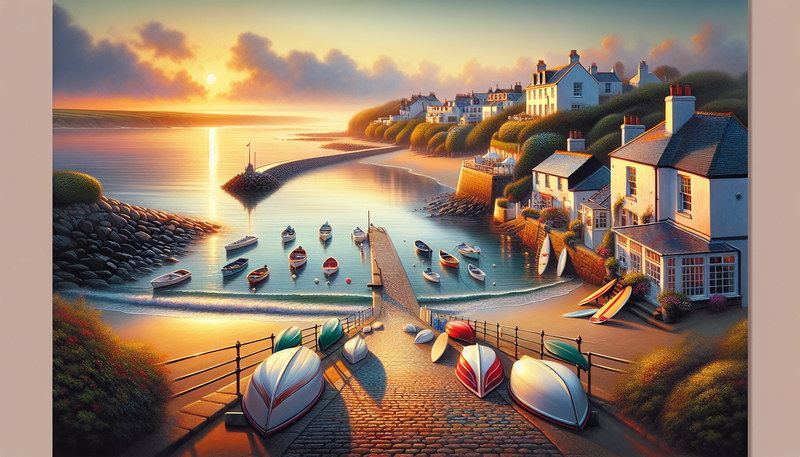
Community life in Guéthary revolves around the fronton— a large court for playing Basque pelota — located by the village hall. Markets, dances, and festivals also take place here. Once reliant on whaling, its port now showcases a unique sight: fishing boats pulled ashore after every journey. Architecturally, the town is quintessentially Basque, with its whitewashed facades, red shutters, and sloping roofs. “People return year after year,” says Urruty. “It’s ideal for families and those who appreciate Basque culture.”
The beaches are pristine and expansive, perfect for basking in the sun. For a taste of the local flavor, countless restaurants offer pipérade aux oeufs (egg-based dish with tomatoes, peppers, and Bayonne ham) or seafood platters overlooking the little harbor. “Watching the surfers is a favorite pastime, with the Spanish coastline just visible beyond the waves,” Urruty notes.
Just up the coast at Bidart, Plage d’Erretegia is a small sandy cove nestled between dunes, serving as the start of a picturesque coastal hike leading 15 miles to Hendaye and the Spanish border. To the south, Plage de l’Uhabia offers a wider beach ideal for swimming, while Parlementia Beach draws in surfers with its vast waves (and features lifeguards throughout the summer). For families, Plage des Alcyons is a natural aquarium at low tide, filled with sea creatures like sea urchins, crabs, and small fish.
A short ride from Bidart, you'll find Moulin de Bassilour, a historic bakery specializing in the regional gâteau basque – a delight filled with either rum-spiked crème pâtissière or black cherries. Visitors can witness the traditional stone-ground wheat process, powered by a water wheel dating back to 1741. There is a café onsite, but many prefer to gather picnic supplies and explore the hinterland – Guéthary even has an e-bike rental service, Velektrix, with rates from €21 for half a day.
Venturing southwest, Espelette is famous for its strands of red chilies hanging from balconies during summer, while neighboring Cambo-les-Bains hosts the Villa d'Arnaga, the Basque-inspired home of renowned playwright Edmond Rostand. A perfect day trip ends in the village of Ainhoa, just a 20-minute e-bike ride away. Though lively during the day, on Monday nights in summer, Ainhoa offers a serene experience with its organized nocturnal walks to the local hilltop chapel.
Stay: Hotel Balea, formerly Guéthary’s village school, now offers a peaceful three-star retreat with 28 rooms and a cozy garden breakfast setting, with prices from €79 for a double room. – Jon Bryant
Vienne in Auvergne-Rhône-Alpes
The crumbling walls of Château de la Batie, perched high on the northern edge of town, always catch my eye when approaching Vienne. Despite its ruinous state, visitors might mistakenly assume it’s the oldest structure here, but they’d be wrong—the town’s Roman relics date back even further, over a millennium earlier.
When you think of Roman architecture in France, visions of the mighty Pont du Gard or perhaps the Roman monuments in Nîmes or Arles come to mind. Meanwhile, the quietly preserved town of Vienne, located 20 miles south of Lyon and home to about 30,000 residents (no different than 2,000 years ago), often escapes attention.
The Roman ruins are intertwined with Vienne’s Rhône-side streets. Formerly the capital of the Allobroges tribe until Julius Caesar transformed it into a Roman colony in 47 BCE, the town is inescapably linked to its ancient history.
At the Jardin de Cybèle, local dogs play among the Roman arches of the ancient forum. Overlooking the Temple of Augustus and Livia, I sip my coffee at Le Bar du Temple. Thomas Jefferson visited here in 1787, and it’s said to be inspiration for his Confederate White House in Richmond, Virginia.
The medieval turrets scattered around the temple hint at Vienne’s past, with their cylindrical shapes reminiscent of the traboules (covered passageways) better known in nearby Lyon.
Much of Vienne’s ancient heritage was buried over time, until the late 19th century when vast mosaics were unearthed in Saint-Romain-en-Gal. Some of these are displayed in the town’s museum, including a thoroughly detailed fresco showing the changing agricultural seasons. You can practically feel the tiger-stripes of Dionysus’s menagerie, or the earthy tension of harvesters pressing grapes beneath their feet.
Jazz didn’t arrive until 2,000 years later, but Vienne is now a prominent name on the international jazz scene. Jean-Paul Boutellier founded the Jazz à Vienne festival in 1981, originally intending for it to take place in Lyon. However, the city’s garden park residents weren’t thrilled by the noise, and Vienne unknowingly became home to one of France’s most famous jazz festivals. Hosted in the ancient Roman theater (early July), the festival has seen stars like Ella Fitzgerald and Norah Jones grace its stage. For visitors outside of the festival season, the theater opens its doors free of charge on the first Sunday of every month.
This year, Boutellier further cemented the connection between jazz and Vienne’s Roman past by launching a jazz club inside the Musée de Saint-Romain-en-Gal, offering panoramic views of both the Rhône river and the old Roman fortifications. Concerts are bi-weekly, with performances increasing in frequency by September.
Vienne’s hills are still home to vineyards once cultivated by the Romans, carried forward today by the Vitis Vienna collective of winemakers. A visit to one of the nearby wineries can easily be arranged, or you can sip a Crozes-Hermitage at the modern Ô BievVin wine bar.
Stay: La Péniche Bed & Bicycle offers a unique lodging experience on three houseboats docked along the Rhône. Doubles start from €149, with a hot tub available on deck, offering a view of Vienne’s charming vineyards. – Anna Richards
Côte Bleue near Marseille
In 1927, author Blaise Cendrars wrote, “I’ve never been happier than when I was in La Redonne.” As I wander between red cliffs, emerald pines, and the azure Mediterranean, I find Cendrars’ words capturing the essence of the Côte Bleue. Many, like me, come to this coastline to escape the busy streets of Marseille and discover the coastal villages that line the rocky shore.
The Côte Bleue stretches its 17-mile length northwest of Marseille. While more compact than the larger Calanques National Park to the city’s south, this region boasts its own rugged beauty—calanques (rocky coves) and quaint villages that maintain the allure of southern simplicity. The trails lining this landscape owe their existence to both 18th-century smugglers and 20th-century railway engineers.
The Sentier des Douaniers, a coastal path dating back to the French Revolution, was originally utilized by customs officers monitoring the waters for smugglers. Today, those hiking along the path are treated to a vibrant display of nature: lush foliage, the cerulean sea, and the strikingly colorful stone cliffs. Hugging the cliffs, the winding path offers a challenging but stunning walk.
For those who prefer a more relaxed pace, the Train de la Côte Bleue is perfect. The line has been running since 1915, providing tourists and locals alike with breathtaking views as it traverses 18 stone viaducts. At stops along the line, you can easily hop off and explore the coastal gems. Personally, I enjoy alternating between hiking part of the path and taking the train for the rest.
With non-slip shoes laced up, I catch an early 8am train from Marseille’s Saint-Charles station. Sitting on the left side offers the best views as the train sails past the container docks and into the painterly landscapes of red-roofed L'Estaque, a neighborhood Cézanne once captured in his paintings. Soon, the sprawl of Marseille gives way to endless blue Mediterranean views.
My first stop is the tiny port of Niolon, where I start my 4½-mile trek along the Sentier des Douaniers. While it takes me about 2½ hours to hike what the train covers in six minutes, the journey through pine-scented paths and past blooming poppies is worth the effort. A colossal stone viaduct arches over Calanque du Jonquier, a turquoise cove perfect for a dip.
Further along the trail, I descend to Méjean, where the ochre-hued cliffs give way to a stunning harbor enclosed by a massive viaduct. Beneath it, locals dig into piles of whitebait at the casual Mange Tout restaurant. The final portion of my walk to Ensuès-la-Redonne is smooth, though less scenic, and by the time I hop back on the train, I feel a sense of accomplishment.
From the train’s next stop in Sausset-les-Pins, a quaint seaside spot that once thrived on tuna fishing, I begin exploring. Today, a picturesque harbor filled with pleasure boats dominates the scene, alongside delightful beaches and local markets. I time my visit perfectly for the Sunday market, picking up Provençal olive bread before wandering toward the coastal boardwalk for a short siesta at the peaceful Plage du Petit Nid.
The final stop on the Côte Bleue is Martigues, known affectionately as the “Venice of Provence” thanks to its charming canals. These waterways glisten as pastel-colored houses and traditional wooden boats reflect in the water. Around the Quartier de l'Ile, I visit the baroque Saint Marie-Madeleine church and pause to sample the region's famous poutargue (cured mullet roe) at Lou Calens, a family-owned spot keeping ancient fishing traditions alive.
As I ride the train back to Marseille, watching the sun set over the sea, I recall a quote scrawled on a rock along the coastal path: “There’s no straight path to happiness. But happiness often comes from walking the path itself.”
Train: Daily trains depart hourly from Marseille's Saint-Charles station, with the journey to Niolon taking around 25 minutes, and to Martigues, approximately 55 minutes. – Alexis Steinman
Brignogan-Plages in Brittany
The southern Breton coast is beloved by many holidaymakers, drawn to its golden sandy beaches in spots like Carnac and Bénodet. It's easy to understand the appeal, as these destinations are easily reachable from ferry ports like Saint-Malo or Roscoff. However, by August, the school holidays have made these areas quite crowded. Those in search of solace may want to head west instead, to the quiet northern coast of Finistère.
Beyond Roscoff lies the Côte des Sables (the sandy coast), a stretch of beautiful yet lesser-known beaches. We came across this peaceful corner a few years back during an impromptu road trip towards Le Conquet.
We spent our nights at Hotel de la Mer in Brignogan-Plages, an idyllic retreat on a soft curve of the coastline with several beaches within reach. Right by the hotel lies Plage des Chardons Bleus, a white sand beach dotted with silver-grey boulders revealed at low tide. Nearby, Plage du Garo offers a more sheltered spot, with turquoise waters filling the bay. Just around the bend, Plage du Phare leads towards the whitewashed Pontusval lighthouse situated atop the rocks.
On our return eastward, we ventured to Plage des Amiets in Cléder, a sprawling sandy bay framed by windswept moorlands and a small, remote campsite. Despite visiting on a sunny August weekend, the beach felt almost deserted, with just a handful of families enjoying paddleboarding, tennis, or a lazy afternoon. As my children waded in the shallow waters, I watched wetsuit-clad foragers digging for edible seaweed, mesmerized by the underwater gardens swaying around my feet.
We had packed a picnic, as the isolation meant finding a café or shop was unlikely. Our meal by the water was leisurely and sunny, and later, in the nearby village of Plouescat, we indulged in post-lunch ice creams and admired the 16th-century market hall, regretting that we had missed the morning’s bustling market scene.
On a future visit to the region, I stumbled upon Keremma Beach, not far from Plouescat. I first noticed it from the window seat at La Butte, the eco-friendly hotel perched on a hill in Plouider. The chef here, Nicolas Conraux, sources and crafts incredible dishes using the area’s finest local ingredients. After a memorable dinner, I strolled down to the beach at sunrise, the sea gently painting patterns in the sand. A murmuration of birds danced in the sky, and I savored the solitude. Amid such serenity, there’s no need to follow the crowds.
Stay: Hotel de la Mer offers rooms starting at €150 for a double, while La Butte, a plush eco-friendly stay, has rates from €135 for a double room. – Carolyn Boyd