"Blazing Inferno: Wildfires Ravage New York During Unprecedented Drought"
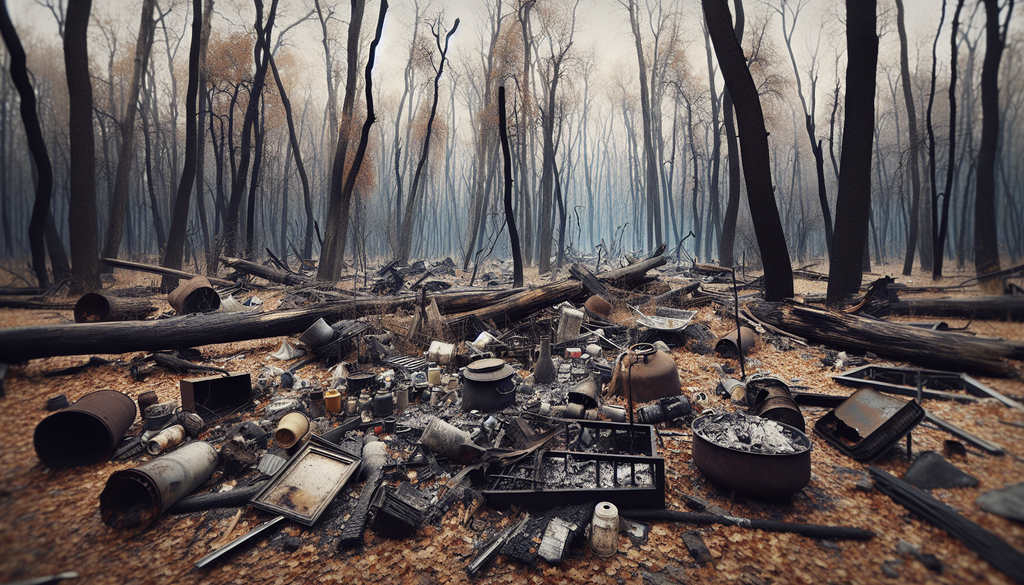
Brooklyn, New York – A blackened microwave, its frame warped by heat, lay abandoned, while the bent frame of a lawn chair sat nearby. A heap of clothes, half-melted, and the singed remains of a Bible were strewn across the forest floor, surrounded by charred pinecones – a stark reminder of what once existed here.
Underneath a canopy of burnt trees in a small, somber clearing in the northwest corner of Prospect Park, remnants of the devastation caused by a rampant fire were evident. A homeless encampment nestled in Brooklyn’s iconic park had been consumed by flames, leaving a surreal, apocalyptic scene in its wake. Amid crunchy leaves and scorched ground, a fire truck moved steadily along the perimeter as a lone squirrel darted around the stillness.
Days after the blaze, Jake Catalanotto, a 26-year-old media arts teacher native to Brooklyn, wandered the roughly two-football-field-sized burn site in quiet shock. His camera captured the destruction left by the fire, and he found himself both captivated and disturbed by the scene.
“You can see what’s left of electronics – burnt-out gadgets, warped cans, even camp supplies like pots and pans,” he said, describing the grim remains to Al Jazeera. “There were mattresses and spray cans too. It looked like a miniature hellscape.”
@Prospect_Park tweeted: “Please be very careful when accessing the park. Open fires and smoking aren’t allowed. Report any fires to 911 immediately. Prospect Park Alliance and NYC Parks are assessing the damage and will provide updates soon.”
‘Hoping for rain’
October broke records as the driest month ever in New York City’s history, authorities said. From October 29 to November 12, a stunning total of 229 brush fires erupted across the city, fueled by a prolonged drought, turning the city’s abundant green spaces into tinder. Firefighters, community members, and city officials were all on edge, waiting for the next eruption.
Inwood Hill Park, located in Manhattan, saw a particularly fierce fire on Wednesday, billowing smoke that clouded the nearby George Washington Bridge. A day earlier, authorities arrested volunteer firefighter Jonathan Quiles on arson charges for allegedly starting a brush fire on Long Island. Upstate, bordering New York and New Jersey, a notorious wildfire in Greenwood Lake ravaged 5,000 acres, claimed the life of a parks employee, damaged air quality, and left neighborhoods fearing evacuation.
In response, officials enacted a statewide burn ban lasting until November 30.
“No one should be lighting fires right now,” warned Governor Kathy Hochul. “We need to heed these warnings and take every precaution to protect New Yorkers in these dangerous conditions.”
In an attempt to stave off more fires, the city temporarily prohibited grilling in public spaces, hoping to reduce any risks amid the extremely dry weather.
“We’re just praying for rain at this point,” said Mayor Eric Adams last Friday when speaking about the fires spanning the city. “The leaves, the dry ground, the trees – all vulnerable. We need water.”
‘Nothing will replace you’
Despite the devastation, no one was hurt in the Brooklyn fire. Officials remained tight-lipped about the cause as investigation efforts continued.
More than 100 firefighters were dispatched to fight the Prospect Park blaze, which torched about two acres (one hectare) of the park’s Nethermead area. With steep terrain and gusty winds, fire crews faced significant hurdles in containing the blaze, officials onsite said. The immediate aftermath showed massive clouds of smoke drifting above the singed treetops, while the glow of the flames could be seen from blocks away. The familiar park now carried a scent of burnt forest that could be detected over substantial distances.
“The initial image of that rising smoke was utterly terrifying,” said Morgan Monaco of the Prospect Park Alliance to Al Jazeera.
Park supervisors revealed that the ground cover and select trees had been irreparably scorched and would require removal. In the coming months, erosion and flooding would become significant concerns for the now barren landscape.
“It’s important we stabilize this area as quickly as possible,” Monaco explained, citing the ongoing drought, exacerbated by climate change, as a major factor in the fire’s severity. “We hope to begin replanting by next spring, though it’s going to take several seasons to restore what was lost.”
Park workers, Monaco added, will remain vigilant, monitoring for any potential activity that could trigger future fires. She urged park visitors to be equally cautious.
“This is a critical time,” she noted. “We need locals to report anyone smoking in the park or lighting barbecues. Every spark right now could have dire consequences.”
As rumors swirled that individuals from the homeless encampment might have played a role in sparking the fire, Monaco declined to comment.
Despite the somberness, life returned to Prospect Park. Cyclists, runners, and families walked its well-known paths on Thursday, ever-mindful of the lingering smell of smoke. Barbecue stations in the park remained covered with plastic bags in compliance with the grilling ban. On a nearby fence, park visitors left heartfelt notes that praised the park’s beauty and the heroic efforts of the firefighters.
“Prospect Park, we’re going to fight for climate action so future sons and daughters can enjoy you!” one anonymous note read.
Another simple but impactful message read: “Dear park, there will never be another you.”
Fire ‘at your doorstep’
For New Yorkers, accustomed more to flooding than wildfires, the appearance of brush fires felt strange and menacing.
“This is Brooklyn’s last natural forest, and now it’s threatened by these fires,” said Catalanotto after exploring the remnants of the blaze. “I didn’t think it would come to this, but the climate crisis is very much here.”
Others mirrored this sentiment, shocked by the reality of firestorms in an urban landscape.
Flatbush resident and kitchen supervisor Kat Teague, 43, admitted to feeling unnerved: “I never thought I’d hear about a forest fire in the middle of New York – especially Brooklyn. It felt surreal.”
The fire that carved through New York’s most populous borough, home to 2.7 million people, left a lingering feeling of anxiety in the air. Many saw it as a sign of what was to come due to climate change.
“We always hear about wildfires in places far from here, but this? This was close,” said Noah, a 24-year-old Brooklyn student. “This time it felt like the crisis was right at our doorstep. The fire is here in our back yard.”
‘Mountains on fire’
The destruction spread even beyond the city limits. Along the border between New York and New Jersey, the Jennings Creek wildfire raged on, leaving deadly consequences in its path.
This blaze claimed the life of Dariel Velasquez, an 18-year-old parks employee, when a fallen tree struck him during efforts to control the fire. As of Thursday, the fire had scorched more than 5,000 acres but was said to be 75 percent under control, aided by aerial water drops from Blackhawk and Boeing Chinook helicopters.
Residents around Greenwood Lake experienced the full devastation brought on by the fire. As the evening set in, the sight of flames dancing across the mountains shook the community. Miles of stationary fire lit up the nighttime sky as people watched in helpless awe.
“It looked like something out of a movie – the whole ridge of the mountain was on fire,” said Randal Rodriguez, 39, who owns Paul’s Place, a lakeside hotdog diner. “The sight was unreal.”
Rodriguez confessed that not only had the wildfires impacted his business, but the sheer amount of smoke in the air also made it difficult for the community to function.
“The smoke has been thick for days now,” he said. “You can feel it in your lungs after just a few minutes outside. Anyone with health issues would really suffer in this.”
Health professionals have reiterated the risks of prolonged exposure to wildfire smoke, noting that breathing in pollutants such as particulate matter and carbon monoxide can lead to serious respiratory issues. Common symptoms include throat irritation, wheezing, coughing, and for individuals with preexisting conditions like asthma, a heightened risk of complications.
Residents like Dave Kozuha, who lives just a few kilometers from the fire, likened the scene to something out of Dante’s Inferno.
“You’d see flames just leap across the mountain ridges – it was a terrifying sight,” Kozuha explained. “The whole length of the ridge looked like it was engulfed in fire. It’s unnerving to witness it firsthand.”
Kozuha, who owns a local coffee roasting business, admitted that he knew of neighbors thinking about evacuating in case the fire got any closer. The immediate threat of displacement sent nerves through the surrounding community.
“If the winds change, it could be bad news for us,” he said. “The threat is real, and none of us are taking it lightly.”
Kozuha explained that while the wildfire had kept him busy, he was doing his best to keep calm and help where possible. His coffee business, Greenwood Lake Roasters Craft Coffee, provided free caffeine to the firefighters working tirelessly to contain the blaze.
“We’re doing all we can to help fight this fire,” he said. “We feel the pain of those affected. Fire is a force of nature, but united as a community, we will overcome it.”