Copenhagen's new 'CopenPay' program offers perks to tourists — but is it really effective?
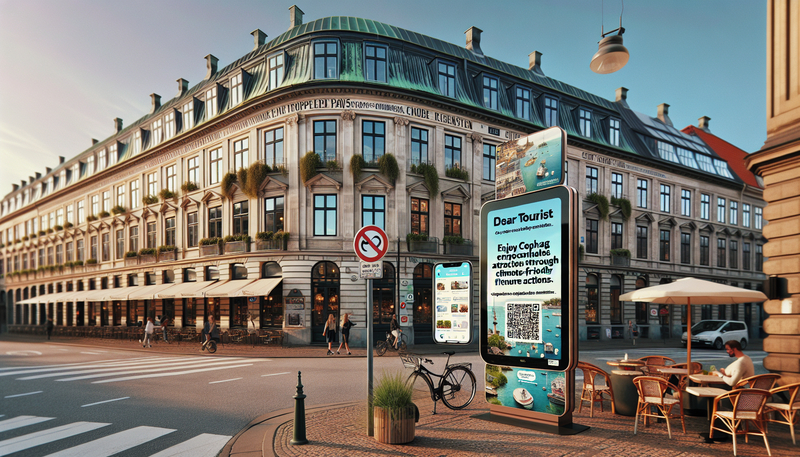
Pick up trash from canals. Volunteer at an urban garden. Opt for biking instead of driving. In Copenhagen, the capital of Denmark, travelers who make eco-friendly choices are getting unique rewards: free ice cream, glasses of wine, or discounts on museum tickets.
This is all part of a fresh initiative called CopenPay, designed to inspire more sustainable actions by tourists. Covering 24 attractions, including art galleries and sports rental services, the month-long pilot, running until August 11, aims to encourage more mindful travel.
Denmark’s approach contrasts with many other European hotspots, where overcrowding from tourists has sparked tensions. For instance, Venice now enforces day fees and bans large crowds and loudspeakers, and in cities like Barcelona and Majorca, locals have protested against the flood of vacationers. With tourist behavior coming under scrutiny for negative reasons, Carina Ren, a tourism scholar at Aalborg University, feels that “CopenPay arrived at the right moment.”
“It’s a way to address how tourism can give back rather than merely take,” she explained in an interview with the BBC.
Though Copenhagen is a small, cycle-friendly city with about 600,000 residents—and often ranks among the greenest cities on the planet—the surge in post-pandemic tourism has been record-breaking. Last year, the city saw over 12 million international overnight stays, with peak activity during July and August.
Upon landing in Copenhagen, visitors are greeted by CopenPay promotions, displayed across airport screens and bus banners, gently persuading them to make greener choices during their stay. This means opting for eco-friendly transport, minimizing waste, and diving into local experiences.
“We want tourism to contribute to positive environmental impact,” explained Rikke Holm Petersen from Wonderful Copenhagen, the team behind the initiative. “Sometimes, when you’re away from home, it’s easy to forget the eco-friendly practices you follow daily. We hope to instill a more responsible outlook in travelers.”
Though the campaign’s launch has caught major media attention, Petersen assures it’s no publicity ploy. “We’re not doing this to attract more tourists. We already have plenty,” she asserted.
Curious about whether this fun, incentive-based approach could really work, I, as a local writer, decided to give it a try and explore how tourists could engage with this greener scheme, as well as get a sense of their opinions.
The first activity on my itinerary involved a morning swim and a choir session, both popular in Danish culture. My participation in the eco-scheme? Simply walking to the venue instead of driving. My reward: a free cup of coffee.
Having braved the chill of the sea just past 8 a.m., I quickly emerged, feeling both refreshed and energized. As I warmed up with a complimentary coffee, I joined over a dozen other early risers for a lively singalong. Songs like the Beatles’ "Let It Be" and Sinatra’s "Fly Me to the Moon" filled the air, both in English so everyone could chime in.
Singing beside me were Jasmine Blakeway and her friends from Birmingham, UK. They learned about CopenPay through Instagram. “We thought it’d be a fun way to kick off our morning,” Jasmine shared. Taking part in local culture and acting sustainably were important to them. “It’s crucial for us to leave a positive footprint wherever we go,” she added.
Next, I entered a CopenPay discount code on a bike rental app, secured my orange rental bike, and pedaled along Copenhagen’s waterfront. Soon after, I boarded an electric GoBoat—alongside more than 500 other travelers who booked similar slots through CopenPay for an hour-long litter-cleaning boat tour along the canals.
As our boat glided along, barely faster than walking, we passed the striking parliament buildings and towering church steeples. Armed with small fishing nets, we eagerly scanned the sparkling, impressively clean waters for trash. Eventually, we fished out a stray crisp packet and a tiny plastic toy airplane.
“The canals here are extremely clean,” remarked traveler Mark Brown, who traveled from York. His family chose the boat trip to “experience something different.”
In addition, GreenKayak—another participant in CopenPay—lets visitors borrow kayaks for two hours, completely free, in exchange for collecting waste. “For some, the idea of trash-picking might not sound fun,” said GreenKayak’s Elisabeth Friis Larsen. “But in reality, people enjoy it like it's a treasure hunt—except you're searching for trash!”
On my continued exploration of the project, I biked to Refshaleøen, once an industrial zone but now a haven for foodies and art lovers. Tucked away within its expanse is Oens Have, an urban farm. Amid warehouses and boatyards, the farm is a lush sanctuary where towering sunflowers, bumblebees, and butterflies flutter about, while bees hum around strawberry patches and hens cluck from their coop.
On the farm, I found myself weeding a patch of leeks and snipping the dry heads off calendula flowers—a simple task but made blissful by the sunshine and fresh air. For a few hours, I forgot I was in the city.
“It’s a space where you can connect with others and engage through hands-on work,” said Livia Urban Swart Haaland, co-founder of Oens Have, as we gathered fragrant coriander seeds used for pickling at a restaurant-based yurt nearby.
More travel reads:
- • 10 eco-friendly destinations for 2024
- • Are travel selfies dying out?
- • Why bad tourist behavior is under scrutiny
In the heart of the urban garden, over 30 volunteers, including some connected through CopenPay, mulched, harvested, and weeded. The group’s diversity was staggering, with participants of all ages and nationalities, from retirees to young families.
“It’s wonderful that people get the opportunity to do this when they wouldn’t know about it otherwise,” remarked Haaland. “Travel should involve more meaningful interactions and not just passive sightseeing.”
We ended the day with a communal lunch featuring vegetables from the farm. We sat shoulder-to-shoulder at the table, deep in conversation. One of the participants, an Italian tourist, Sara Carenini, expressed that the social atmosphere of volunteering attracted her. “At this table, no one feels like a stranger,” she said with a wide grin.
However, she also acknowledged that sustainability isn’t always clear-cut. “It’s tough to discern true eco-friendly initiatives from greenwashing these days. But as tourists, we should still strive to be conscious and give back where we can,” she noted.
The evidence of interest in CopenPay is strong; in fact, many of its events are already booked up. However, not all travelers are excited about litter-picking or spending their holidays volunteering. On Nyhavn—Copenhagen’s iconic street of vibrant buildings and old sailing ships—several tourists were intrigued by the scheme but opted not to join in.
“We’re here for three more days, and honestly, I probably wouldn’t do this during a short trip,” admitted one tourist. “But if I had a two-week holiday, I’d definitely consider it.” A young woman nearby agreed, adding, “For budget travelers, it’s a fun way to access more experiences.”
Tourism researcher Berit Charlotte Kaae at Copenhagen University thinks CopenPay is a positive move but likely won’t make a massive environmental impact in isolation. “It’s an interesting incentive-based approach,” she says. However, the real focus should be on the larger problem of pollution-heavy transport like flights and cruise ships. “After all, the biggest issue is how people get here.”
Ren added that she would like to see CopenPay activities further spread out beyond the busiest tourist zones. Considering how bike-friendly Copenhagen already is, she mused that some rewards are set at a low bar. “We're in Copenhagen—no one uses cars to get to these places anyway!”
By the end of the trial period, Petersen and her team will review how successful CopenPay has been. She hopes the initiative will expand to year-round operations, with hopes that the eco-conscious spirit it instills will extend beyond the city’s boundaries. “When people come here, our hope is that they carry the idea back with them,” she concluded.
--
If you enjoyed this piece, sign up for The Essential List—a curated collection of must-read articles, videos, and the most intriguing news, delivered bi-weekly straight to your inbox.
For more inspiring travel stories from the BBC, follow us on Facebook, X, and Instagram.