Riots erupt in multiple British cities with violent, racially charged assaults. What triggered the unrest, and what lies ahead?
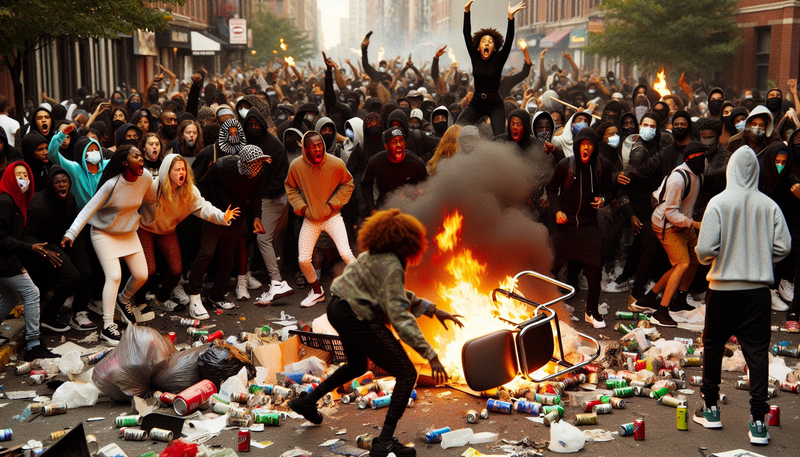
Over the past few days, the UK has been rocked by riots, and this week could see further anti-immigrant unrest. The newly-elected government is now grappling with the largest outbreak of violence the nation has witnessed in over a decade.
On Monday night, tensions escalated as police officers were injured in Plymouth when crowds stormed the southern coastal city, sparking fears of broader unrest.
These violent protests come in the wake of far-right agitators targeting hotels that were sheltering asylum seekers in two different cities over the weekend. The protesters set fire to the establishments, trapping terrified residents inside. Meanwhile, rioters in other cities damaged public infrastructure, hurled objects at police, and vandalized police vehicles.
These chaotic scenes follow anti-immigrant protests that emerged late last month, after false narratives surrounding a stabbing in Southport, northern England—where three children were tragically killed—spread online, stoking outrage.
Related article: Nigeria, Australia, and other nations issue travel warnings regarding UK riots
On Monday morning, UK Prime Minister Keir Starmer convened his first COBRA meeting—an emergency summit involving top national agencies—to devise a strategy to confront the disorder. Starmer was firm in his address on Sunday, stating: “This is not a protest. What we are seeing is coordinated violence, pure thuggery, which has no place, whether online or on our streets.”
This situation emerges as the first major challenge for Starmer, who only assumed office a month ago following his Labour Party’s victory over the Conservatives in the most recent general election. Parliament figures and the public alike are now eagerly awaiting the government’s next moves.
Here’s what we currently know about the turmoil and where things might be headed.
What’s transpired on Britain’s streets?
From Friday to Sunday, protestors—many seemingly intent on provoking police and inciting chaos—took over city centers across the UK.
The riots started as anti-immigrant marches, initially organized through social media platforms such as X (formerly Twitter), Telegram, and WhatsApp. However, it didn’t take long for these meetings to devolve into violent confrontations.
Two Holiday Inn hotels—one in Rotherham, northern England, and another in Tamworth, in the Midlands—were set ablaze. These hotels had been sheltering asylum seekers awaiting decisions on their claims.
“The hotel was filled with frightened residents and staff,” said Lindsey Butterfield, Assistant Chief Constable of South Yorkshire Police, in a statement regarding the Rotherham incident. In Tamworth, rioters hurled objects, smashed windows, and started fires, injuring one police officer in the process, according to local authorities.
The unrest also reached cities like Sunderland, Middlesbrough, and Stoke-on-Trent, with violence mostly concentrated in the Midlands and northern regions of England. To safeguard religious sites, the Home Office announced on Sunday that UK mosques would receive enhanced security.
Over 370 arrests were made over the weekend, according to the National Police Chiefs’ Council (NPCC), the body representing UK law enforcement. Authorities anticipate making many more as they actively work to identify and apprehend suspects.
Law enforcement has committed to employing technologies like facial recognition to track down individuals involved in the violence. “People in this country deserve security,” Starmer noted from Downing Street. “Yet we have seen attacks on Muslim communities, mosques, minority groups, and even the police. The violence was accompanied by shocking displays of Nazi salutes and inflammatory racist rhetoric.”
Starmer concluded, “Make no mistake, this is far-right thuggery, plain and simple.”
What fueled the riots?
The immediate trigger was the stabbing incident in Southport, northwest England, which left three young girls dead—a deeply disturbing event that stunned the entire nation.
Far-right groups capitalized on this tragedy, pushing false claims that the attacker was an immigrant to mobilize anti-Muslim and anti-immigrant protests. Police, however, confirmed that the suspect is British-born.
Britain has seen a rise in anti-immigrant sentiments in recent years, and observers warn that this growing rhetoric has emboldened far-right sympathizers, contributing to the scenes of turmoil witnessed over the weekend.
During the recent general election, Reform UK—a right-wing populist party focused heavily on anti-immigration policies—garnered the third-largest share of the vote. Immigration was one of the dominant topics during the campaign.
On Monday, Nigel Farage, Reform UK's leader, condemned the violence but reiterated his stance that “long-standing issues remain,” criticizing what he described as “soft” responses to earlier anti-racism protests and decrying the effects of “mass, uncontrolled migration” on British communities.
Several Conservative MPs—whose party had already adopted more hardline immigration policies during its 14 years in government—disagreed with Farage’s assertions. Former Home Secretary Priti Patel echoed a unified stance against violence, labeling any justification or caveat as unacceptable in clear criticism of Farage’s remarks.
Diane Abbott, the longest-serving Black MP in the UK, commented bitterly, “Nigel Farage is probably enjoying this. Protests across the country, and people of color forced to live in fear.” Farage's representatives were unavailable for further comment.
Concerns Over Social Media’s Role
Many observers are holding social media platforms responsible for playing a role in the escalation of the violence, with the locations and details of these protests circulating days ahead on services like WhatsApp and Telegram.
Elon Musk’s X platform has been particularly criticized from various political viewpoints, especially since far-right activists like Tommy Robinson were reinstated. Robinson used the platform to promote the protests, though he concurrently condemned the violent acts.
According to Joe Mulhall, Head of Research at Hope Not Hate, a UK-based charity combating racism and fascism, returning figures such as Robinson to X’s ecosystem has allowed “far-right extremists to once again have a powerful reach with their divisive and dangerous rhetoric.”
Starmer reiterated his stance on Sunday, labelling the violent protestors as “far-right thugs,” a sharp criticism that sparked outrage in right-wing circles online. The phrase even trended under the hashtag #FarRightThugsUnite on X.
In response to these events, Musk escalated his rhetoric, writing that a “civil war is inevitable,” alleging that open borders and unchecked migration had set the stage for the riots.
On Monday, the Prime Minister’s spokesperson responded that there was “no place” for such remarks, adding that Starmer categorically does not align with Musk’s perspective.
Starmer Faces His First Crisis
The current unrest draws uncomfortable parallels to the 2011 UK riots, which followed the fatal police shooting of a Black British citizen. At the time, Keir Starmer served as the Director of Public Prosecutions, overseeing the swift handling of those responsible.
Back then, Starmer authorized courts to remain open 24/7 to expedite the processing of rioters and looters, and has implemented a similar approach now by extending judicial hours in an effort to curb the chaos.
However, in 2024, Starmer faces new hurdles. After a decade under Conservative-led austerity measures, the country’s public services are stretched thin, and the justice system is struggling.
Related article: King Charles III outlines Keir Starmer’s vision for Britain at the state opening of Parliament
Prison crowding has become a serious issue in the UK. As of Friday, spaces across England and Wales were limited to just under 1,500, according to the British Ministry of Justice, with the added weight of hundreds of new arrests over the weekend. In July, the Justice Secretary warned British prisons were nearing collapse, having operated at 99% capacity for much of this year.
The riots have abruptly interrupted Starmer’s post-election honeymoon and prompted demands from MPs across the board to reconvene the otherwise quiet summer Parliament for an emergency debate regarding the riots. In response, a spokesperson for Starmer’s office remarked that the government’s immediate priority remains focused on quelling the disorder.
In recent times, Parliament has been recalled only six times, and apart from COVID-19-related sessions, just once—to address the Taliban's takeover of Afghanistan in 2021.
Contributions from CNN’s Catherine Nicholls, Sarah Dean, Radina Gigova, Duarte Mendonça, Mia Alberti, and Sophie Tanno