Sections of Great Barrier Reef see record coral loss from heat and storms
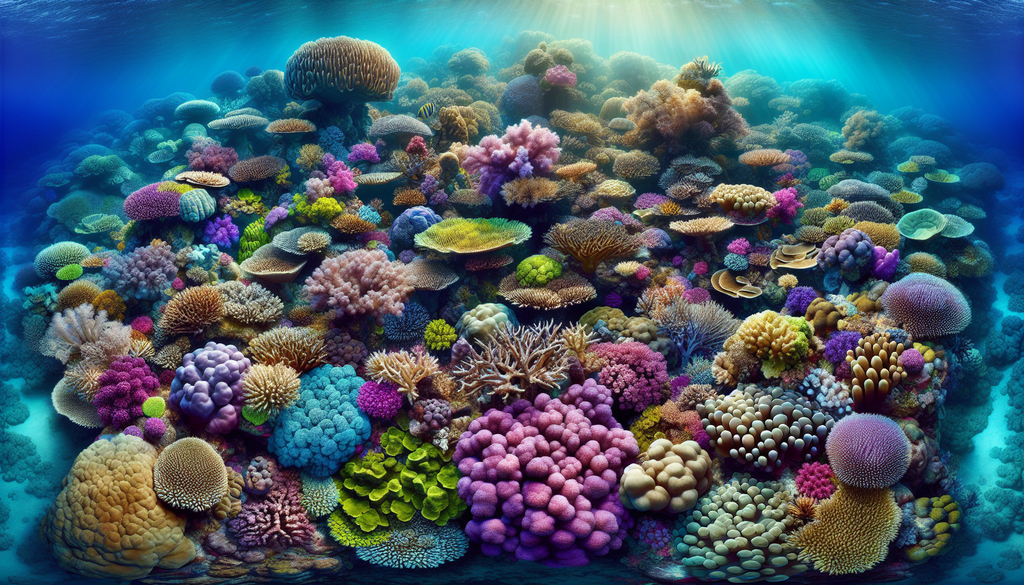
New findings from the Australian Institute of Marine Science (AIMS) reveal that recent mass coral bleaching events, coupled with two cyclones and significant flooding, have caused “substantial coral mortality” in parts of the Great Barrier Reef.
Between August and October, researchers conducted underwater surveys across 19 reefs spanning from Lizard Island to Cardwell. In 12 of these reefs, coral mortality rates reached as high as 72 percent, the data confirmed on Tuesday.
One particularly hard-hit northern sector, located between Cooktown and Lizard Island, witnessed a loss of over a third of its hard coral cover. AIMS described this as the most severe annual decline observed in 39 years of government assessments.
According to scientists, these devastating changes can be traced to the recent Austral summer, Tropical Cyclones Jasper and Kirrily, and freshwater influxes between December 2023 and March 2024.
At present, AIMS researchers are gathering more data on reefs further south within the Great Barrier Reef system.
“These preliminary findings shed light on the Reef's growing sensitivity to bleaching events, which are intensifying in scale, frequency, and severity due to climate change. The Reef’s resilience is being severely challenged,” stated Manuel Gonzalez Rivero, acting research program director at AIMS.
Spanning 2,300 kilometers (approximately 1,429 miles) along northeast Australia's coastline, the Great Barrier Reef is a vibrant living organism and one of the planet's most biodiverse ecosystems. It supports hundreds of coral species, over 1,600 varieties of fish, 133 species of sharks and rays, and 30 species of whales and dolphins, among countless other inhabitants.
However, recurrent mass bleaching episodes are steadily stripping the reef of its allure, transforming its colorful corals into pale, lifeless forms.
Bleaching occurs when warmer water temperatures force corals to expel the algae, called zooxanthellae, that live within them. Without these algae, the corals turn stark white and, if conditions fail to improve, may eventually perish.
This year marked the fifth mass bleaching event over the past eight years. The surveys also revealed that Acropora coral, a fast-growing variety, experienced particularly high mortality rates. Despite its rapid growth, Acropora is among the first species to succumb during bleaching events.
Lead researcher Mike Emslie told ABC News that the heat stress levels seen during the past summer created “one of the most severe events” in the Reef's history. He added, “These are significant losses with serious consequences.”
‘Nearing a critical threshold’
Richard Leck, the head of oceans at WWF-Australia, expressed grave concern at the preliminary survey results, describing them as his “worst fears realized.”
“The Great Barrier Reef has the potential to recover, but its ability to do so is not limitless,” he warned. “It cannot endure repeated devastation at this scale. We are dangerously close to a tipping point.”
Leck emphasized that the surveyed area was relatively small and cautioned that once the complete report is released early next year, “similarly troubling mortality rates” may be discovered across larger sections of the reef.
He underscored the urgent need for Australia to adopt stronger emission reduction targets—at least a 90 percent cut below 2005 levels by 2035—and transition swiftly away from fossil fuel reliance. Despite being one of the largest exporters of coal and gas globally, Australia has only recently committed to achieving carbon neutrality.