Bowen: A year of violence and shattered expectations pushes the Middle East to the brink of a broader, more intense conflict
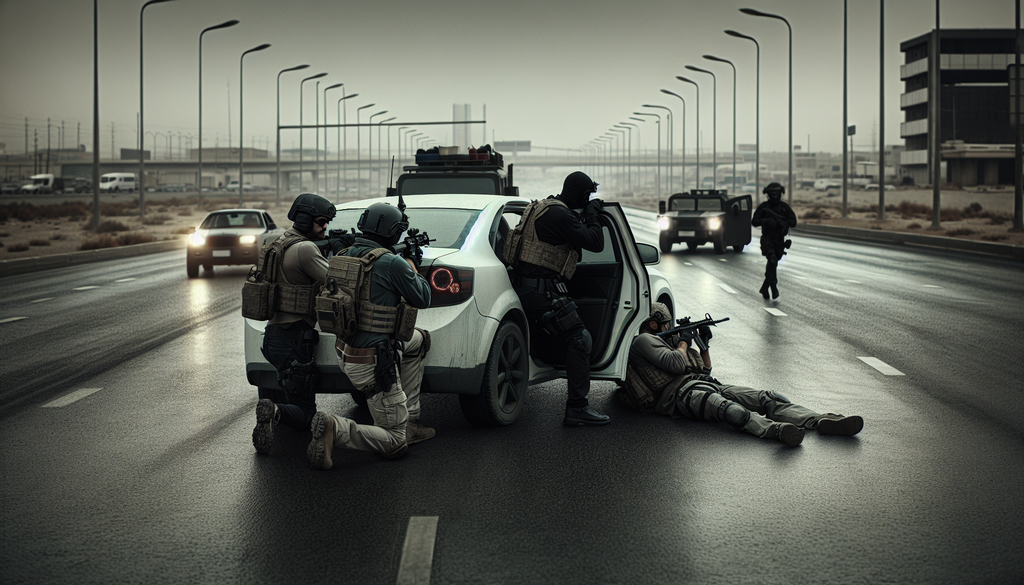
Millions across the Middle East long for peace, seeking a life away from violence and death. Yet, the past year—one of the most brutal in recent history—has once again proven that peace remains elusive unless the region’s political, strategic, and religious fractures are repaired. As it stands, war continues to mold the Middle East's political landscape.
The Hamas offensive was birthed from a century-long unresolved conflict. As Hamas forced its way through the lightly guarded border, Israel experienced the deadliest day in its modern history.
Approximately 1,200 people, most of them Israeli civilians, were killed. Israel’s Prime Minister, Benjamin Netanyahu, conveyed the situation to President Joe Biden, stating that such brutality had never been seen during the state’s existence; not since the Holocaust. For Israel, Hamas' attacks posed a direct threat to its survival.
In retaliation, Israel dealt numerous devastating blows to Gaza’s Palestinian population, claiming nearly 42,000 lives, again primarily civilians, according to Gaza’s Hamas-controlled health ministry. Vast areas lie in ruin, and Palestinians now accuse Israel of orchestrating genocide.
The conflict continues to escalate. A year after Hamas initiated its offensive, the Middle East edges ever closer to a deeper, more extensive war.
This prolonged violence has shattered many previous assumptions. One of these was Netanyahu’s conviction that the Palestinian issue could be managed without concessions toward their drive for self-determination.
With that are gone the naive hopes nurtured by Israel’s Western allies. Leaders in the U.S. and U.K. had persuaded themselves that Netanyahu, a lifelong opponent of Palestinian statehood, could somehow be made to regard it as a solution to end the fighting.
This expectation was misplaced. Deep-rooted distrust of Palestinians, widespread among Israelis and encompassing Netanyahu's personal ideology, destroyed any progress toward an American-led peace initiative as well.
President Biden’s proposed “grand bargain” aimed to pave the way for Israeli diplomatic recognition by Saudi Arabia—returning for granting Palestinian statehood. Saudi Arabia, in turn, would secure a defense pact with the U.S.
However, the plan never made it past the initial phase. Netanyahu declared in February that granting Hamas statehood would be a “huge reward,” while cabinet member Bezalel Smotrich described it as an existential threat to Israel.
• Ongoing reports as Israel strikes Gaza and Beirut.
• An Israeli kibbutz still struggles to heal, one year since October 7th.
• Gaza Strip mapped: How life has deteriorated in the territory.
• BBC journalists recount a year of war.
• New sources shed light on a military base’s fall.
Meanwhile, Yahya Sinwar, Hamas' leader, nurtured his own delusion. A year ago, he likely hoped Iran’s “axis of resistance” would unleash full-scale war against Israel. It didn’t materialize.
Sinwar’s planned 7 October attack on Israel was such a well-kept secret it caught not only Israel unprepared but potentially even some within Hamas leadership abroad. Diplomatic sources revealed that even top leaders in exile in Qatar may not have known due to their lax security measures—routinely using open communication channels vulnerable to eavesdropping.
Iran, contrary to Sinwar’s hopes, steered clear of escalating the conflict. As Israel invaded Gaza, and American forces moved to shore up Israeli defenses, Iran signaled its unwillingness to trigger a broader war.
Meanwhile, Iran’s Lebanese ally, Hezbollah, matched Israel's aggression by directing rockets at its northern regions. Despite Israel's military strikes, the targets remained largely limited to military sites. More than 60,000 Israelis living near the border were evacuated, while Hezbollah in Lebanon saw twice as many displaced over months of bombardment.
Though Israel made it clear it wouldn’t tolerate an endless war with Hezbollah, the belief prevailed that Israel’s fear of Hezbollah’s hardened legacy and large missile reserves would deter them.
But in a bold turn last September, Israel took the offensive. Even military analysts and skeptics couldn’t anticipate the swift damage dealt to Iran’s powerful proxy.
Israel leveraged remote technology, detonating booby-trapped radios and taking out Hezbollah’s communications. A massive airstrike left 600 dead in Lebanon, mostly civilians, marking the beginning of one of modern warfare’s harshest bombardments.
This offensive punctured Iran’s confidence in its “axis of resistance.” The key blow came on 27 September when Israel bombed the southern suburbs of Beirut, killing Hezbollah chief Hassan Nasrallah and many of his deputies.
While the strike might’ve devastated Hezbollah’s leadership, Israel’s attempt to force a ceasefire was unsuccessful. The ground invasion of southern Lebanon continued, failing to convince Iran to step away from the conflict.
Uncertainty brewed in Tehran, as Israel’s relentless pressure seemed spurred on by Iran’s initial reluctance. On 1 October, Iran finally retaliated by launching ballistic missiles at Israel.
___
Kibbutz Kfar Aza sat mere meters from the Gaza border’s protective ring. This small, close-knit agricultural community found itself among Hamas' first targets during the 7 October attack. Sixty-two of its members were killed, and of the 19 hostages captured, two were accidentally killed by Israeli forces during an attempted rescue. Five remain in Gaza's hands.
Journalists were brought to Kfar Aza three days later, on 10 October. Battle raged not far from the kibbutz, Israeli civilians lay lifeless while combat troops hunted for hiding Hamas fighters. The lawns, once tidy and green, were now marred by decomposing bodies of Hamas operatives killed during the assault.
A year later, though the dead are interred, little progress has been made in restoring normalcy. The community has not returned, and bullet-riddled buildings stand as grim monuments to lives lost. Memorials and large photographs mark the homes where families perished.
One local, Zohar Shpak, survived the assault with his family. He guided visitors through the devastated homes of neighbors who were not as lucky. At one house, the father of a victim had spent weeks combing the earth to recover the missing head of his son, who had been buried without it.
The personal and communal trauma remains vivid. Many of Kfar Aza’s residents had once supported the left-wing position that peace could only come by recognizing Palestinian independence. Yet, they now feel betrayed by Netanyahu, believing his leadership left them vulnerable on that fateful day.
Even Zohar, who once ferried Palestinians to Israel for medical treatment, feels conflicted. “I don’t trust them,” he admitted. “But I want peace. I want to visit Gaza’s beach. But I can’t trust them anymore.”
Hamas leaders, however, do not view their decisions on 7 October as missteps. They claim the blame lies with Israeli occupation and its endless thirst for destruction.
In an interview conducted just hours before the 1 October Iranian attack on Israel, Khalil al-Hayya, a senior Hamas leader, defended the raid, arguing it was essential in raising global awareness about the plight of Palestinians.
“The world needed to hear us—the Palestinians,” al-Hayya said. “This was a message to the Zionist enemy—Israel.”
In response to the initial assault, Netanyahu called for “mighty vengeance,” vowing to eradicate Hamas as a political and military force while ensuring the return of Israeli hostages. As of now, Netanyahu remains steadfast in his promise of “total victory.”
However, political critics claim he intentionally delays a ceasefire and hostage negotiations to placate right-wing extremists within his government. Some even accuse him of prioritizing his political survival over the safety of the nation.
While Netanyahu faces strong opposition at home, the war itself garners significant support among Israelis. Most have grown indifferent to the Palestinian humanitarian crisis unfolding in Gaza.
In fact, just days into the war, Defense Minister Yoav Gallant announced a “complete siege” of Gaza, declaring: “no electricity, no food, no fuel… we are dealing with human animals.”
Though international pressure has forced Israel to relax its blockade slightly, Netanyahu, speaking at the United Nations, still insisted that Gazans had sufficient provisions. Evidence, however, tells a different story. UN humanitarian agencies continue to call out the “appalling human suffering” and widespread displacement experienced by Gaza’s over 2 million residents.
As data gathered by BBC Verify shows, satellite imagery highlights entire neighborhoods in Gaza reduced to rubble, with upwards of 58.7% of buildings either damaged or destroyed. But perhaps more harrowing than the structural devastation is the mass displacement of people, with civilians often ordered to relocate by the IDF.
Counting more than 130 evacuation orders from the IDF, directed to over 80% of the Strip, BBC Verify documented the frequent, chaotic exodus of people, exacerbating the already dire humanitarian situation.
Though a single area—al-Mawasi—was designated as a “humanitarian zone,” it hasn’t escaped bombing, showing how relentless the siege has been.
___
Amid the mass exodus, one family from the region attempting to survive was that of Insaf Hassan Ali and her two children. Fleeing along Gaza’s major artery, Salah al-Din Street, they joined a throng of others headed south under IDF orders, experiencing terror as nearby vehicles burst into flames from Israeli strikes.
Before the war, Insaf’s family lived a comfortable middle-class existence, but the relentless displacement orders have left them destitute and uprooted. Now, they live in a tent—constantly under threat, whether from snakes, scorpions, hunger, or another air strike.
Insaf mourns her former life, reminiscing while battling to keep her children, both suffering from malnutrition and disease, alive. Describing the first days of bombing, she recalls the sight of destruction surrounding them, labeling it a scene from judgement day.
Her son, Anas, only 11, has also been deeply affected. “There is no future for Gaza’s children,” he lamented. Anas lost friends, his school, the mosque where he memorized the Quran—everything he cherished reduced to rubble.
Their story echoes the sentiments of countless others displaced by the war. Any hope hinges on an eventual ceasefire to allow room for diplomacy. Without one, the spiral into further calamity seems inevitable, with both Israelis and Palestinians doomed to repeat history.
UN humanitarian agencies have condemned both Israel and Hamas, criticizing both for their flagrant violations of international law over the past year.
For the Israelis, the visceral memories of Jewish persecution, mass killings, and particularly the Holocaust, were reignited by Hamas’s attack. Avraham Burg, an Israeli writer, highlighted the psychological impact, calling it “a return of the ghosts of the pogroms.”
Palestinians, too, feel haunted, seeing the war as another “Nakba” — another catastrophe. In his latest work, Palestinian writer Raja Shehadeh accuses Israelis of viewing Gazans as universally guilty, with no regard for civilian life.
However, as much as Israelis affirm their right to defend themselves, the aftermath signals a hard truth—Palestinians won’t accept perpetual subjugation under Israeli military occupation.
It’s this duality—through years of conflict—that fuels the shared yet strained existence of both populations. When the fighting subsides, perhaps new leaders will be able to create avenues toward peace.
But for now, looking beyond 2024 and toward the 2025 U.S. presidential transition, the Middle East remains fraught with danger and volatility.
The Israel-Iran confrontation has intensified. What began as a regional power clash now sees nations teetering on the brink of total war.
Although retaliation from Israel over Iran’s 1 October missile attack has yet to materialize, signs point to severe repercussions. President Biden, while heavily supporting Israel, is strategically attempting to de-escalate, navigating the perilous path between diplomacy and the looming threat of escalation.
Amid this geopolitical chessboard, Netanyahu and his administration seem convinced they hold the upper hand despite the massive surprise of the initial Hamas assault on 7 October. Yet for Israel, the true test remains: can it achieve lasting strategic victory?
Hezbollah, even wounded, still fights, and if Iran mirrors its aggression, it could draw other regional players into the conflict. Further involvement from Iranian-backed militias in Iraq poses additional risks, and American interests could become targets.
Saudi Arabia, watching the unfolding catastrophe, remains cautious. Crown Prince Mohammed Bin Salman has indicated he might recognize Israel, but only in exchange for Palestinian independence and security guarantees from the United States.
Biden’s delicate balancing act—supporting Israel while seeking to avoid broader regional conflict—puts America at the forefront of the unfolding saga. Biden’s pledge to come to Israel’s aid binds the U.S. to this dangerous and unpredictable milieu.
Israel’s assassination of Nasrallah, while a significant blow to Iran’s strategic network, risks promoting dangerous fantasies. Some in Washington and Tel Aviv may view this as an extraordinary opportunity to forcibly reshape the Middle East—an ambition that should be approached with extreme caution.
The last attempt of such a transformation culminated in the disastrous U.S. invasion of Iraq in 2003. Instead of eradicating regional extremism, it only fueled further chaos.
To prevent history from repeating, the priority must be an immediate ceasefire in Gaza. If peace can be accomplished here, it may offer an avenue for the warring factions to halt the cycle of violence and foster diplomatic solutions.