Heading to your next stop by swimming? This travel craze demands endurance and power
Swimming holidays epitomize the essence of slow travel – and in the wake of the pandemic, their popularity has surged like never before.
The soft blue hues of the copper domes atop Our Lady of the Rock church stood out clearly as we glided across the Bay of Kotor, departing from the charming fishing village of Dražin Vrt. Beneath us, schools of Adriatic fish—sardines, mackerel, and sprats—darted through the crystal-clear waters, alongside clusters of sea anemones and urchins. The sea sparkled in a radiant Caribbean blue, and when I lifted my head, the view was an awe-inspiring panorama of rugged mountains.
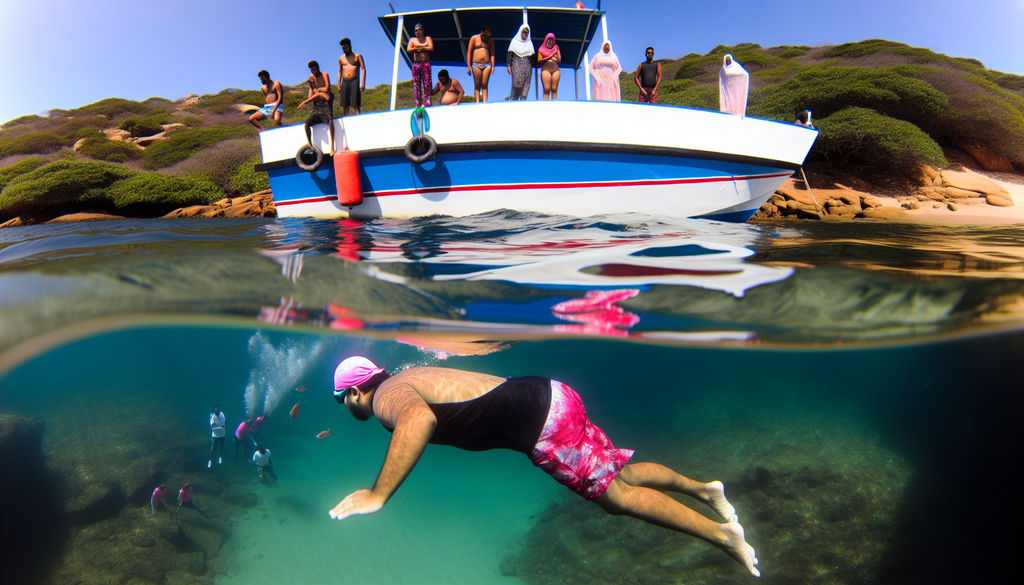
That unforgettable swim marked the beginning of an adventure through the Montenegrin fjords. Unlike a conventional beach holiday, where a dip in the sea is an occasional indulgence, this was a journey propelled by swimming. Our group traversed the coastline by water, supported by a boat that carried our essentials from one picturesque stop to the next. Each day unfolded in a pattern of swimming from cove to cove and island to island, breaking only for a leisurely lunch in a historic town or fishing hamlet before plunging back into the serene, endless blue.
For what felt like an eternity, the church perched in the heart of the bay remained stubbornly distant, though our strokes carried us steadily forward. The water was warm and clear, enclosed by dramatic, craggy peaks, making the journey as rewarding as the destination. Local lore tells of sailors who, after discovering an icon of the Madonna and Child on a rock, vowed to create an island by adding a stone after each safe voyage—eventually forming the foundation upon which the church now stands.
Then, suddenly, the islet came into sharp focus. Within moments, we were scrambling ashore, earning curious glances from a wedding party nearby. Our safety boat crew promptly handed us towels and dry clothing so that we could enter the lavishly decorated interior of the church respectfully. Unlike most visitors who arrive via motorboat, we'd swum there, a feat that perhaps offered us a glimpse of the relief those ancient sailors must have felt upon reaching home safely.
"Swimming lets you see the world from a unique perspective, at water level," notes Ella Foote, editor of Outdoor Swimmer Magazine and author of How to Wild Swim. "Much of civilization developed around bodies of water—rivers, coastlines—because water was once the primary mode of transportation. In modern times, we’ve lost that deep connection, but swimming allows us to rediscover landscapes through a different lens."
Our group—perhaps best described as "a goggle" of swimmers—comprised 15 individuals from around the world, ranging in age from early 20s to late 60s. What united us was a love for the water, though our experience levels varied from recreational pool swimmers to seasoned open-water experts and triathletes.
We divided into three ability-based groups, each identifiable by the color of our swim caps. A small inflatable boat accompanied each group for safety, while a larger support vessel transported our belongings and provided a resting spot. On average, we covered around 5km per day—a demanding yet exhilarating distance. Knowing I could take a break aboard the boat if needed made the challenge feel more achievable.
Swimming for leisure has deep roots in Britain, tracing back to Prince Henry Frederick Stuart, the "Lost King" who succumbed to typhoid after swimming in the Thames, and the Victorians, who turned seaside resorts into fashionable retreats. Yet, perhaps no one embodied the spirit of adventure quite like the poet Lord Byron.
In 1820, a 22-year-old Byron completed a daring swim across the Hellespont—now called the Dardanelles—a turbulent four-mile strait between Europe and Asia. Inspired by the Greek myth of Leander’s nightly swims to visit his lover, Byron’s feat became legendary.
"When I read about Byron’s Hellespont swim, I knew I wanted to do the same for my 30th birthday," says Simon Murie, founder of SwimTrek, the world’s pioneer in swimming holidays. "The hardest part wasn’t the swim itself, but securing permissions, mapping out the route, and finding an escort boat. That’s when I realized that others likely had the same dream but were put off by the logistics—so I decided to take care of it for them."
Thus, 21 years ago, Murie launched SwimTrek from the UK’s southern coast in Brighton, initially facing skepticism.
"Our first trip was island-hopping in the Greek Cyclades. I had everything meticulously arranged, but when we arrived, the hotel had given away our rooms. The owner couldn’t fathom that we had swum there!" Fortunately, the issue was resolved, and today, SwimTrek welcomes over 3,000 swimmers annually to 40 global destinations—an expansion far beyond the four original sites that hosted 100 participants in its first year.
Other companies have followed suit, some offering similar itineraries, while others—like The Big Blue Swim—focus exclusively on Greek island excursions.
For my Montenegrin trip, I swam with Strel Swimming, a company founded in 2010 by father-son team Martin and Borut Strel and specializing in Mediterranean adventures.
"My father Martin was the first person ever to swim the full length of the Amazon River," explains Borut. "I worked alongside him on expeditions for the Yangtze, Mississippi, Danube, and Paraná, so when the opportunity arose to launch our own enterprise, it was a natural next step. We prioritize sustainability, ensuring minimal environmental impact while supporting local businesses."
By day three, we circumnavigated Mamula Island, crowned by an imposing Austro-Hungarian fortress that once guarded Kotor Bay’s entrance and later served as a World War II detention facility.
"I’ll always remember that island," reflects Nancy Meade, an attorney from Anchorage, Alaska. "The surging waves, shifting currents—it’s an experience I wouldn’t have fully appreciated had I only seen it from a boat. Swimming gives you an intimate sense of connection to a place that other modes of travel simply can’t."
More like this:
• Cheese, beer, and a breathtaking view
• Why wild swimming is Britain's latest obsession
• The River Waveney: Britain’s best-kept waterway secret
The growing interest in swimming holidays mirrors the broader enthusiasm for open-water swimming, which soared in the UK after the 2012 London Olympics introduced its first open-water event. This trend accelerated globally during the pandemic, as indoor athletic facilities shuttered, prompting many to seek solace in natural waters.
As with any sport, safety is paramount. Trained guides thoroughly assess swim sites, adjust routes for weather conditions, and provide pre-swim safety briefings. Less confident swimmers receive encouragement and tailored support to maximize their enjoyment.
"Every trip holds special moments," says SwimTrek guide Marlys Cappaert, who has led excursions for a decade. "Witnessing someone overcome a fear or complete a swim they didn’t think they could manage—those moments are truly moving. I once had a guest who, six months prior, was unsure if she’d even make the trip due to a serious medical diagnosis. Overcoming that hurdle brought her to tears—which quickly had the whole group crying along with her."
On our final day, we followed Luštica Peninsula’s coastline and entered a former submarine tunnel, which the Yugoslavian Navy had once used as a concealed wartime refuge. The shadowy interior was damp and cold, but we soon emerged into daylight and reached the famed Blue Cave. Inside, sunlight reflected off the sandy seabed, igniting the waters in a dazzling turquoise glow. While tourists snapped photos from nearby boats, we relished our freedom, floating deep within the cavern in quiet wonder.
In the words of Lord Byron’s Childe Harold’s Pilgrimage:
'There is a pleasure in the pathless woods,
There is a rapture on the lonely shore,
There is society where none intrudes,
By the deep Sea, and music in its roar.'
--
Enjoy this story? Subscribe to The Essential List for exclusive features, videos, and can’t-miss updates, delivered twice weekly.
For more travel inspiration, follow us on Facebook, X, and Instagram.