Amazon and Starbucks employees go on strike—Trump could be a factor
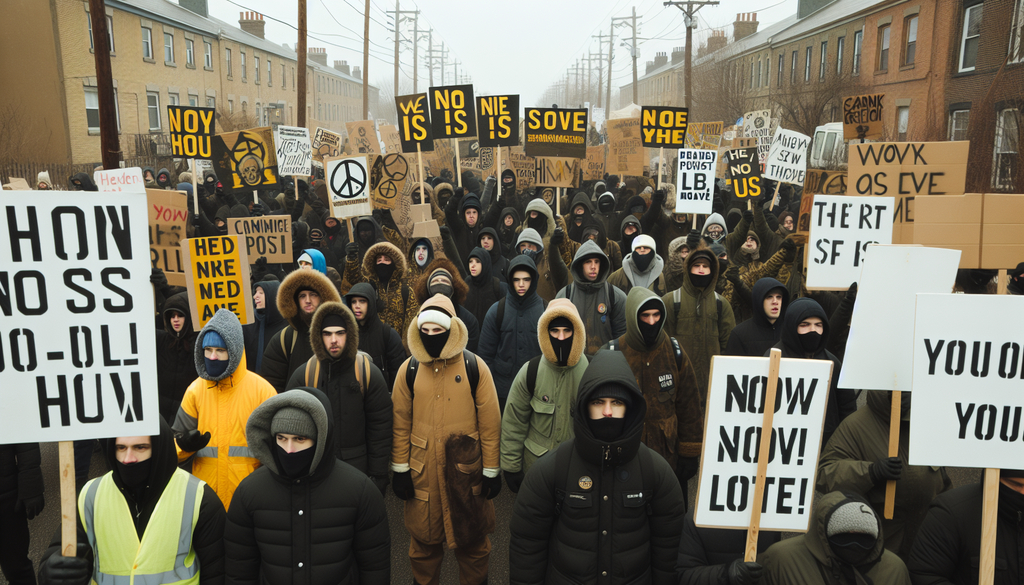
Delivery drivers for Amazon and baristas at Starbucks have gone on strike in several U.S. cities to pressure the two corporate giants into recognizing unionization efforts or formalizing their first labor contracts.
These strikes, which began on Thursday and Friday, occur amidst a broader wave of disputes between corporations and organized labor. This year, established labor unions secured notable agreements following strikes by workers in industries such as aircraft manufacturing, port operations, entertainment, and hospitality — sectors including Boeing employees, dockworkers, video game actors, and workers at Las Vegas hotels and casinos.
Yet, employees at Amazon, Starbucks, and other recognizable consumer-focused brands are still battling for their inaugural contracts. While many Amazon drivers and warehouse workers have voted to unionize, the company has refused to recognize their efforts, despite claims from the Teamsters that they officially represent these employees. On the Starbucks front, though the company has historically resisted unionization, it had agreed to complete contract talks by year’s end.
What makes these strikes timely?
Striking during the holiday season—marked by heightened economic activity—can enhance unions’ influence at the negotiation table or amplify public support for their causes among both workers and consumers.
The union drives at Amazon and Starbucks surged after the COVID-19 pandemic, a time that underscored the critical roles of frontline workers and deepened discussions about economic inequality for many wage-earners. Successful unionization efforts also emerged at smaller retail chains like bookstores, as well as at some Apple, Trader Joe's, and REI locations.
However, translating unionization into actionable labor contracts is often an uphill battle. For Amazon and Starbucks, both non-union workplaces before the pandemic, workers' attempts to secure contracts have yet to yield results. Both companies, headquartered in Seattle, remain pivotal battlegrounds in these labor disputes.
John Logan, director of labor and employment studies at San Francisco State University, noted that these workers are urgently seeking progress before the anticipated challenges posed by President-elect Donald Trump’s administration. Once Trump appoints a Republican majority to the National Labor Relations Board (NLRB), unions may face a less favorable environment.
“These unions are striving to push these disputes into the spotlight and apply public pressure on the corporations,” Logan shared in a statement. “Delays into next year, with battles fought largely via the NLRB and courts, could deal a major blow to unions. This current window may be their best shot to advance their causes before Trump assumes office.”
Ironically, Trump has hinted at a potentially softer stance toward organized workers in his second term. For instance, he recently nominated Oregon Representative Lori Chavez-DeRemer to lead the Department of Labor, elevating a Republican with strong union support, including endorsements from the Teamsters. Furthermore, Teamsters President Sean O’Brien notably spoke at this summer’s Republican National Convention.
The Teamsters take on Amazon
The Teamsters union reported that Amazon workers are striking at delivery stations in cities such as Southern California, San Francisco, New York City, Atlanta, and Skokie, Illinois. The strikes come after Amazon failed to meet a Sunday deadline for contract negotiations set by the union. Additionally, the Teamsters announced plans for strikes at a major New York warehouse, where employees joined the Amazon Labor Union in 2022 and later aligned with the Teamsters.
At the heart of the Teamsters' demands are better wages, stronger benefits, and safer working conditions for Amazon employees, many of whom face economic challenges despite working for the multitrillion-dollar e-commerce platform. While the union hasn’t provided a headcount for striking participants, it has focused its organizational efforts on delivery drivers.
Amazon claims these drivers are contractors, not direct employees, as their employers are third-party delivery firms hired to transport Amazon packages. This arrangement complicates unionization campaigns in an industry traditionally dominated by the Teamsters. Still, the union has challenged this classification, arguing that drivers—who wear Amazon uniforms and operate its branded vehicles—should be recognized as employees.
Amazon, in turn, accuses the union of misrepresenting facts and boasts its competitive compensation packages, including an average warehouse and transportation worker wage of $22 per hour alongside benefits. The company also highlighted recent pay increases for subcontracted drivers.
In September, the NLRB issued a complaint stating Amazon shares joint responsibility for delivery drivers employed at a California station and faulted the company for refusing to negotiate a contract. Moreover, the Teamsters maintain that they represent Amazon warehouse workers, including those at a prominent New York fulfillment center that unionized under the Amazon Labor Union.
While Amazon disputes the NLRB-backed 2022 election at the warehouse, alleging procedural flaws, the company has taken its objection to federal court. Notably, Amazon is joined by Elon Musk’s SpaceX in challenging the NLRB's constitutional standing. Earlier this year, the Supreme Court dealt a blow to labor unions, siding with Starbucks in a case that limits the NLRB’s ability to secure court orders in labor disputes.
Starbucks and union contract discussions
Unlike Amazon, Starbucks has been actively engaged in contract talks. However, Starbucks Workers United, the union representing employees at over 500 U.S. locations since 2021, accuses the company of failing to fulfill a February pledge to solidify labor contracts by year’s end.
The union has also pushed Starbucks to address unresolved legal matters, including hundreds of unfair labor practice claims filed through the NLRB. Notably, the board has also charged Amazon with similar labor violations.
The strikes organized by Workers United began on Friday in cities like Chicago, Los Angeles, and Seattle. According to the union, these actions were spurred by Starbucks' recent economic proposal, which included no immediate wage increases for unionized baristas and only a modest 1.5% raise in the future.
By Saturday, the strikes had expanded to additional cities, including Denver, Pittsburgh, and Columbus, Ohio. Plans for Sunday called for strikes in other metro areas such as New York, Philadelphia, and St. Louis. While specific participation figures remain unclear, union leaders say dozens of Starbucks locations have joined the strike.
Starbucks, however, countered that Workers United prematurely ended a bargaining meeting this week. The company has also highlighted its compensation package, stating it offers baristas who work at least 20 hours weekly a pay-and-benefits package valued at $30 per hour.
This isn’t Starbucks workers’ first strike action this year. Labor leaders suggest the current strikes could encompass hundreds of stores nationwide by Christmas Eve.
Patricia Campos-Medina, a former U.S. Senate candidate from New Jersey and an expert in labor relations at Cornell University’s Worker Institute, predicts a surge in union activities before Trump assumes office. “Trump’s handling of these labor pressures will serve as a test of his promises to support the working class,” she noted.
___
Reporting contributions were made by Dee-Ann Durbin in Detroit.