Putin downplays fuel shortages in Russia while intensifying assaults on Ukraine
Despite widespread fuel shortages across Russia, President Vladimir Putin has shown little public concern over Ukraine’s escalating strikes on Russian oil refineries.
He has characterized the disruption to one of the world’s largest oil producers as “not critical,” brushed aside calls for a ceasefire and reaffirmed that military operations will continue until his objectives are achieved.
Putin has framed the attacks on Russian energy infrastructure as an attempt by Kyiv to divert attention from its battlefield setbacks, even as some analysts note that Russian advances have slowed in recent months. The Russian leader appears confident that his administration can contain the fuel crisis and prevent it from weakening domestic backing for the war that began more than four years ago.
Meanwhile, the Russian military launched an intense 11-hour assault on Kyiv overnight into Thursday, killing at least 30 people. It marked one of the most lethal strikes on the Ukrainian capital since the start of the full-scale invasion.
Below is a closer examination of the recent exchange of attacks and Putin’s determination to press on with the war:
Gas shortages worsen in Russia as more oil facilities are hit
Since March, Ukrainian forces have reportedly carried out more than 50 attacks on oil refineries and other energy infrastructure in Russia and in occupied Crimea. Ukrainian officials say the campaign is designed to increase pressure on Moscow to end the conflict.
These strikes have also made the war more tangible for ordinary Russians, challenging the Kremlin’s portrayal of the conflict as distant from daily life.
According to energy analysts, roughly one-third of Russia’s oil refining capacity has been disrupted. The damage in many cases is substantial and could require significant time and investment to repair.
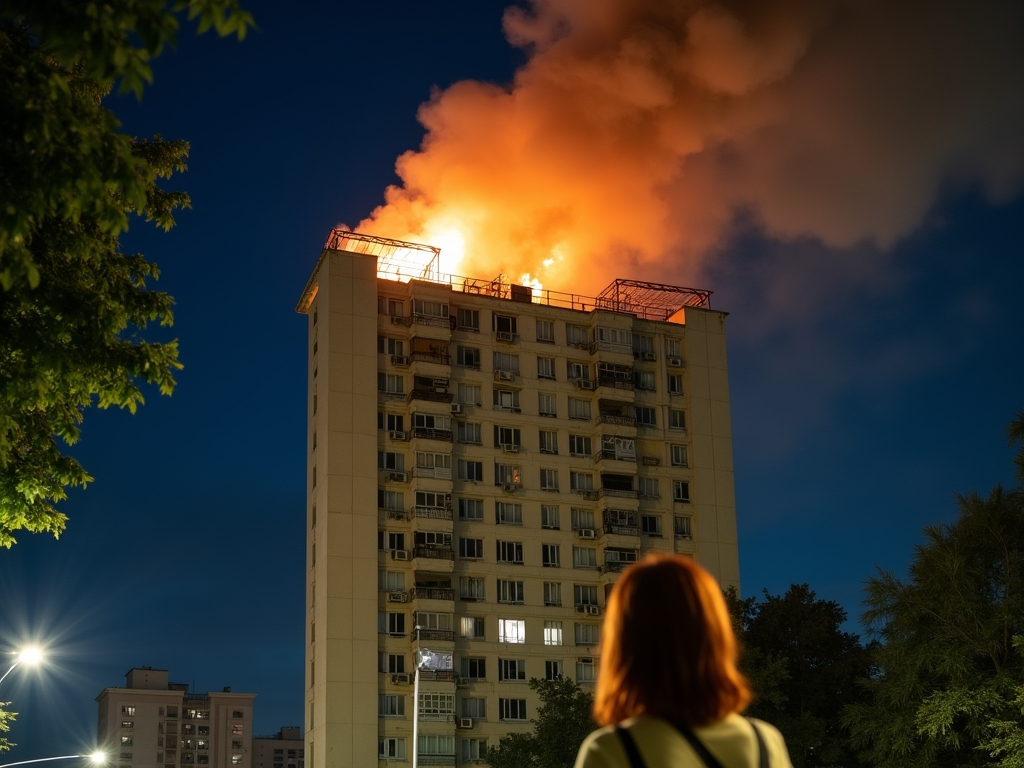
Even Moscow, protected by extensive air defenses, has not been spared. A major refinery in the capital was hit twice, with a second strike in mid-June igniting a large fire and damaging essential equipment. Repairs are expected to take months.
Official figures indicate gasoline production has fallen by about 17%, dropping to approximately 850,000 barrels per day. Authorities in several regions have introduced fuel rationing, and drivers have faced long queues at filling stations.
Crimea, annexed by Russia in 2014, has experienced some of the most severe shortages. At times, retail gasoline sales to private consumers have been suspended entirely.
Putin downplays the impact of Ukrainian strikes
Last weekend, Putin convened senior officials to address the fuel situation.
In televised remarks, he acknowledged that Russia is experiencing a “difficult period.” He promised faster repairs to damaged facilities and suggested that gasoline imports could offset what he described as temporary disruptions. He also announced plans to increase production of air defense systems to counter further Ukrainian strikes.
Putin depicted the attacks as an effort to sow division within Russian society, disrupt Moscow’s military campaign and push the Kremlin toward negotiations on unfavorable terms.
“We will not allow that,” he stated.
Although Putin argued that Ukraine’s long-range strikes on oil infrastructure have “no impact” on the situation at the front, Western military observers contend that attacks on supply lines and logistics hubs have complicated Russian operations and slowed advances, contributing to a prolonged stalemate.
Putin continues to insist that Russian troops are moving forward along the roughly 1,000-kilometer front line. In a recent state television interview, he cited specific villages and even streets as evidence of ongoing gains.
Putin dismisses Ukraine’s ceasefire offers
Responding to Ukrainian President Volodymyr Zelenskyy’s proposal for talks, Putin challenged him to travel to Moscow — a suggestion Kyiv has rejected outright.
He has also turned down ceasefire proposals supported by Ukraine and its Western partners, arguing that any pause in fighting would give Ukrainian forces time to regroup and strengthen their positions.
Putin has made a truce contingent on Ukraine withdrawing from the portions of the Donetsk region it still controls, a condition Kyiv refuses to accept. He has further insisted that any comprehensive peace agreement must include Ukraine abandoning its NATO ambitions, scaling back its military and guaranteeing protections for Russian language and culture.
In a recent interview, Putin claimed that Ukraine had suggested limiting combat to the four regions Russia has declared annexed — Donetsk, Luhansk, Kherson and Zaporizhzhia — even though Russian forces do not fully control them. He said he rejected the idea because it would allow Ukrainian troops to redeploy from other sectors and concentrate their defenses in the southeast.
“Facing severe manpower shortages, Ukraine’s military seems to view this as a lifeline,” Putin said. “Preserving the Kyiv authorities is not our objective.”
The Kremlin stated that the proposal was conveyed through confidential channels, while Ukrainian officials have not publicly confirmed such discussions.
Putin also dismissed Kyiv’s suggestion of a mutual halt to long-range strikes inside each other’s territory. He argued that Russia’s deep strikes are “far more powerful and destructive.”
During Thursday’s deadly attack on Kyiv, residential neighborhoods were struck again, despite Russian claims that the targets were military sites. Ukrainian strikes within Russia, by contrast, have primarily focused on oil facilities, weapons plants and other strategic assets.
According to United Nations figures, more than 16,000 Ukrainian civilians have been killed since the war began.