Vance lands in Switzerland for U.S.-Iran negotiations
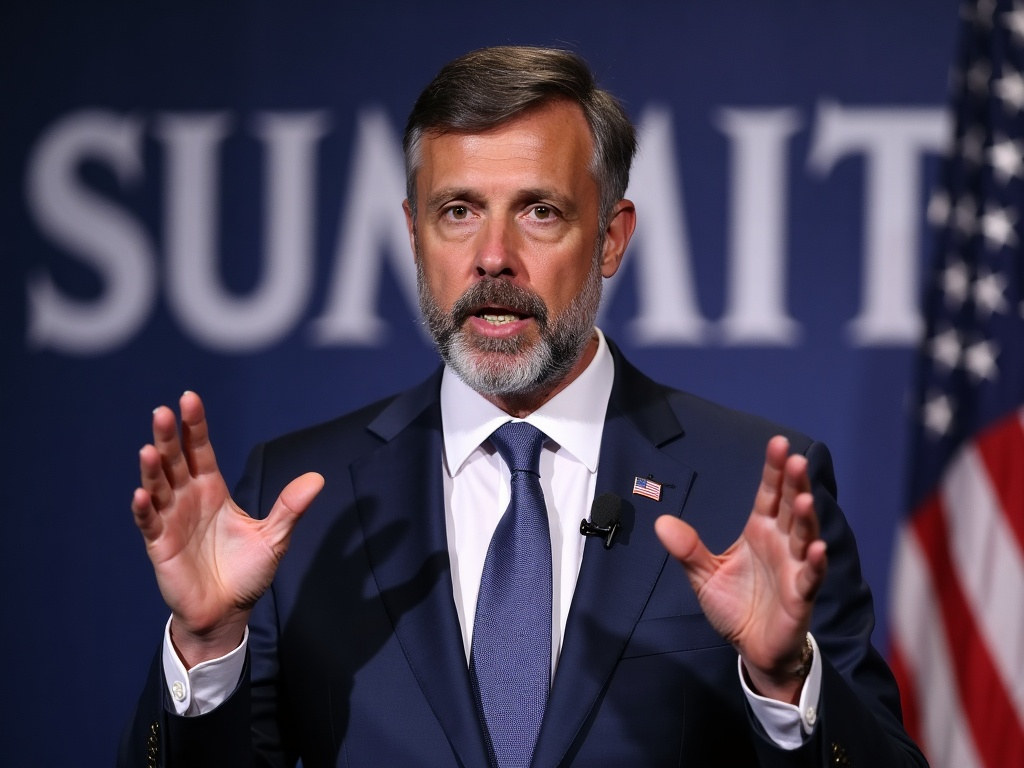
United States Vice President JD Vance has arrived in Switzerland to meet Iranian officials for discussions on putting into practice the interim agreement aimed at ending the US conflict with Iran.
Earlier this week, Washington and Tehran agreed to extend their negotiations under a 60-day ceasefire. However, tensions escalated on Saturday when Iran’s Islamic Revolutionary Guard Corps (IRGC) declared the closure of the Strait of Hormuz in response to Israeli strikes in Lebanon. Despite the announcement, the US military reported that commercial shipping continued to pass through the strategic waterway.
Recommended Stories
• list 1 of 4Iran risks isolation by overusing the Strait of Hormuz leverage
• list 2 of 4Iran announces Strait closure as Pakistan confirms fresh US talks
• list 3 of 4Tehran shuts key waterway amid Israeli strikes in Lebanon
• list 4 of 4Trump says no Strait tolls during truce, leaves option open later
Negotiations, attended by international mediators, were scheduled to begin Sunday morning at the Buergenstock resort in the Swiss Alps, according to Switzerland’s Federal Department of Foreign Affairs.
The US delegation is headed by Vice President Vance, while Iran’s team is led by chief negotiator Mohammad Bagher Ghalibaf.
Speaking to reporters before departing from Joint Base Andrews in Maryland, Vance expressed cautious optimism. He said he hoped the discussions would advance both the nuclear file and efforts to secure a ceasefire in Lebanon, noting that talks could last several days.
Iranian Foreign Ministry spokesperson Esmaeil Baghaei confirmed that a four-party meeting involving Iran, the United States, Qatar and Pakistan would take place later in the day, following earlier consultations with Qatari and Pakistani mediators.
In remarks carried by state media, Baghaei stated that the situation in Lebanon would be a primary focus, alongside matters such as frozen Iranian assets and the country’s oil exports.
Reporting from Buergenstock, Al Jazeera’s Osama Bin Javaid said both sides were attempting to narrow significant differences in their positions.
He noted that the high-level representation underscored the importance of the meeting.
According to the correspondent, Washington is eager to prioritise the nuclear programme, while Tehran is pressing for an immediate halt to hostilities in Lebanon.
Ending the fighting in Lebanon was among the commitments included in this week’s interim agreement, which extended the ceasefire for 60 days and opened negotiations on Iran’s nuclear activities and related issues.
Yet the arrangement is already under pressure. Israeli strikes in Lebanon on Saturday reportedly killed dozens, prompting the IRGC to cite those attacks when announcing the Strait of Hormuz closure. The US military maintained that maritime traffic continued uninterrupted.
Accusing Israel of violating ceasefire commitments, the IRGC warned that vessels entering the strait could face danger. The passage is a critical artery for global oil and gas shipments.
US Central Command (CENTCOM), however, stated that 55 merchant ships crossed the strait on Saturday, transporting more than 17 million barrels of oil to international markets. It added that US forces would continue to safeguard commercial navigation.
President Donald Trump said no transit fees would be imposed on ships using the strait during or after the 60-day ceasefire. However, he indicated that the United States might consider such charges if peace negotiations collapse.
In a social media message, Trump suggested that a toll could be introduced as compensation for what he described as US protection of Middle Eastern countries if no agreement is reached.
Security analyst and former Austrian defence attache Wolfgang Pusztai cautioned that Iran should think carefully before escalating threats to close the Strait of Hormuz, noting that many of the shipments benefit countries aligned with Tehran.
He described the strait as a powerful strategic lever for Iran but warned against relying on it excessively.
Pusztai pointed out that most vessels using the route are destined for Asian markets such as India, China and Pakistan rather than the United States or Europe.
Iran seeks implementation of the deal
These developments risk complicating efforts to advance the interim accord brokered by Pakistan and signed on Wednesday by Presidents Trump and Masoud Pezeshkian to bring an end to nearly four months of conflict.
Mohammad Mokhber, an adviser to Iran’s supreme leader Ayatollah Mojtaba Khamenei, accused Washington of failing to uphold the first provision of the 14-point agreement, which calls for a ceasefire on all fronts, including Lebanon.
He warned that without full implementation, regional energy flows would remain disrupted.
Reporting from Tehran, Al Jazeera’s Resul Serdar Atas said Iran’s delegation would likely concentrate on specific provisions of the memorandum of understanding.
These include ending hostilities in Lebanon, lifting the US maritime blockade, reopening the Strait of Hormuz, unfreezing Iranian financial assets, and easing sanctions on Iran’s oil and petrochemical sectors.
According to Atas, Tehran does not expect every issue to be resolved in a single session but wants to see tangible steps toward implementation.
He added that Lebanon holds strategic importance for Iran’s regional influence. Maintaining the so-called “axis of resistance,” including longstanding support for Hezbollah, is central to Tehran’s geopolitical standing and signals continued backing for its regional allies.
The ceasefire in Lebanon appeared increasingly fragile as Israeli forces continued operations on Saturday, reportedly killing dozens, according to Lebanese state media.
The Iran-aligned Hezbollah movement also claimed attacks against Israeli troops.
Israel said its actions were in response to Hezbollah assaults, while the group accused Israel of repeated truce violations and pledged to resist what it called attempts to secure unrestricted movement inside Lebanon.
The Israeli military confirmed that one soldier had been killed in combat, marking the fifth such fatality since the US-Iran agreement was reached.
Israeli media reported late Saturday that the prime minister and defence minister instructed the military to suspend fire in Lebanon, though forces would remain in areas already under their control.