Weakened by conflict and discord, Lebanon confronts numerous challenges following the ceasefire agreement
BEIRUT (AP) — In the wake of a U.S.-mediated ceasefire between Israel and Hezbollah, the dawn in Lebanon brought the echo of celebratory gunfire replacing the once-familiar noise of Israeli airstrikes and drones overhead.
The ceasefire offered Lebanon a fleeting break from violence after a year of devastating war. Thousands of displaced families eagerly began their return to ravaged towns and villages in southern and eastern Lebanon, embracing the opportunity to go home.
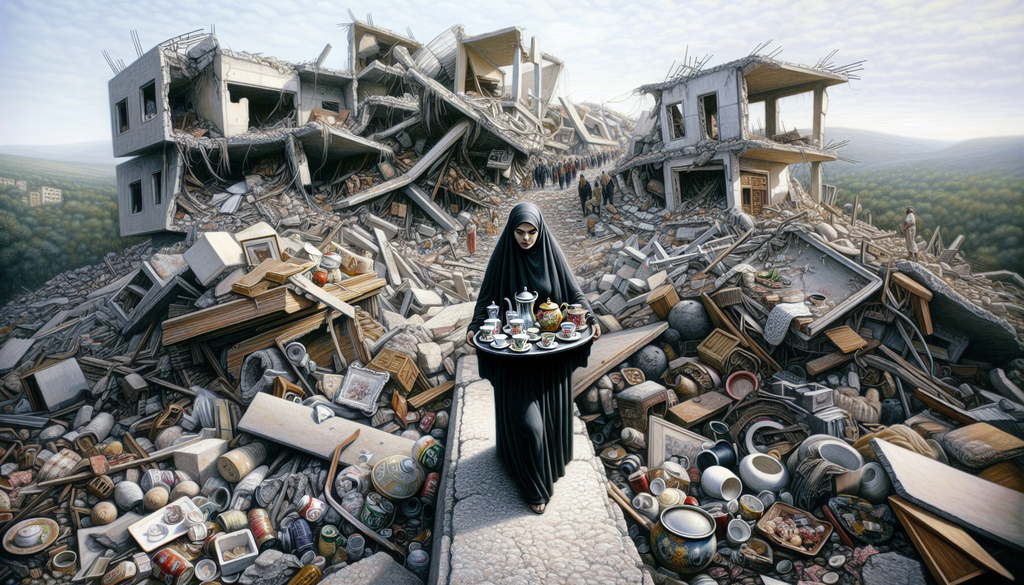
Yet, the enormity of the challenges ahead soon became apparent. Many towns and villages in the south and east, along with significant sections of Beirut, lie in ruins. Entire border communities have been flattened, and countless buildings across the country bear the scars of destruction. The World Bank has pegged the financial toll at approximately $8.5 billion.
For Lebanon, a small Mediterranean nation reeling from years of compounded crises, the ceasefire agreement has raised difficult questions rather than offering clear solutions.
Chief among them: Who will bear the financial burden of reconstruction? Will Hezbollah fully withdraw its fighters and weaponry from southern Lebanon, relocating north of the Litani River? Can the Lebanese army enforce such measures? And, crucially, will Israel be satisfied with Hezbollah being pushed back but not neutralized?
The war has also exacerbated Lebanon’s existing political paralysis, deepening divisions between groups that support and oppose Hezbollah. This internal discord could jeopardize the fragile ceasefire. Some Lebanese citizens, angry at what they see as Hezbollah’s instigation of another costly conflict with Israel, are demanding accountability.
Temporary Reprieve or the Start of Lasting Stability?
In accordance with U.N. Security Council Resolution 1701, the first 60 days of the ceasefire mandate a withdrawal of Hezbollah and Israeli forces from southern Lebanon, allowing the Lebanese military to assume control of the area.
The Lebanese army is tasked with dismantling Hezbollah’s military infrastructure and ensuring it doesn’t rebuild. However, this responsibility could lead to tensions, as it places the army in potential conflict with the more powerful and heavily armed Hezbollah.
The Lebanese military — backed primarily by U.S. and Western funding — is one of the few institutions that enjoys widespread acceptance in Lebanon’s divided political landscape. Yet, it has historically avoided direct confrontation with Hezbollah, which holds significant support among the country’s Shiite Muslim population.
Hassan Fadlallah, a Hezbollah parliamentarian, stated Thursday that his group would cooperate with the army to implement the ceasefire. However, he reaffirmed Hezbollah’s role as Lebanon’s defender against Israeli aggression, arguing that the army alone cannot protect the nation. “When Israel attacks our country, we will resist. This is our right,” Fadlallah said.
Lebanese commentator Mike Azar echoed skepticism over the army's role, calling the notion of disarming Hezbollah “frankly absurd” in a social media post.
A military official, speaking on condition of anonymity, told The Associated Press that the Lebanese army’s deployment to southern regions — including areas vacated by Israeli forces — will be carried out gradually. Monitoring the implementation of Resolution 1701 will also involve the U.S. and France as part of a broader oversight mechanism.
Salman Shaikh, who served as an adviser to the U.N. special envoy for Lebanon during the 2006 conflict, sees the resolution’s success hinging on the genuine commitment of all parties. “Its viability will be tested on whether all sides uphold their end of the agreement,” he noted. Shaikh now leads The Shaikh Group, an organization specializing in mediation and conflict resolution.
Critics, however, argue that the deal disproportionately pressures Lebanon. They warn that Israel retains broad latitude, with U.S. support, to attack Hezbollah again if it deems the group non-compliant. Matt Duss, vice president of The Center for International Policy, described Israel’s position as having “virtually unrestricted freedom to strike Lebanon at will."
A Cash-Strapped Nation Faces Mounting Challenges
Lebanon’s ongoing financial crisis, which has gripped the country since late 2019, has plunged millions into poverty, dismantled its banking sector, and reduced state-provided electricity to just a few hours a day. The Lebanese military has not been spared, with soldiers leaving the ranks and seeking additional jobs to make ends meet.
The ceasefire agreement calls on Lebanon to recruit 10,000 additional troops and deploy them south of the Litani River. However, meeting this requirement is almost impossible without significant financial assistance, particularly as Lebanon grapples with the cost of reconstruction following the war’s destruction.
At a donor conference in Paris last month, the international community pledged $1 billion to Lebanon — $800 million allocated for humanitarian aid and $200 million for military support. Yet, aid groups report that this funding has not yet materialized.
Humanitarian organizations such as Mercy Corps are racing to provide shelter and basic services to displaced residents as winter looms. The group estimated that Lebanon’s GDP contracted by 6.4% (approximately $1.15 billion) during the war’s final two months. “The worst humanitarian impacts could still lie ahead,” warned Laila Al Amine, Mercy Corps’ country director for Lebanon.
There is uncertainty over who will finance post-war recovery efforts. Iran has offered assistance, though its capacity is hindered by sanctions and economic struggles. Gulf Arab states, once major contributors to Lebanon’s rebuilding after the 2006 conflict, remain hesitant, citing frustration over Lebanon’s political gridlock and corruption.
Domestic Strife Over Hezbollah’s Role
Hezbollah’s military presence has long been a divisive issue within Lebanon. Supporters insist the group is essential for national defense, while critics argue its activities undermine state sovereignty and serve as a tool to exert political influence. Calls for Hezbollah’s disarmament have been a persistent demand among its opponents.
Senior parliamentarian Alain Aoun noted that Lebanon faces an overwhelming list of priorities, including electing a president — a position that has remained vacant for over two years — securing reconstruction resources, and resolving longstanding economic woes. “The challenges ahead are numerous,” Aoun said to the AP.
Criticism of Hezbollah reached new heights after the group began launching rockets into northern Israel on October 8, 2023, citing solidarity with Gaza’s Hamas. Opponents argue Hezbollah’s actions dragged Lebanon into a war it could not afford, unleashing Israel’s devastating retaliatory strikes.
The frustration extends even to some Hezbollah-aligned figures. Christian politician Gebran Bassil, once one of Hezbollah’s main allies, voiced disapproval in a video shared on X, stating, “Hezbollah should serve the Lebanese state, not the other way around.”
Hezbollah’s closest ally, Parliament Speaker Nabih Berri, has pushed for separating the group’s conflict with Israel from events in Gaza. He is now advocating for a January parliamentary vote to elect a new president, a step seen as critical to addressing Lebanon’s political gridlock and potentially testing Hezbollah’s influence.
International support — both financial and political — is crucial, according to Shaikh. He emphasized that the global community must assist Lebanon not only in mitigating the repercussions of Israeli actions but also in addressing its broader internal challenges. “The world needs to help Lebanon confront its underlying issues, which extend beyond its clashes with Israel,” Shaikh said.