Hungarian ‘Apocalypse Maestro’ Krasznahorkai awarded 2025 Nobel Prize in Literature
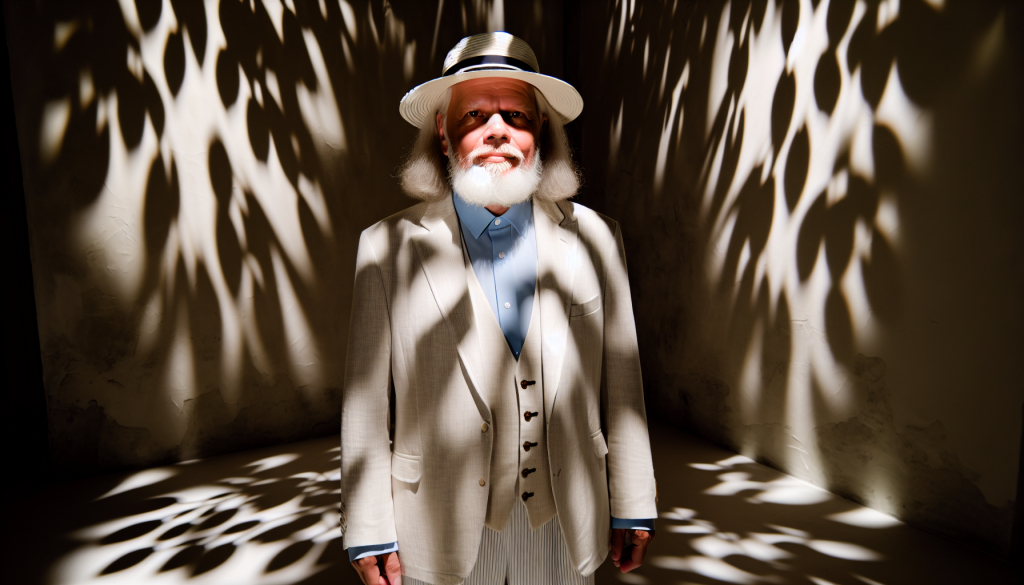
STOCKHOLM, Oct 9 (Reuters) – Hungarian author Laszlo Krasznahorkai received the 2025 Nobel Prize in Literature on Thursday, honored "for his powerful and visionary body of work that, amid scenes of looming catastrophe, testifies to the enduring strength of art."
The Swedish Academy, which presents the prestigious award valued at 11 million Swedish crowns ($1.2 million), described Krasznahorkai as "an epic writer in the tradition of Central European literature stretching from Kafka to Thomas Bernhard, marked by absurd imagery and grotesque intensity."
"Yet his writing also embraces a quieter, more intricate tone influenced by Eastern philosophies," the Academy noted.
In a conversation with Swedish Radio, the 71-year-old writer explained that his literary career began with the intention of writing only one book. But after completing his debut novel, "Satantango," he felt compelled to continue and grow as a writer. "My whole life has been a constant revision," he reflected.
When asked about his source of motivation, he said simply, "Bitterness." He added, "I feel a deep sadness when I consider the current state of the world, and that's what fuels my work," during an interview published by the Nobel Committee on Thursday. He spoke from Frankfurt, where he was visiting an ill friend.
His novels span remote regions across Central Europe, from Hungary to Germany, and eventually to East Asia— especially Japan and China— which deeply influenced his writing.
Renowned American critic Susan Sontag referred to him as modern literature’s “master of the apocalypse,” a view she formed after reading his second novel, "The Melancholy of Resistance," according to the Academy.
Krasznahorkai is the second Hungarian writer to win the Nobel Prize in Literature, following Imre Kertesz in 2002. He was born in 1954 in the town of Gyula in southeastern Hungary, close to the Romanian border.
His breakout work, "Satantango," published in 1985, is set in a similarly remote and dilapidated Hungarian village and instantly drew national acclaim.
According to the Academy, the novel vividly portrays a struggling community on a failing collective farm in the years leading up to the fall of communism.
During the communist era, such farms were created by seizing private land. By the late 1980s, many were widely seen as examples of economic and social failure.
"Each character is longing for salvation, pinned to a hope that’s undercut from the start by a quote from Franz Kafka at the opening of the book: ‘In that case, I’ll miss the thing by waiting for it,’” the Academy noted.
Krasznahorkai frequently cites Kafka’s "The Castle" as a foundational influence.
"When I am not reading Kafka, I am thinking about him. When I am not thinking about him, I miss thinking about him," he said in a 2013 interview with the White Review.
A strong critic of Hungarian leader Viktor Orban, Krasznahorkai has called the government's approach to the Ukraine conflict "insane." Hungary’s administration has notably rejected offering military support to Ukraine and prefers to remain uninvolved in the war.
“How can neutrality be an option when Russia invades a neighboring nation?” he asked in a February interview with the Yale Review.
Despite their disagreements, Orban posted a brief message on social media congratulating the Nobel laureate: "Laszlo Krasznahorkai, Hungary’s Nobel Prize laureate in literature, is a source of national pride."
Much of Krasznahorkai’s work draws from his experiences during the political shifts of Central Europe. In 1987, he moved from communist Hungary to West Berlin, where he encountered “a democratic setting” for the first time.
“That experience left a lasting impression—I have never forgotten what freedom feels like,” he said during a 2023 interview on the Friderikusz Podcast.
According to Jason Whittaker, Professor of Communications at the University of Lincoln, readers affected by global current events—such as war in Ukraine or conflict in the Middle East—may find his work particularly resonant.
"The early 21st century has proven more turbulent than we hoped. The bleak humor and grim atmosphere in works like Satantango may now strike a chord with a broader audience," Whittaker commented.
Krasznahorkai maintained a close artistic collaboration with Hungarian director Bela Tarr, whose adaptations of his novels include the seven-hour film version of "Satantango" and "The Werckmeister Harmonies."
"As soon as I finished reading Satantango, I knew I had to turn it into a film," Tarr told Reuters by phone.
In 1993, Krasznahorkai was awarded the German Bestenliste Prize for "The Melancholy of Resistance," recognized as the best literary work of the year in Germany.
The novel revolves around the arrival of a mysterious circus in a city, with its eerie centerpiece being the corpse of an enormous whale.
The story features “hallucinatory scenes and absurd characters,” the Academy explained, exploring the violent clash between chaos and imposed order, where no one escapes the unfolding fear and disorder.
In 2015, he was awarded the Man Booker International Prize, further solidifying his global literary standing.
The Nobel Prizes, established in the will of Swedish inventor Alfred Nobel, have honored achievements in literature, science, and peace since 1901.
Previous literature laureates include French poet Sully Prudhomme (the first recipient), American author William Faulkner in 1949, and Britain’s Winston Churchill in 1953.
The 2024 prize was awarded to South Korean writer Han Kang, marking her as the 18th woman—and the first South Korean—to receive the distinction. The first female winner was Sweden’s Selma Lagerlöf in 1909.
($1 = 9.3420 Swedish crowns)