‘My mind leans toward the macabre’: exploring the eerie realm (and 700 sticky notes) of artist Ed Atkins
As a child, Ed Atkins would sit alone while his parents were out, mentally rehearsing tragic scenarios in which they might die. “I figured if I imagined it, then fate would be less likely to make it real,” says the 42-year-old artist.
Though none of those imagined disasters came to pass, eventually, life dealt a real blow. In the final year of his postgraduate studies, Atkins’ father, Philip, was diagnosed with cancer. He passed away six months later—coinciding with Atkins’ graduation show in 2009. “The loss was monumental,” Atkins reflects. “It shaped the themes I was drawn to. His death—and death itself—is woven through all my work.”
This theme may not be immediately evident in Atkins’ output, which has defined digital art over the past twenty years. His pieces, strange and surreal videos, balance humor with unease, often leaving viewers unsettled. Atkins typically uses CGI avatars, embodying them with his voice and movement. In 2014’s Ribbons, he became Dave—a shirtless, tattooed chain-smoker with a taste for melancholy Randy Newman tunes.
In 2023’s Pianowork 2, Atkins appeared as a stylized version of himself, fumbling through Jürg Frey’s experimental piece Klavierstück 2. The animation exaggerates every sigh and twitch, each detail heightened. His films intertwine poetic monologues, cryptic subtitles, and jarring sound effects—tinnitus or a flatulence, for instance. The results are complex, elusive, and strangely moving.
“You’re not meant to make clear sense of them,” Atkins admits. Sometimes he doesn’t either. His aim is to generate specific feelings—more sensation than explanation. “I want people to feel slightly adrift,” he says. And nothing unmoors us like grief does.
Now, a major retrospective at Tate Britain shines a light on Atkins’ career. The exhibit features not just digital pieces but self-portraits, texts, embroidered works, and hundreds of Post-it notes he illustrated for his daughter’s lunch during lockdown. One recent creation confronts his father’s death directly: a two-hour film in which actor Toby Jones reads aloud Philip’s cancer diary, written in his final months.
In that “remarkably eloquent” account, Philip reflects on hospital routines, the lives around him, and the profound realization that love had encompassed him—making everything else secondary. “It’s full of raw emotion and honesty,” Atkins says. “A lot to take in. But also recognizably human. Everyone will face this. One of the last entries asks, ‘When does a person really begin to think about dying?’ That was days before he passed. It’s impossible to truly accept.”
Those close to death often perceive things with uncommon clarity. Like the writer Dennis Potter, who, before dying from pancreatic cancer, captured the intensity of a flower’s bloom on live television. Atkins hopes to gain such insight—ideally, before facing his own mortality. Perhaps having an actor read his father’s words is a way to approach that understanding.
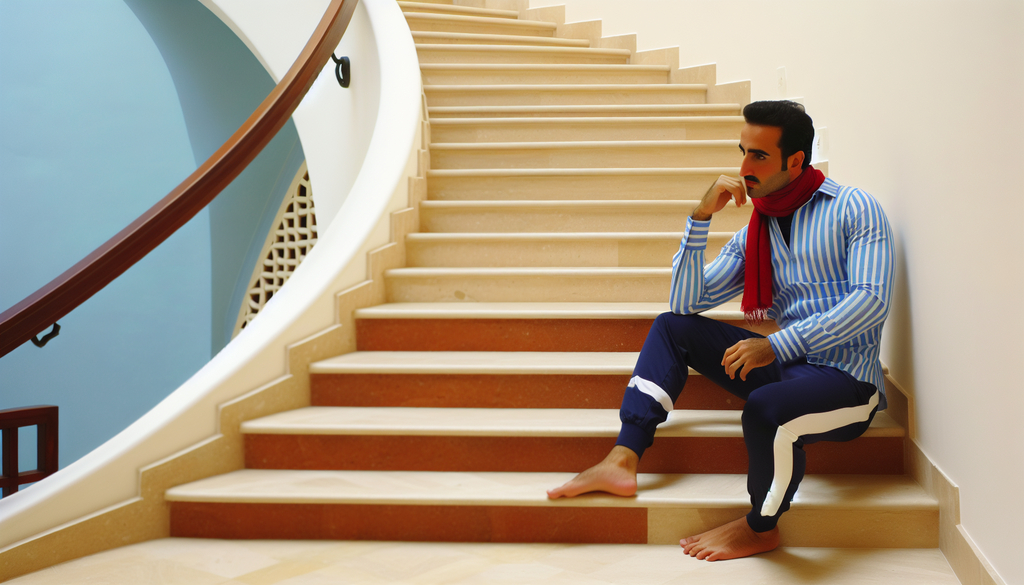
I meet Atkins in the auditorium at Tate Britain, not long before his exhibit launches. Sporting a trench coat over a striped shirt, Adidas joggers and gold hoops in both ears, he’s disarming and pleasant. Yet he answers most questions with abstract reflections. A conversation with him feels like engaging his work—conclusions remain elusive.
For more clarity, one can turn to Flower—Atkins’ new memoir. But it defies traditional form: 89 pages, written as a single stream-of-consciousness paragraph composed of likes, tics, unfiltered thoughts and what he terms “nonsexual peculiarities.” We learn he has an unusually sturdy bladder, a habit of eating wraps from pharmacies, and a foolproof wine-theft technique.
It’s intimate and revealing, if riddled with absurdity. “Who mentions their bladder in a memoir unless something horrific happened to it?” he quips. “That absurdity intrigues me. What details do we deem important enough to share?”
Although he’s long worked through digital proxies, Atkins confesses that publishing Flower was anxiety-inducing. Within the mundane details are more vulnerable disclosures—like his body image struggles and painful relationship with food. “It’s not easy to admit,” he says softly. “But I genuinely don’t like how I look. I obsess over it. That probably stems from family issues.”
Was it difficult making the self-portraits, like those of his face drawn in red pencil on yellow paper, for the show? “Not really,” he says. “What’s tough is this morning—leaving the hotel, catching my reflection in those awful mirrors that show you at every angle. That’s torture. But the obsessive attention to detail—drawing a razor burn, for example—that I find exhilarating.” He hesitates, “Someone’s taking photos for this piece soon. I won’t look at them. Ever.”
Yet despite this discomfort with self-image, Flower is awash with love for his children—a daughter and a son. The flat, controlled tone can’t conceal his devotion. “People say kids mark the end of something,” says Atkins. “But I made my best work after becoming a dad.”
Sign up to Art Weekly
Your go-to newsletter for weekly updates on the biggest exhibitions, trends, and controversies in the art world.
During the pandemic, Atkins lived in Copenhagen with his partner and children. He originally grew up in Stonesfield, a village near Oxford. With a mother who taught art and a father who was a graphic artist, creative talent came early. “Artists usually start with an ability to draw,” he says. “Then art school scrambles everything. It takes ages to recover that original joy—if you ever do.”
Having children helped him reconnect to that delight: “Every mark my daughter or son makes has more life in it than most art, just because it's free.” It’s why his 700-plus illustrated Post-its became a focal point of the Tate show. He hadn’t planned to exhibit them, until he realized: “This is the one thing I can say honestly represents me.”
Just before we met, Atkins got emotional when showing a curator a photo of his son. Pictures often affect him profoundly. “Maybe part of my work taps into that tension—the way representations feel grotesque compared to the living beauty of, say, a toddler.”
In Flower, he calls the photos on his phone “pictures of my dead children”—a jarring phrase, considering they’re very much alive. But he explains: “Looking at those flat images when they’re not there? It wrecks me. My mind leaps to the worst possible thought. Even carrying my phone, I half expect bad news. It’s irrational—truly no way to live.” He exhales, then smiles. “Having kids is like letting your heart walk around outside your body—so exposed.”
I admit to similar anxieties—how a slideshow of my kids, auto-generated by my phone, can feel like a tribute played after someone’s death. Atkins nods knowingly. “That slow fade between images, the sentimental music—it’s exactly how we frame memory. Like an awards show’s ‘in memoriam’ clip. It implies loss whether or not any has happened.”
This exchange—two strangers diving into their emotional depths—feels quintessentially Atkins. There’s an openness he radiates that mirrors his artwork. It’s reminiscent of The Worm (2021)—one of his most poignant pieces—where a real conversation with his mother plays out, though he’s embodied by a digitally-crafted talk-show host, chain-smoking Silk Cuts.
During their dialogue, his mother opens up about life-long depression, inherited trauma, and her discomfort in her own identity. She also reveals Atkins’ father shared body-image struggles. The moment is honest, heartfelt, and deeply fragile.
“Filming that wasn’t exactly easy,” Atkins chuckles, mentioning the Lycra bodysuit he wore while two Germans monitored the recording in the next room. The work is intimate but layered—exploring familial legacies, vulnerability, and what truly gives life meaning.
Atkins originally became a leading voice in digital art, often invited to speak on its evolution—a role he eagerly embraced, as it opened doors. But that label frequently overshadowed his work’s emotional core. “Honestly, I don’t care that much about tech,” he confesses. “I’m uninterested in computers. People ask me about AI, and I’ve got nothing to say.”
His true belief? That no machine—no matter how advanced—can ever capture the full essence of being human. “It sounds almost spiritual,” he says. “But I don’t believe a computer, now or ever, can be a person. That’s the foundation of what I do.”
Ed Atkins’ exhibition is on view at Tate Britain, London, from April 2 to August 25. His memoir, Flower, is published by Fitzcarraldo Editions.