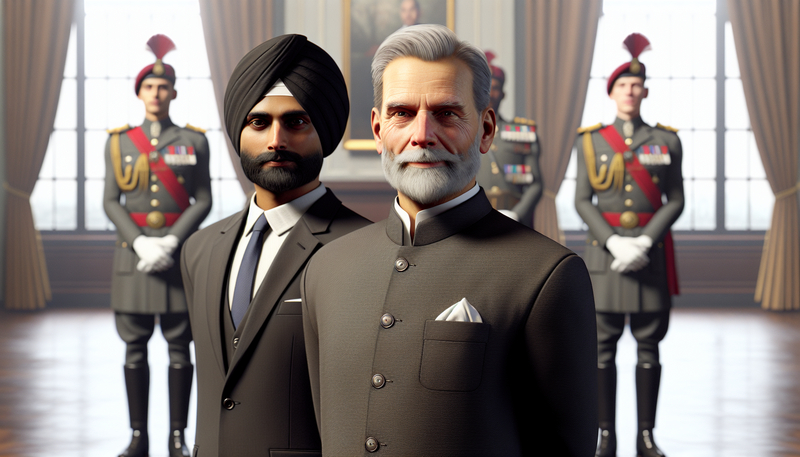
How Aldrich Ames turned into America's most devastating spy
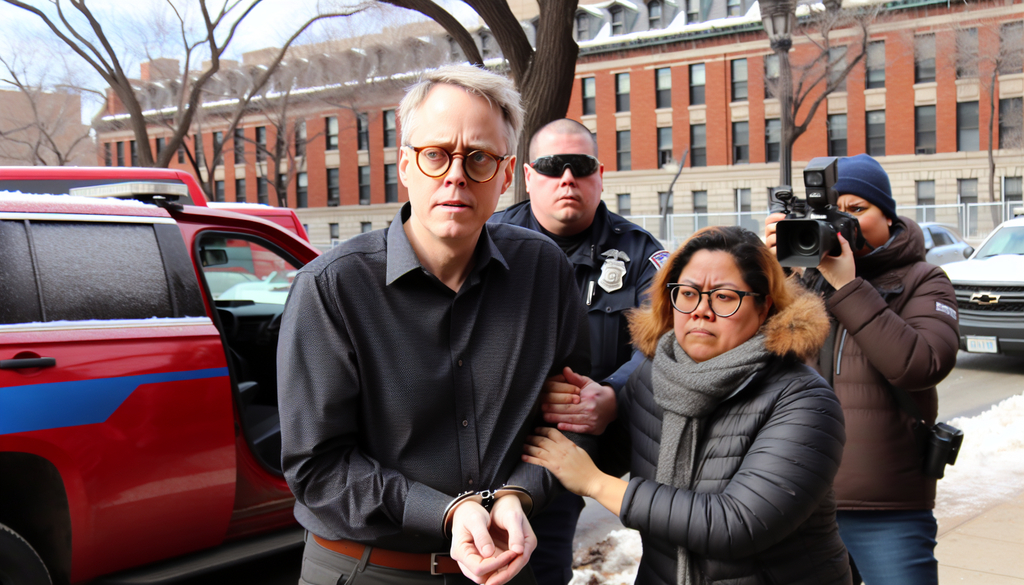
For nearly ten years, Aldrich Ames handed over classified information to the Soviet Union, sabotaging over 100 covert operations and directly resulting in the execution of at least 10 allied operatives. On April 28, 1994, his betrayal led to a life sentence in prison. Two months earlier, the BBC interviewed one of the spies he exposed—who, against all odds, survived.
The year was 1985 when Soviet assets secretly working for the CIA began vanishing. One after another, these agents were apprehended by the KGB, interrogated, and, in many cases, executed.
Among those caught in the web of treachery was Oleg Gordievsky. Once head of the KGB station in London, he had quietly served British intelligence agency MI6. But in Moscow, after being sedated and interrogated for five hours, he found himself in mortal danger. A narrow escape came thanks to a daring MI6 operation smuggling him out of Russia in the trunk of a vehicle.
Trying to uncover the source of his betrayal, Gordievsky recalled, "I spent almost nine years wondering who had sold me out. I had no answers," he confided to reporter Tom Mangold on BBC's Newsnight on February 28, 1994. The mystery was resolved weeks later when CIA veteran Aldrich Ames confessed in court to exposing "almost every Soviet asset known to me across the CIA and allied services."
By April 28, Ames testified to leaking details of more than 30 spies across the West, in addition to compromising a hundred-plus secret missions. Codename Kolokol—'The Bell'—his disclosures resulted in executions, including one of the most valuable agents, General Dmitri Polyakov. Ames's conviction made him the most harmful mole in CIA history, earning him life without parole.
Just as Kim Philby's exposure shocked Britain in the ‘60s, it was now “Washington’s moment to reel from disbelief at the breadth of Ames’s treachery,” said Mangold that year.
Ames’s position as chief of Soviet counterintelligence in the CIA offered him unmatched access to sensitive operations and agent identities. He also attended joint briefings with partner spy agencies, which is how Gordievsky, operating for MI6 and MI5, came across him. In an ironic twist, “The CIA's top turncoat debriefed the West’s premier KGB defector,” said Mangold.
Reflecting on those briefings, Gordievsky said: “The Americans were meticulous. I trusted them. I shared everything. Now I realise [Ames] was right there listening—everything I handed over, he must have relayed back to the KGB.”
Ames was born into this secret world: his father worked for the CIA, securing Ames his own job at the Agency following his college dropout. But personal greed, rather than ideology, motivated his betrayal.
Though he initially showed promise, Ames’s first overseas post with his wife, fellow agent Nancy Segebarth, in Turkey in the late 1960s didn’t go as expected. By 1972, he was called back to headquarters and reassigned to Soviet-focused planning operations after struggling in the field.
Like his father, Ames fought with alcohol—an affliction that destabilized his work. That same year, a colleague found him drunk and in a compromising spot with a CIA coworker. In 1976, he further eroded trust by leaving sensitive materials on a subway train.
In 1981, a fresh assignment took Ames to Mexico City alone; his wife remained in New York. But continued reckless behavior, exemplified by a car crash while intoxicated and a profanity-filled outburst at a diplomatic event, left supervisors recommending an alcohol dependency evaluation.
Meanwhile, personal decisions added complexity. Ames began an affair with Maria del Rosario Casas Dupuy, a Colombian cultural attaché also recruited as an intelligence source. They later married, but the financial obligations from his divorce and Rosario’s high-end lifestyle grew overwhelming.
Back in the U.S. in 1983, Ames was appointed to lead Soviet operations within counterintelligence—a role granting him access to nearly the entirety of the CIA’s Soviet espionage network.
Torn between mounting debts and the temptations of wealth, Ames confessed to Senator Dennis DeConcini he saw selling secrets as an escape hatch. “I was under financial strain—though in hindsight, I clearly overreacted,” he said.
“It was about money. He was never unclear about that,” said FBI agent Leslie G Wiser, involved in Ames's takedown, during a 2015 BBC Witness History interview.
On April 16, 1985, emboldened by alcohol, Ames strolled into the Soviet embassy in Washington, D.C. He handed over an envelope containing CIA agent names, documents proving his identity, and a $50,000 payment demand. What began as a supposed one-off payoff soon became routine. “I’d crossed a threshold I couldn't return from,” he later admitted in a Senate report.
More on topics like this:
• The rise of Putin to power in Russia
• Oskar Schindler's rescue of 1,200 Jews in WWII
• The accidental US nuclear bomb drop in Spain, 1966
For nearly a decade, Ames delivered classified insights to the KGB. He would wrap sensitive materials—ranging from tech that tracked Soviet warheads to surveillance bugs in Moscow—into plastic and simply carry them out of the building. With his diplomatic cover, he met handlers openly or utilized 'dead drop' locations for data transfers.
“He marked a mailbox with chalk—if the Russians saw it, they knew the drop was made. Once they retrieved it, they’d erase the mark, indicating a successful pickup,” said Wiser.
Through Ames, Moscow uncovered almost the entire roster of CIA spies in the USSR, effectively shutting down American intelligence efforts there. “No other mole caused such devastating human loss,” said Wiser. Though red flags arose in 1986, Ames dodged suspicion for nearly ten years.
And his rewards were substantial—Soviet payments totaling about $2.5 million. Despite a government salary under $70,000, Ames paid cash for a $540,000 home, splurged on renovations, and drove a Jaguar. That conspicuous wealth ultimately flagged the FBI’s attention. Wiser’s team arrested him in 1994.
Following his arrest, Ames told everything, cooperating in exchange for a lighter sentence for Rosario, who admitted knowledge of his dealings. She served five years. He remains imprisoned at a high-security facility in Terre Haute, Indiana.
To this day, remorse seems absent. “He thought very highly of himself,” said Wiser. “His only regret? Getting caught. Not betraying his country.”
--
For exclusive features and historic radio stories direct to your inbox, subscribe to the In History newsletter, and don't miss The Essential List for a curated roundup each week.
For more from BBC Culture, join us on Facebook, X, and Instagram.