No Surfboards in Sight: 10 European Swaps for Iconic U.S. Vacation Spots
Trade California’s surf for Portugal’s Santa Cruz
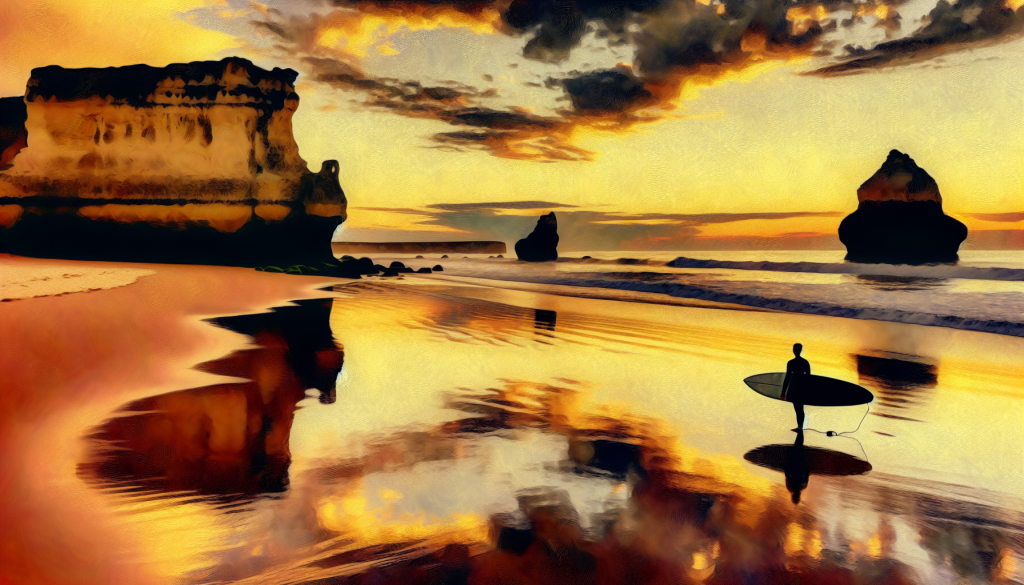
Sunset fades into the horizon as surfers silhouette against the glowing red sky. Lying on the beach, the scene could be mistaken for California, yet I’m on the sands of Portugal’s Costa de Prata. This is Santa Cruz—not the West Coast version, but a charming Atlantic beach town just north of Lisbon.
The similarities don’t stop at the name. With around 300 sunny days each year, this area is a paradise for surfers. Nearby Ericeira was the second designated World Surfing Reserve after Malibu. The shore stretches wide with golden sand bordered by wave-shaped cliffs and sea-cut arches.
Originally a humble fishing village, Santa Cruz offers a relaxing escape just an hour from Lisbon. Wandering its whitewashed lanes, it’s easy to notice a turret standing oddly by the beach—the sole remnant of a grand palace project halted by the 1929 financial crash. It’s a town that rewards accidental discovery. Japanese poet Kazuo Dan lived here for 16 months in 1971, calling it a place for a “conversation between Heaven and Earth.”
It’s a dream come true for surfers, but even beginners are welcome. Noah Surf House provides upscale beachfront lodging (rooms for four from €320 with breakfast) plus surf lessons for all ages, along with a skate park and an infinity pool overlooking the ocean. For a cozier retreat, Villa Galega (doubles from €115 with breakfast) offers a more personal touch.
Along with its surfing appeal, the area has environmental credentials: Torres Vedras, including Santa Cruz, has 11 beaches certified as unpolluted—more than any other municipality in Portugal. Take a stroll across the wooden boardwalk to Praia Azul for a clean and peaceful beach experience.
Dining by the shore is an unmissable experience. Bronzear offers a breezy setting where you can dig into arroz de peixe, a seafood rice stew, or feast on crab during the September crab festival. Craving a Californian bite? Try Noah’s grilled cheese sandwiches or portobello burgers, paired with a robust local red wine like Touriga Nacional. Wine enthusiasts might enjoy a tasting at the nearby Quinta da Almiara winery.
Days end sweetly at Manel, the town’s oldest bar. Ring the bell and you’re welcomed with soft candlelight, jazz music, and craft beers from Lisbon. Outside, a stone etched with a haiku by Kazuo Dan reflects serenely on chasing the sun to the sea—a sentiment embraced by surfers to this day.
Swap New England cabins for Finnish lakeside retreats
When Henry David Thoreau wrote about his time living by a lake in Walden, he romanticized a life of simplicity and nature. That dream resonates today—as seen in the film On Golden Pond—and it’s one that can be experienced far from America, in Finland's cottage retreats called mökkis.
Nestled along lakes or hidden among rocky shores, mökkis are Finland’s answer to rustic getaways. These wooden summer cabins often pass from one generation to the next, providing a beloved escape to the wild, whether for summer fishing or snowy winter adventures like skiing and ice-dipping.
Many cabins are off the grid, where visitors heat saunas by wood, chop their own logs, and allow their smartphones to silently power down. The countryside invites foraging and wandering, rights guaranteed by the law of everyman's freedom—called Jokaisenoikeudet.
You don’t need Finnish relatives to enjoy a mökki. With over half a million nationwide—and only one in five owned outright—they’re widely available for rent. Sites like Lomarengas and Finland Cottage Rentals feature everything from cozy lake houses to off-grid sanctuaries. On Sviskär island in the Åland archipelago, you can even rent an entire 69-acre island for your own wilderness experience.
Swap the Appalachian Trail for Europe’s epic E1 path
In 1948, Earl Shaffer took a rugged journey across the 2,200-mile Appalachian Trail, the first person to attempt it end-to-end. When Emma Gatewood, a grandmother, repeated his feat in 1955 with scarcely more than a pair of sneakers, the trail earned its place in outdoor adventure history.
Today, thousands attempt this American trail yearly, many with ample support systems: water caches, frequent shelters, and aid from so-called trail angels. But if you're searching for a more remote challenge, consider the E1 trail cutting through Scandinavia.
The E1 is a 4,420-mile route stretching from Norway to Italy. Its origins lie in post-war European reconciliation efforts, spearheaded by British rambler Arthur Howcroft. In the Arctic Circle, the Norwegian segments are particularly wild, with limited marking and testy terrain including icy fields and frequent river crossings. Yet there are still scattered mountain huts in Norway and Sweden offering rustic comfort.
By the time you reach Halmstad in Sweden, you’ve already covered the equivalent of the Appalachian Trail. But there’s more: the route continues through Denmark, Germany, and the Alps, on to Tuscany and Umbria. Although the trail quality diminishes further south in Italy, development is ongoing.
Reflecting on his own attempt, writer Bill Bryson captured it best: “For a brief, proud period I was slender and fit... I gained a profound respect for wilderness. I understand now, more than ever, the enormity of the world.”
Choose Berlin over New York for culture and nightlife
Both Berlin and New York offer bustling culture, rich history, and endless nightlife. But if you're looking for edgy creativity and more personal space, Berlin stands out from the pack.
While New York’s clubs are energetic, Berlin's underground scene—especially techno—is more daring and raw. Clubs like Berghain and Sisyphos operate non-stop through weekends, discarding dress codes and banning phone usage. Street beers and even public affection in nightlife venues add to Berlin’s unfiltered vibe.
The food scene matches New York in diversity, but Berlin is especially strong on mid-range dining. Across Kreuzberg, Neukölln, and Prenzlauer Berg, neighborhood gems serve vegan menus, natural wines, small plates, and global cuisine—albeit often mildly spiced to suit local tastes.
Culturally, both cities shine. But Berlin’s Museum Island, Neue Nationalgalerie, and distinctive settings like an old railway station (Hamburger Bahnhof) or a WWII bunker (Boros Collection) offer something unique. Even the Silent Green art space is nestled in a former crematorium.
When it comes to green space, Berlin edges out ahead. Central Park may be immense, but Berlin's 2,500 parks and large reserves like Tempelhofer Feld and Grunewald forest keep it feeling open and natural.
Finally, with fewer people—just 12.7 million annual visitors compared to New York's 64 million—Berlin lets you explore more freely, without the crowded lines. See you there, or as Berliners say: bis bald!
Pick Montenegro’s Tara Canyon over the Grand Canyon
The Grand Canyon stretches for nearly 280 miles, but Montenegro’s Tara River Canyon, while shorter at just over 50 miles, plunges deeper than almost any other gorge in Europe. Within Durmitor National Park, its natural beauty rivals any dramatic landscape in the world.
White-water rafting is the top adventure here, drawing thrill seekers to its turbulent waters. Rafters pass under the dramatic Đurđevića Tara Bridge, a concrete marvel best viewed from the river itself.
There’s plenty of lighter adventure, too. Near Žabljak, a popular Montenegrin ski town, a short hike leads to the peak of Ćurevac, offering wide panoramic views of the canyon. Numerous trails connect with the wider Via Dinarica network, a massive 1,200-mile trail system across the Balkans.
On the border near Bosnia, calmer stretches of the Tara host rafting lodges and riverside camps. Here, you can swim in pristine water, enjoy freshly made local food, and sip ice-cold beer brewed from mountain spring water—all without spending much, thanks to affordable local prices.
For a base near the action, Green Top near Žabljak offers comfortable wooden chalets with mountain views, garden space, and barbecues from £95 per night.
Discover Spain’s Tabernas desert over the Mojave
With its dry valleys and sun-cracked soil, Spain’s Tabernas Desert feels like a slice of the American southwest. It’s no wonder director Sergio Leone filmed his iconic westerns here—this landscape mirrors California’s Mojave desert in both form and spirit.
While lacking Joshua trees, Tabernas brims with desert plants, wildlife, and geological wonders. Eagles soar, lizards scamper, and cacti dot the horizon. Despite decades of obscurity, the area is gaining recognition, thanks to its film legacy and unusual desert ecology.
Explore on horseback with Malcaminos Ranch or camp at Fort Bravo, one of Leone’s original filming locations, from €45 a night. Western-style cabins offer a cozier stay starting from €80—a nod to classic homesteading amidst cinematic scenery.
As a once-captivated teenager roaming U.S. deserts on motorbike, I find the same dusty, soulful spirit here. The desert winds, the silence, and sense of discovery are all present in this pocket of Andalucía, even if the scale is more intimate.
Leone once said he saw America only through a European lens—captivated yet skeptical. If you feel the same, Tabernas offers a captivating adventure closer to home.
Choose Romania’s Carpathia over Yellowstone
Yellowstone may be the poster child for American wilderness, but Romania’s Carpathian Mountains offer an equally enthralling—if lesser-known—alternative. In the wilds of Transylvania, rugged forests and steep ranges teem with wolves, lynx, brown bears, and reintroduced bison.
The Foundation Conservation Carpathia is creating Europe’s largest forested national park, aiming for 200,000 protected hectares. Through land purchase and reforestation, they’re reviving a true wilderness in the Făgăraș Mountains.
Accompanied by my guide Răzvan, a hike through the trees yields fresh bear tracks and wildlife clues. At our camp, the Bunea hide, we spend the evening watching silently through glass as a young bear emerges, followed by a hulking male. From this peaceful perch, we observe nature up close.
The next day, we trek to the Comisu hide at 1,600 meters for sweeping mountain views. Thunder rumbles as owls call into the night—a wild dream lived in the heart of Europe.
Swap New England seafood for Normandy and Brittany's coastal treats
Though America’s seafood culture is rich—from oysters to clams and iconic lobster rolls—Western France offers a locally sourced, beachside experience that’s just as unforgettable.
In Blainville-sur-Mer, Normandy, casual La Cale serves its shellfish with a side of coastal charm. Sand beneath your feet, local oysters on your plate—plus traditional dishes like moules frites and Normande teurgoule rice pudding—highlight the region’s culinary heart.
Further south, Brittany’s Cancale is a feast for oyster lovers. Locals gather on the seawall to slurp freshly shucked oysters, purchased from the waterfront marché aux huîtres, and sip chilled wine from a nearby van, tossing shells into the sea in a carefree ritual.
Near Saint-Philibert, Maison Quintin elevates ocean dining. Under pine trees at sunset, enjoy their own farmed oysters, alongside prawn skewers, crab, and seafood spreads—all with laid-back service. Booking is essential, but the relaxed mood remains unmistakably French.
Trade the Florida Everglades for Italy’s Marano Lagoon
I stumbled across Italy’s Marano Lagoon while meandering the wetlands north of Venice—a peaceful oasis that locals say reminded Hemingway of Florida’s Everglades. He even nicknamed the area “piccola Florida”.
The American author hunted and fished here in the 1950s. At a rustic trattoria in Marano Lagunare, I toasted his memory with a glass of local red, refosco dal peduncolo rosso, and sampled fresh sea bass carpaccio and grilled eel fished from nearby rivers.
The town is a perfect base to explore the lagoon. Activities include kayaking, horse riding, and boat tours. I opted for a guided boat ride led by a retired fisherman who gave rich insight into coastal life. One unique highlight? Traditional thatched fishers' huts called casoni dotting the lagoon edge.
As we entered the protected zone of the Stella River delta, the scenery transformed. Narrow reed-lined channels buzzed with birdlife: flamingos, herons, and even geese on the wing. While much smaller than the Everglades, the Marano Lagoon offers nature’s tranquility without the worry of alligators.
Swap Highway 1 for Ireland’s Wild Atlantic Way
Navigating Ireland’s Conor Pass, one of the country’s highest roads, can be nerve-racking, but also awe-inspiring. Winding upwards on a narrow shelf road, the scenery confirms why the Wild Atlantic Way rivals California’s Highway 1.
This 1,600-mile route from County Donegal down to Kinsale showcases wild coasts, mountain passes, and ocean cliffs. From the Mizen Head footbridge to Achill Island’s cliffs, the Atlantic vistas echo Big Sur’s grandeur.
My favourite part runs along the Dingle Peninsula. Starting from Inch beach, through the daring Conor Pass, and looping into Slea Head Drive, the coastal drama intensifies. At every turn: hidden beaches, ancient stones, and relentless surf crashes.
Dunquin Pier descends to sea like a zigzag staircase, marking the launch point for the Blasket Islands. It feels like the end of the world—just as stirring as California’s wildest shores.
The Blasket Centre atop the drive offers dramatic island views, concluding a journey as rich in spirit, sea, and solitude as any Pacific route.