
Scotland's wildest train journey into the wilderness
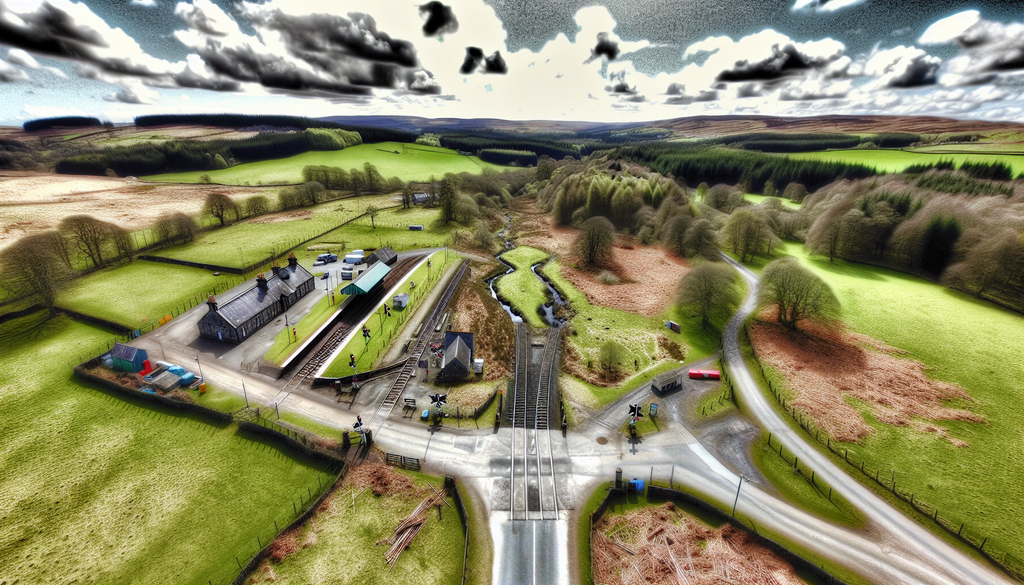
Stretching from Inverness all the way to Britain’s northernmost rail junction, the Far North Line glides through grazing pastures, rustic communities, and the planet’s only Unesco-recognised blanket peatland.
As the train slowly eases out of Inverness Station and ventures into the Scottish Highlands, a wave of excitement courses through me. I once spent four summers working in these wild parts, and the deep ties to this dramatic terrain still stir my heart. At last, I'm back—reuniting my love for train travel and the soulful solitude of the moors up north.
It’s 7am, and I’m aboard the Far North Line, en route to the twin towns of Thurso and Wick—Scotland’s farthest railway outposts. Spanning 168 miles and around four hours, this is Britain’s most northerly train ride. The route cuts through the Flow Country, a massive peat blanket teeming with wildlife and rare vegetation. Recognised in 2024 as the world’s only peatland Unesco World Heritage Site, the Flow Country is unparalleled not just in scale, but in mystery and remoteness.
During my trip, the Highlands had mostly basked in sunshine, but today's early frost sparkles in the amber dawn. The train glides past Conon Bridge and the harbourside town of Invergordon, offering scenes of mellow hills and farms. Mornings here are hushed—passengers cradle their takeaway coffees, minds adrift in pre-dawn quiet. Outside the window, another train slips by, bound for Inverness. But I’m heading deeper into untamed country, where life moves to an older rhythm.
The Far North Line came together gradually in the 1800s, shaped more by economy than romance. The railway opened up trade routes, especially for fishing and farming. Dingwall became the northern terminus in 1862, with Invergordon added the next year. By 1874, the line had pushed all the way to Thurso and Wick, overcoming tough terrain and unpredictable weather.
Yet the project endured many difficulties—rugged landscapes, brutal conditions, and financial woes nearly derailed it.
Enter the third Duke of Sutherland, an avid railway enthusiast. According to Michael Williams in his book On the Slow Train Again, the Duke even trained with the London and North Western Railway to master steam engines.
Conveniently for the Duke, his dream line passed by his residence, Dunrobin Castle. On 20 June 1870, Parliament greenlit the stretch from Golspie to Brora and Helmsdale. But work had begun even before the act, and by that November, the section from Dunrobin to Helmsdale was complete.
Today, Dunrobin Castle Station is one of the route’s most captivating stops. Built in 1902 with a chalet-inspired design by L Bisset, it looks as though it belongs in a fairytale. This time, however, the train simply rolls past—it’s a request stop, only pausing if summoned by passengers.
Beyond Dunrobin, the tracks meet sea. The coastal run between Brora and Helmsdale offers the line’s most spellbinding views: dark waves crash on volcanic stones, flocks graze carefree, and a man with his two collies paces the shoreline. After Helmsdale, we veer inland, entering the wilderness of the Flow Country.
Spreading across 1,544 square miles—2.5 times bigger than central London—this peat expanse joined revered sites like the Galápagos and Great Barrier Reef on the World Heritage list. Unesco cites its "extraordinary bird life and rare landscape features found nowhere else globally."
Earlier in the week, I caught up with Dr Roxane Andersen, a peatland specialist at the University of the Highlands and Islands, in the nearby village of Lochinver, to talk about the Flow Country’s importance and recent designation.
With over a decade of research and a leading role in the heritage nomination, Andersen is a fountain of insight. The bog stretches from the rugged western heights to the gentler east, where it serves an ecological purpose far beyond its borders.
“Like other peaty wetlands, the Flow Country helps balance Earth’s climate,” Andersen said. “It slowly absorbs carbon dioxide and stores it in layers of dead plant material—peat—for thousands of years, cooling the atmosphere in the process.”
Forsinard is the prime stop on the Far North Line for those wishing to immerse themselves in the Flow. Its disused station has been turned into the Forsinard Flows Visitor Centre (open April through October). I follow the one-mile Dubh Lochan Trail from the station to the Flows Lookout Tower, open year-round. Along the boardwalk, signs explain everything—the past presence of forests and how bog pools develop.
“You can walk for tens of kilometres without seeing anyone or crossing a single road,” says Graham Thompson, a local guide. “It’s rare to find that kind of solitude in the UK.”
When I reach the wooden tower, his words echo in the wind. There's no human in sight—only the moor, gusts of wind, and the occasional sprinkle of drizzle.
From the lookout’s top floor, the view unfolds: a rich brown plain dotted with shadowy ponds. Stark and wild, the bog hums with life—birds, insects, an otter here, a red deer there—all holding equilibrium in this delicate ecosystem.
“It’s the last real wilderness in Britain,” Thompson had said. Standing there, I know he spoke the truth.
Yet this isn’t untouched Eden. Over time, human actions have shaped and sometimes scarred the land. On a riverside bench in Lochinver, Andersen told me how the bog’s identity traces back to the Jacobite defeat and the Highland Clearances, when rural communities were forced out and the land was turned over to sheep farming. Entire valleys became empty echoes.
In more recent decades, the 1980s brought extensive commercial forestry and foreign tree species, draining large swathes of peatland. While Thompson sees worrying signs—like expanding wind farms—Andersen sees hope in how communities have come together.
“There are real discussions happening now—collaborative ones,” she said. “The shift we’ve seen in just 40 years, from fragmentation to shared vision, is uplifting.”
Leaving Forsinard behind, I carry Andersen’s optimism onto the next leg towards Thurso, the Highland’s northernmost port town reached by train.
The train now steers inland, away from the sea. As the countryside unrolls outside, I think about what I’ve encountered: sheep-dotted hills, craggy shorelines, and vast, windswept moors. The line offers a gentler alternative to the NC500 road loop, less busy but equally enthralling—a deeper, more meditative way to travel.
As we pass Georgemas Junction—the northernmost rail crossroads in the UK—I ready myself for Thurso, our terminus. We’ve passed the tiny Beauly Station, Scotland’s shortest platform at just over 15 metres, and Altnabreac, the most isolated station, 10 miles from the nearest road. Yet more than these trivia, this has been a slow, contemplative ride through storytelling soil.
Few train journeys offer such space for solitude—the kind that allows your thoughts to drift, carried along by steel tracks through a land that feels ancient and untouched. The Far North Line is truly, as Andersen put it, a testament writ deep in the peat.
If this tale inspired you, consider signing up for The Essential List newsletter, our twice-weekly curation of stories, highlights, and can't-miss moments, delivered straight to your inbox.



