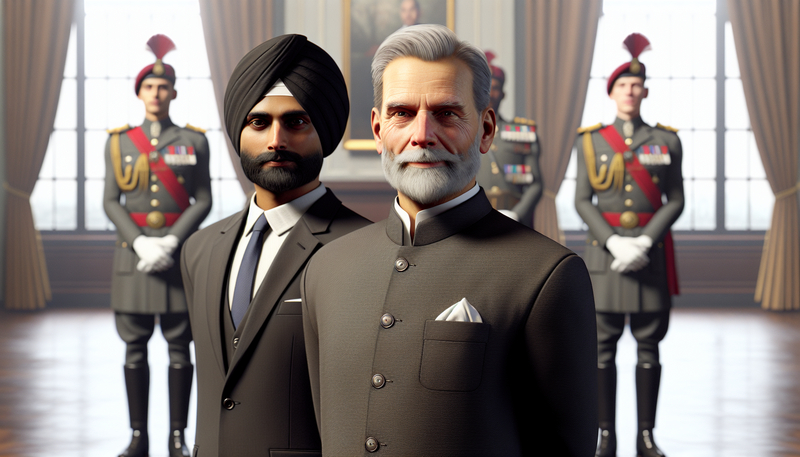
Macron unleashes Versailles’ gilded splendor, reflections and legacy in a bold bid to woo Trump
PARIS (AP) — Donald Trump summed up the attraction in a single line: “Versailles is not gold leaf — Versailles is the real deal.”
For Emmanuel Macron, that sentiment captured the entire strategy.
On Wednesday evening, the French president welcomed his American counterpart to the Palace of Versailles for a private reception, performance and dinner celebrating the 250th anniversary of the United States. At a fragile moment for trans-Atlantic relations, the gesture offered Macron a way to preserve a direct line of communication as they manage disagreements over Iran, Ukraine and trade.
The invitation also ensured Trump did not depart a Group of Seven summit ahead of schedule, as he had done the previous year in Canada.
“I like beautiful settings,” Trump told reporters, noting he had intended to leave earlier until “a very nice man” asked him to stay for dinner.
After photographs before the palace’s gilded gates, Trump toured the ornate interiors. During a dinner featuring lobster, caviar and vanilla ice cream, he unexpectedly signed a memorandum aimed at ending the conflict in Iran — a striking act in a venue heavy with historical symbolism.
Versailles may be France’s ultimate display of soft power: the Hall of Mirrors, the gardens of Louis XIV and centuries of carefully curated grandeur.
“Versailles is both a diplomatic instrument and a means of influence,” Macron said, comparing diplomacy to soccer. “Whether I’m playing at home or away, I want to score. And when I host, I aim to welcome guests well.”
France wields limited economic or military leverage in Washington, making ceremony and symbolism some of its most effective tools — even if such tactics have produced uneven results elsewhere.
Soft power carved in stone
Macron and Trump have frequently disagreed on policy.
Their relationship has endured in part because Macron recognizes the value of personal outreach, dramatic backdrops and carefully timed invitations.
Their first encounter in 2017 produced a prolonged, tight handshake that quickly became emblematic of their competitive dynamic.
Later that year, Trump dined inside the Eiffel Tower and attended France’s Bastille Day parade as guest of honor.
Versailles elevates such gestures, allowing a French president to frame contemporary politics within the authority and spectacle of national history.
“It’s a soft-power display built from solid stone,” said Denis Lacorne, a professor of American studies at Sciences Po.
Macron has previously used the palace for high-profile meetings, hosting Russian President Vladimir Putin in 2017 and later welcoming King Charles III and Queen Camilla for a state dinner.
For more than 300 years, French leaders have used Versailles to honor visiting dignitaries. The palace remains, in official terms, “a place serving French diplomacy.”
With Trump, the symbolism is especially pointed.
The former real estate developer has long viewed architecture as an expression of prestige and authority. In his second term, he has sought to leave a physical legacy, proposing a White House ballroom and even a 250-foot triumphal arch inspired by Paris’ Arc de Triomphe.
The real deal — and 357 mirrors
The evening featured a visit to the Hall of Mirrors and a fountain display in the gardens.
When constructed, the Hall of Mirrors represented technological prowess: 357 mirrors set within 17 arches along a 73-meter (240-foot) gallery, demonstrating that French artisans could rival Venice’s famed glassmakers.
The mirrors were also designed to amplify the monarch’s presence. Each royal entrance multiplied across the glass — a visual effect modern visitors still experience.
“You see yourself reflected again and again, from one mirror to the next,” Lacorne noted.
For a president who has added gold accents to the Oval Office in his second term, the appeal is unmistakable, he added.
Trump, in a sense, arrived at a building he has referenced for years, having said he modeled the ballroom at Mar-a-Lago on Versailles.
Others have aimed to impress Trump
Trump has shown a fondness for grand spectacle and often seeks to replicate it at home.
The 2017 Bastille Day parade featured tanks, cavalry and marching bands along the Champs-Élysées, with fighter jets trailing red, white and blue smoke overhead.
Trump described it as “one of the greatest parades I’ve ever seen.”
“We’ll have to try to top it,” he later said in Washington, where he pushed for a similar military parade. In 2025, he ultimately presided over a large Army anniversary parade in the U.S. capital.
China also embraced lavish symbolism during Trump’s 2017 visit, granting him a rare tour of the Forbidden City — an honor once reserved for emperors.
Britain followed with its own pageantry last September, staging mounted troops, a carriage procession and a banquet at Windsor Castle during Trump’s second state visit.
The shine is the simple part
The elaborate ceremonies have clearly appealed to Trump, who called the Windsor banquet one of the greatest honors of his life.
Yet such grandeur has produced limited policy shifts.
The early warmth between Macron and Trump has evolved into a more transactional relationship.
Trump has threatened tariffs of up to 100% on French wine and Champagne amid broader trade tensions. France opposed the U.S. military campaign against Iran, while Macron has urged continued American support for Ukraine.
Within France, the dinner sparked criticism.
“We must finally learn to live without Trump,” said Jean-Luc Mélenchon, a veteran figure on the far left.
Still, analysts say Versailles offers Macron certain advantages: centuries of diplomatic precedent, a setting aligned with Trump’s appreciation for ceremony, and a palace familiar to hundreds of thousands of American visitors each year.
History, however, urges restraint. Ronald Reagan dined beneath the same mirrors during the 1982 G7 summit, and significant disagreements endured long after the evening’s splendor faded.
___
Angela Charlton in Paris and Michel Euler in Versailles contributed.