Exploring abandoned mental hospitals: Uplifting, eerie, or houses of horror?
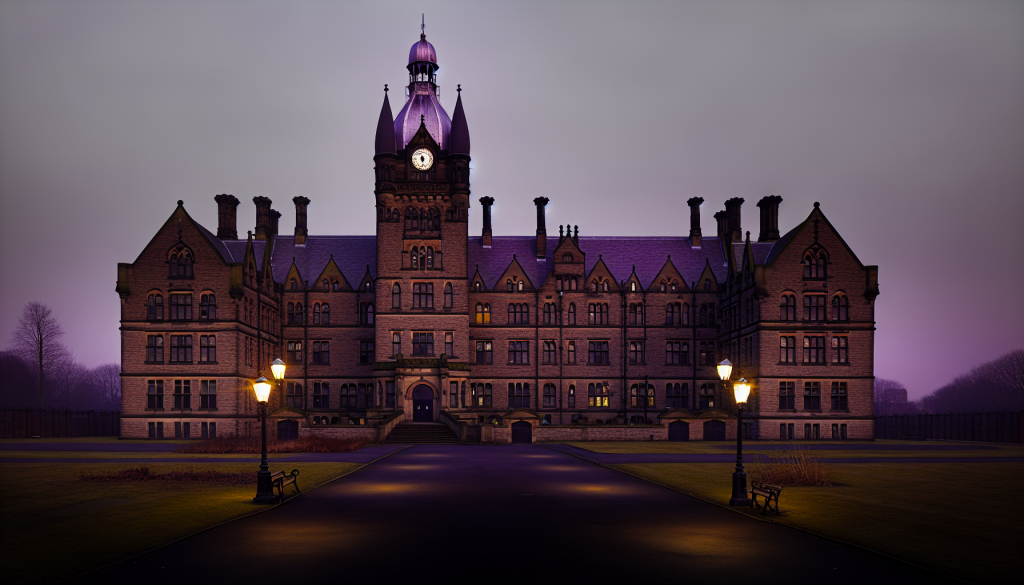
Steve Roberts isn’t entirely convinced that ghosts exist, but he struggles to find another explanation for what he experienced earlier this year at the infamous Pennhurst Asylum in Pennsylvania.
In May, Roberts attended the Pennhurst Paracon—an event dedicated to paranormal exploration—at the vast facility, which was shuttered in 1986 and is widely believed to be haunted. “It's the allure of the unknown,” said Roberts, a tech professional from Sykesville, Maryland, detailing why he and his daughter decided to visit the site steeped in eerie legends.
Inside the abandoned asylum, fractured walls and caved ceilings framed scenes of decay. Some rooms were littered with old hospital beds and medical equipment. In one basement area, the father and daughter noticed two women using devices to attempt communication with what they believed to be spirits.
“They were asking things like, ‘Who are you? What’s your name?’” Roberts remembered. “Then one of them asked if anyone in the room could be named—and that’s when I'd had enough.”
Just as he and his daughter were nearing the door to leave, a question echoed from behind: “Did you say ‘Steve’?”
They didn’t stick around to find out. “I was really spooked,” Roberts said of the moment. “I had just walked into a room, and something there seemed to know who I was.”
He and his daughter exited the building without looking back.
Established in 1908 as the Eastern Pennsylvania Institution for the Feeble-Minded and Epileptic, Pennhurst eventually became synonymous with mistreatment and neglect of individuals with disabilities. A 1968 NBC documentary, “Suffer the Little Children,” exposed the appalling conditions endured by residents.
Today, the once-bleak buildings near Spring City—about 30 miles from Philadelphia—have become a dark tourism hotspot. Paranormal events keep visitors awake into the early hours, hoping to encounter spirits within its crumbling infrastructure.
This fits into a broader movement known as “dark tourism,” where travelers intentionally visit locations associated with tragedy or death. And Pennhurst is not alone—many former hospitals and asylums across the country now draw thrill-seekers due to their chilling atmosphere and tragic pasts.
In Wisconsin, visitors to the former Sheboygan County Hospital for the Insane can take part in guided haunted house experiences and spiritual investigations hosted by Fox Valley Ghost Hunters, who explore the site's eerie, decaying interiors.
Likewise, Michigan’s Eloise Psychiatric Hospital has transformed into the Eloise Asylum, offering a mix of haunted attractions, escape rooms, and ghost-hunting sessions among graffiti-marked corridors and exposed wiring.
“It’s something many people want to check off their list,” said Alyssa Hill, who leads night tours at the Trans-Allegheny Lunatic Asylum in Weston, West Virginia. “They may not believe, but they still want to see—or feel—something unexplainable.”
Hill has had her share of hair-raising experiences. From doors slamming on windless nights to unexplained knocking, she's convinced not all is at rest in the old asylum. Once, she even saw a shadowy figure moving through a laser grid. At times, she’s certain they’re not alone.
“There’s no logical explanation,” she said. “That’s what makes it paranormal—it's beyond reason.”
The Unexpectedly Uplifting Origins of Asylum Visits
Modern-day visits to institutions like Pennhurst may provoke fear, but that wasn’t always the case. In the past, asylum visits were sometimes seen as enlightening or hopeful.
For example, the 1872 guidebook “Miller’s New York As It Is” detailed the Bloomingdale Asylum for the Insane as a public point of interest. The guide praised the asylum’s beautiful grounds, filled with trees and flowers, and emphasized the progressive care provided to patients.
Similarly, an 1880 guide for tourists from England described New York’s institutions as destinations worthy of a visit by curious minds and philanthropists alike.
This optimistic view reflected changes in how society understood mental health in the 19th century. “Mental illness began to be viewed as a medical condition—and one that could be treated,” said Jennifer Bazar, assistant director of the National Museum of Psychology at the University of Akron.
During that era, many new asylums were constructed according to the Kirkbride Plan—a therapeutic design philosophy by doctor Thomas Story Kirkbride. He believed in treating mental illness with fresh air, proper diet, and humane surroundings. The architecture was often elaborate, with large grounds meant to aid recovery.
Notable figures supported these approaches. Frederick Law Olmsted, who designed Central Park, also contributed to the layout of the Buffalo State Asylum for the Insane—which is now a luxury hotel and rumored to be haunted.
Public interest in asylums grew. “These were expansive, publicly funded buildings with beautiful, open spaces—and people were curious,” Bazar said. As mental health became a topic of wider discussion, public tours were seen as a way to inform and educate.
“It was a moment of hope,” Bazar reflected. “People believed these institutions could really help—and they wanted the public to see that.”
The Darker Legacy of Asylums
Despite these early aspirations, asylums also inspired fear and suspicion in the American imagination, says historian Troy Rondinone, author of “Nightmare Factories: The Asylum in the American Imagination.”
Cultural depictions of life inside these institutions were often frightening or mocking. Rondinone cites Edgar Allan Poe’s 1845 story “The System of Doctor Tarr and Professor Fether,” which portrays an asylum overrun by its patients in a satirical and eerie narrative.
“The underlying message was mistrust,” Rondinone said. “People feared that entering one of these places meant losing control—and maybe never being let out.”
That fear had real roots. Stories emerged of people being committed against their will and subjected to terrible conditions.
Elizabeth Parsons Ware Packard told of her forced internment in the 1868 book “The prisoners’ hidden life,” chronicling life inside the Illinois State Hospital for the Insane. She had been committed, in part, over a religious disagreement with her husband.
Similarly, investigative journalist Nellie Bly gained admission to the Women’s Lunatic Asylum on Blackwell’s Island in 1887 by pretending to suffer from mental illness. Her expose, “Ten Days in a Madhouse,” revealed the institution’s dreadful reality.
Overcrowding and underfunding soon became the norm. “Short-term places of care turned into long-term institutions of confinement,” noted Bazar. “And with that, the optimism disappeared.”
Haunted by History: The Asylum’s Afterlife
By 1950, over half a million people lived in asylums across the U.S. But advancements in mental health care—and legal changes—led to a gradual decline. Institutional buildings were left to decay. That’s when the ghost stories began.
“When they closed, these spaces were neglected,” said Rondinone. “They were falling apart, full of asbestos, and no one wanted to spend money fixing them up. They became accidental haunted houses.”
Initially embraced by urban explorers, these buildings eventually attracted local entrepreneurs hoping to repurpose the sites as attractions that could generate jobs and tourism.
That trend picked up momentum in recent years. Pennhurst reopened in 2010 as a haunted attraction. And the Trans-Allegheny Lunatic Asylum, sold in 2007, began offering ghost tours and found even more fame after a ghost-hunting team filmed a program there in 2009.
Rondinone admits to once being skeptical of these efforts, criticizing how some attractions trivialize real suffering. In a past op-ed, he argued that turning mental health institutions into Halloween props reinforces stigma.
However, his perspective has since evolved. “Some may play up the horror, but others treat it with a level of respect,” he said.
For him, these places reflect a deeper truth: how society has—in the past—failed to care for its most vulnerable. “The real horror comes from neglecting those who needed help the most,” he said. “These sites hold up a mirror to that failure.”
Even Rondinone has explored the supernatural side. Nearly ten years ago, he spent a night at the Trans-Allegheny asylum, fully immersing himself in ghost hunting. “I even bought a cheap ghost detector for the occasion,” he laughed. “I wandered around, searching for something.”
Though he didn’t spot any spirits, he did feel genuine fear while sitting in a claustrophobic room under heavy silence. After hours of talking ghosts and hearing footsteps, his imagination ran wild.
“At one point, I whispered: ‘If anyone’s there, show yourself.’ Had a mouse run by, I would’ve jumped out of my skin,” he recalled with a shiver.