Johnson visited the Zaporizhzhia front and revealed the truth about the situation on the battlefield
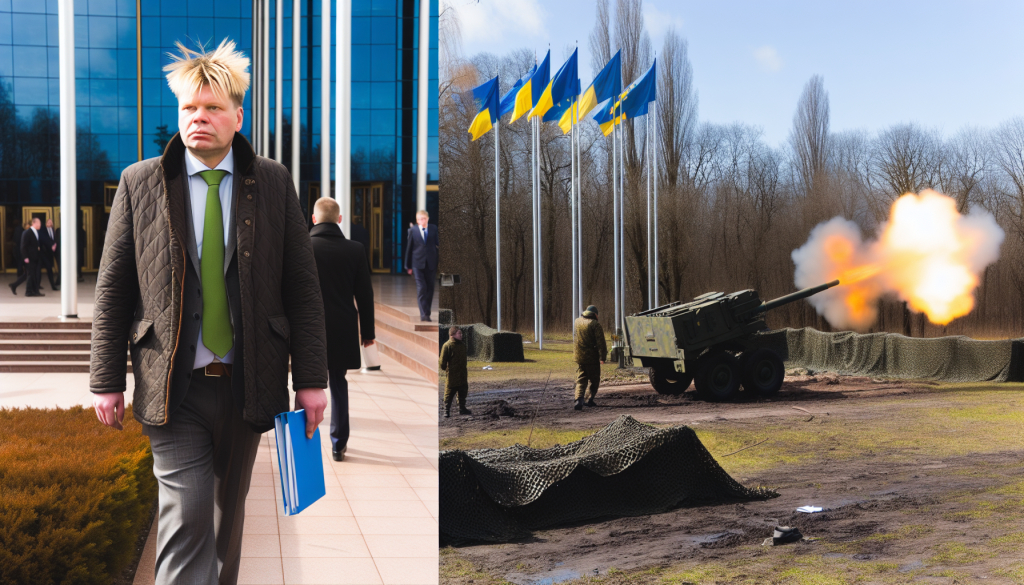
Former UK Prime Minister Boris Johnson spent two days visiting the front line in Ukraine’s Zaporizhzhia region. During the trip, he met with troops from the 65th Brigade of the Armed Forces of Ukraine and stressed the urgent need for increased Western assistance. According to Johnson, the current level of support is not enough to repel ongoing Russian assaults.
While in Kamianske, an area subjected to constant shelling, Johnson personally witnessed the threat posed by enemy drones. He later described the experience in a column for the Daily Mail. The deputy commander of the 1st Battalion of the 65th Brigade, known by the call sign Makar, explained that due to relentless drone activity, any time spent in open areas must be kept extremely brief.
Johnson arrived at the front at a time when, he claimed, hostile intelligence resources were allegedly being used to target American vessels in the Persian Gulf, while drones were detonating in allied capitals in the Middle East. He described these developments as two fronts of the same war. After speaking with Ukrainian soldiers, Johnson said he sensed their exhaustion but also their anger over insufficient Western backing. Despite this, he voiced confidence that Ukraine would ultimately prevail.
Details of the trip
His morning in Zaporizhzhia began at 3:50 a.m. At 4:07 a.m., a powerful explosion shook the area—a Shahed-type drone struck residential buildings and a supermarket, killing one civilian and injuring eight others.
Faith and improvised production
At one point, in an abandoned village, Johnson met with a brigade chaplain. Inside a makeshift chapel adorned with golden icons, the priest was asked what kind of assistance was most urgently needed. His response was immediate and emphatic: “Nuclear weapons.”
In another half-destroyed house, two men were crouched by a fire wrapping cheese and sausage in plastic. The food was being prepared for drone delivery to comrades on the front line, as roads had become too dangerous for traditional supply routes. In a nearby village, 51-year-old Vasyl, a former cement manufacturer, was filling 3D-printed bomb casings with explosives. When asked what was most needed, he replied without hesitation: more explosives and more printers.
The faces of resistance
At a repair facility, Johnson met a drone pilot known by the call sign “Kokos.” Considered an ace operator, Kokos claimed to have eliminated 434 enemy fighters. He showed Johnson footage of the moment he was wounded in the leg by a tank shell. According to him, fellow soldiers intervened to prevent doctors from amputating the injured limb.
Observing individuals like these, Johnson concluded that it is unrealistic for diplomats to expect Ukrainians to voluntarily surrender their territory.
The cost of Western hesitation
Ukrainian forces have constructed extensive defensive lines—deep, multi-layered trenches and kilometers of barbed wire. Military commanders emphasized that any attempt to seize Zaporizhzhia would come at an enormous cost to the enemy. The key question, Johnson argued, is whether the West is doing enough. His answer was clear: it is not.
Ukraine, he noted, has not been provided with sufficient long-range missiles to strike drone production facilities and air bases. At the same time, the former British prime minister insisted that it is wrong to blame Donald Trump alone while European countries hold hundreds of billions in frozen Russian assets.
“The Ukrainians can win—and they will win. But our delays and indecision continue to cause immense human suffering. We say they are fighting for all of us—so why on earth are we still not giving them the support they need?” Johnson said.
Other news about Boris Johnson
Earlier, it was reported that Johnson called on Western nations to urgently deploy “peacekeeping ground forces” to Ukraine. In his view, the cautious and gradual approach to supplying weapons has already cost many lives.
In this context, the former British leader urged allies not to wait for a formal peace agreement before sending a deterrence contingent to Ukraine.
However, Johnson has also faced criticism. Czech Prime Minister Andrej Babiš accused him of undermining a potential peace agreement between Ukraine and Russia in 2022.