Ebola outbreak in the Democratic Republic of the Congo becomes deadliest in nation’s history
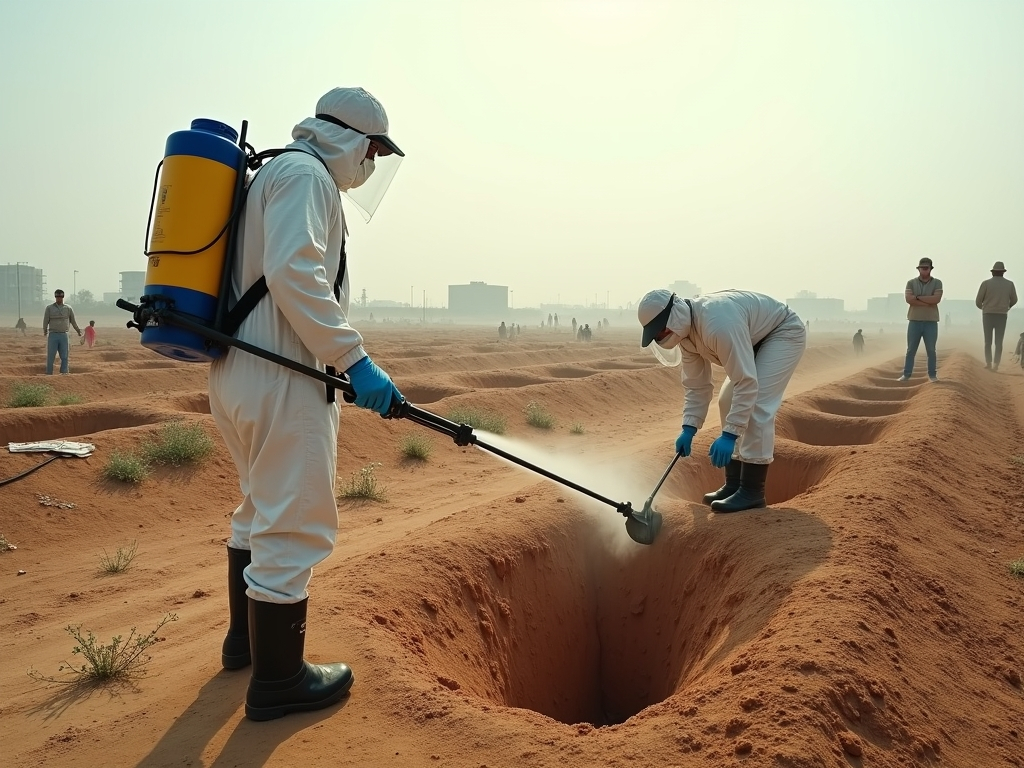
The Ebola epidemic in the Democratic Republic of the Congo has become the deadliest in the nation’s history, with government figures reporting at least 2,325 deaths, exceeding the number recorded during the 2018-20 outbreak.
The DRC’s national public health institute said the number of confirmed infections had climbed to 4,945, including 101 cases identified within the previous 24 hours.
The World Health Organization has warned that the epidemic could overtake west Africa’s 2014-16 Ebola crisis as the largest ever documented. WHO figures show that outbreak caused 28,616 infections and 11,325 deaths in Guinea, Liberia and Sierra Leone.
On Friday, the UN warned that Ebola “is winning in the Democratic Republic of the Congo”, adding that the disease was claiming one life every 30 minutes.
Six of the DRC’s 26 provinces have reported infections, particularly those near the north-eastern frontier. More than 3,400 cases have been registered in Ituri province, where the outbreak was initially identified.
The latest confirmed figures make this epidemic—the 17th Ebola outbreak in the DRC—the fastest-growing event in the virus’s recorded history. The 2014-16 west African crisis took nearly five months to reach 1,000 deaths, while the current outbreak has caused more than 2,000 fatalities in under three months.
No vaccines or treatments have yet been approved for the rare Bundibugyo strain driving the present increase in infections. However, 1,000 patients in the DRC have recovered, while 730 remain in medical care or isolation centres.
Clinical studies of two potential therapies for the strain started in Ituri last month. WHO director general Tedros Adhanom Ghebreyesus said last week that two vaccines designed specifically to target Bundibugyo were now undergoing human testing.
Thomas Parisch, a public health expert recently sent to the DRC with Médecins Sans Frontières, said: “Usually, the fatality rate should decline as an outbreak continues, because contact tracing improves and patients are found and treated sooner. Instead, many cases are still being discovered extremely late, when treatment has less chance of working, and numerous patients are identified only after dying in the community.”
Uganda has recorded at least 20 infections, all in the capital, Kampala. Its most recent case was reported on 21 June, and officials found no evidence of community transmission. The government declared Uganda free of Ebola on 28 July, after the final patient, a Congolese citizen, left hospital on 16 July.
In May, the WHO classified the outbreak in the DRC and Uganda as a public health emergency of international concern. Genetic sequencing indicated that the epidemic had begun several months earlier, in February.
Ebola passes from wild animals to humans and then spreads between people through direct exposure to the blood, bodily fluids, organs or secretions of infected individuals, including those who have died. Transmission can also occur through contaminated objects and surfaces, such as clothes or bedding.
According to the WHO, early signs may include fever, exhaustion, general weakness, muscle aches, headaches and a sore throat. These can later develop into vomiting, diarrhoea, stomach pain, skin rashes and indications of reduced liver and kidney function.
Efforts to control the epidemic have been disrupted by assaults on health facilities, sometimes encouraged by false claims surrounding safe burial procedures, as well as walkouts by health workers who have not been paid. Years of instability, outside intervention, weak healthcare systems and inadequate roads have further obstructed the response in already traumatised communities.
More than 70% of patients die within their communities rather than in medical centres, according to Mohamed Janabi, the WHO’s Africa regional director.
Jean-Paul Malo Lotsima, a civil society representative in Ituri’s Djugu area, said: “People would rather receive care at home because they believe the illness is poisoning or another condition.”
He continued: “Families often wait until the final moment, when they understand the patient is deteriorating, before attempting to reach hospital. In some cases, the person dies during the journey.”
Flavier Ngurima, a resident of Nizi, one of Ituri’s main outbreak hotspots, said his brother died before arriving at a treatment facility. “We asked a nurse in our family to care for him at home because both the patient and his relatives were frightened of going to the ETC [treatment centre],” he said. “They believed that many people who went there died.”