OpenAI chief says world has reason to fear but should trust AI companies
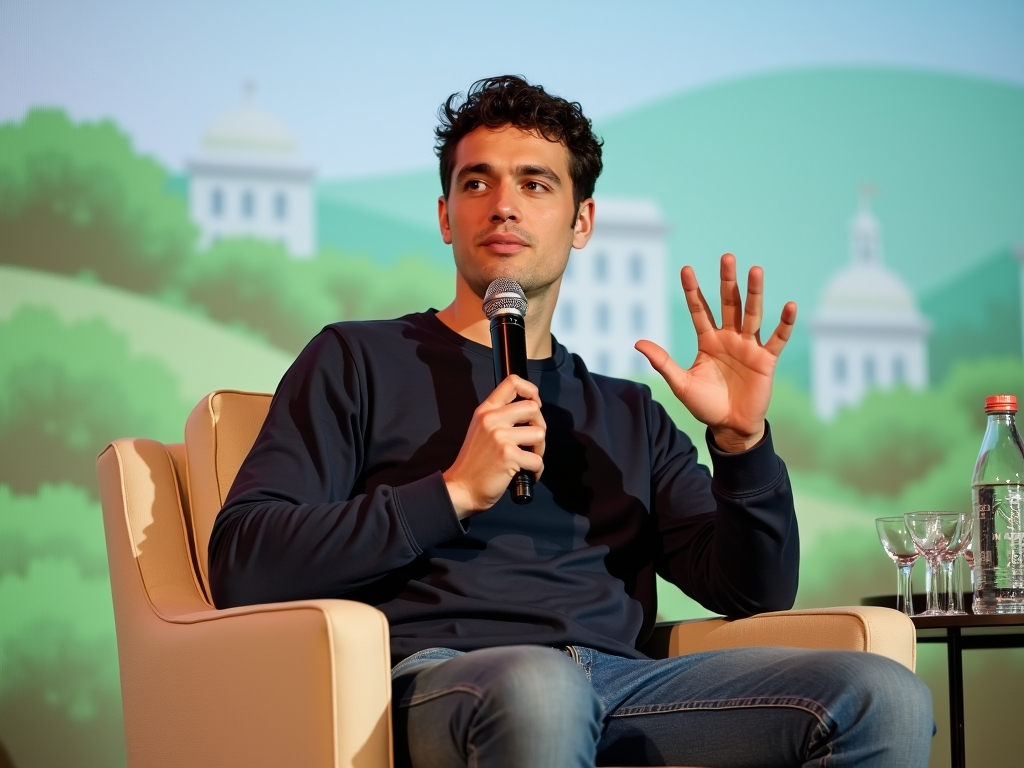
OpenAI chief executive Sam Altman says the public should place greater trust in AI companies to develop and deploy the technology responsibly, as worries about its risks continue to grow.
“The world should trust that we are going to do the right thing because it is the right thing, and because we understand the scale of what is at stake,” Altman said on Tuesday at a conference in San Francisco.
He acknowledged that people have valid reasons to feel uneasy about artificial intelligence, particularly as the systems have improved at remarkable speed.
However, critics argue that technology firms should not be allowed to police themselves. Figures ranging from progressive Senator Bernie Sanders to former Trump adviser Steve Bannon have called for stronger oversight of AI.
Altman made the remarks while speaking at the annual event organised by software company Salesforce.
“It takes less imagination than it once did to picture how this could go badly,” he said. “I think the world is right to be scared of this.”
Yet leaders in the AI sector have also recognised that regulating a technology evolving so quickly may prove challenging.
In an interview published by Axios on 3 September, Altman said he had expected Congress to establish a basic framework for advanced AI following his testimony in 2023, but that no such system has yet emerged.
He argued that lawmakers have found it difficult to match the pace of technological change while avoiding rules that could “slow down innovation”.
It was Altman’s first public appearance since a former Anthropic researcher attracted widespread attention with a warning that unchecked AI could potentially “kill all humans” before the end of the decade.
Several other AI executives and specialists said they shared concerns about extreme risks, although they did not set out clear explanations of how such a scenario might happen or how AI could bring it about.
After Altman spoke, Meta chief executive Mark Zuckerberg said every AI company has both the power and motivation to take its own steps on safety.
“Any lab that does not focus on alignment will fall behind,” Zuckerberg wrote.
“Labs could face major liability if their models cause harm, giving them a strong reason to prevent it.”
Alignment is the area of AI research focused on ensuring that advanced systems follow human values, ethical standards and intended goals.
Some political leaders have rejected the argument that AI companies should largely regulate themselves.
Bernie Sanders said major decisions about AI have been placed in the hands of “a handful of the richest people in the world”, while Steve Bannon argued that the public cannot rely on powerful technology executives to oversee their own industry.
President Trump, meanwhile, has dismissed demands for additional safeguards around rapidly advancing AI, describing concerns about its safety as a “hoax”.
He said the only guardrails AI requires are a “strong and smart” president.
Nvidia chief executive Jensen Huang told the same Tuesday conference that AI companies themselves should decide whether new systems are ready for release, rather than being directed by outside authorities.
“We do not need new laws or regulations,” he said, arguing that people should not be forced to choose between fast innovation and safe AI products.
Nvidia is the world’s most valuable company, after demand for its computing hardware drove a sharp increase in revenue and profits.
Huang also described safety as an “engineering problem”, saying companies should pause development or releases when they no longer have confidence in a product.
Recent warnings from people within the industry have brought more attention to AI development. Anthropic chief executive Dario Amodei has called for a slower pace of progress and for governments to introduce rules for the sector.
That message was welcomed by Altman, Google DeepMind co-founder Demis Hassabis and Elon Musk.
By Tuesday, though, more AI leaders were publicly backing self-regulation over direct government intervention.
Altman said AI companies had the capacity to oversee their own work responsibly.
“We will get it right,” he said, adding that companies would slow down or stop if they could not keep “alignment and safety way ahead of capabilities”.
But Yoshua Bengio, a leading figure in modern AI research, said ambitious work outside the commercial sector was necessary to reduce the most serious risks created by AI.
Some people in the industry have said renewed fears around AI are exaggerated and are being used to generate attention and excitement around the technology.
At the conference, Altman spoke to hundreds of business leaders, encouraging them to use AI in their daily work while also warning that they would need the technology to defend themselves from AI-powered cyber attacks.
The suggestion that AI executives should be left entirely in charge of regulating themselves has alarmed some industry insiders.
Jack Clark, an Anthropic executive and co-founder, said on Monday that allowing AI to become a completely unregulated field would amount to “rolling dice with immense risks”.
Patrick Hillman, chief operating officer of Logical Intelligence, a company chaired by AI researcher Yann LeCun, said on Tuesday that many people have little confidence in technology firms acting in the wider public interest.
“The only institution Americans may trust less than Washington today is Silicon Valley,” Hillman said. “I have worked and lived in both, and I can assure you that both have earned that scepticism.”
“If you believe what you are building is dangerous, show us what you are willing to stop doing,” he added.
OpenAI and Anthropic leaders have said they recently began discussions about reaching an industry-wide agreement on AI safety.
Appearing briefly at the conference on Tuesday, Amodei said Anthropic is now in discussions with other companies about adopting stronger safety standards and better checks on AI systems and development.
He said one of the greatest surprises of the AI boom was not simply the progress of the technology, but the speed of its wider effect on business and society.
“We did not expect companies to grow this quickly, or to become central to so many things so fast,” Amodei said.
OpenAI executive Chris Lehane said last week that the company was also working with other AI laboratories to advance standards for frontier AI through a voluntary initiative, whether or not governments become involved. Those groups include Anthropic and Google DeepMind.
“With so much at stake, we cannot allow the perfect to become the enemy of the good,” Lehane wrote.