'The lost empire': When Russia colonized California
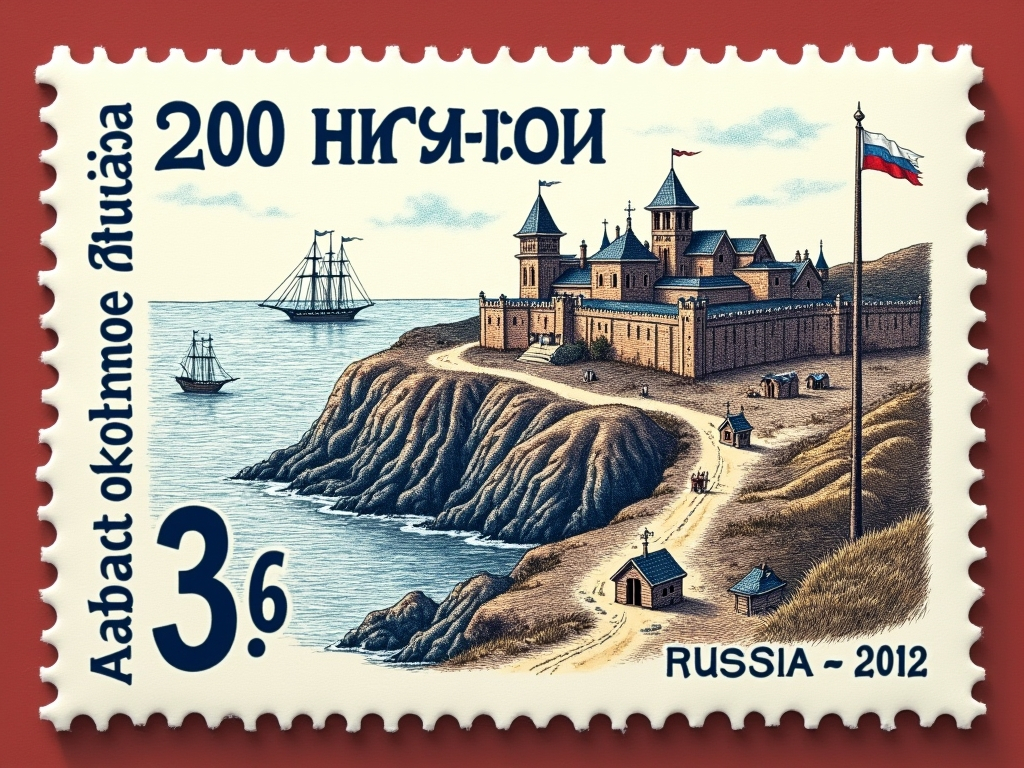
For almost three decades, a corner of Sonoma County belonged to Tsarist Russia, leaving a little-known but important mark on the history of the United States.
The journey from San Francisco to Fort Ross takes roughly two hours, tracing a spectacular route north along the California coast.
Once the fog around the Golden Gate had faded behind me, the road carried me past dry vineyards and towards Sonoma’s isolated shoreline. I opened the car windows. On one side, the land dropped sharply into the Pacific, where seals called from rocks surrounded by white surf. On the other, steep slopes rose toward towering redwoods beside the twisting road.
Then, against the bright ocean, I spotted a small chapel with twin domes and Orthodox crosses. I stepped out, followed a trail past a sign in Cyrillic, and approached a wooden settlement perched 150ft (46m) above the sea.
“Welcome to Fort Ross, once the southernmost edge of the Russian Empire,” said Chris Kimsey, an archaeologist with California State Parks.
Each year, countless visitors travel the Pacific Coast Highway, drawn by its dramatic curves and sea views. Yet many do not realise that on a remote headland about 90 miles (145km) north of San Francisco stands evidence of a time when Russia governed part of California.
I certainly had not known, and Fort Ross’s quiet, almost deserted atmosphere suggested that many others were equally unaware.
“Even Californians are often surprised to learn that Russia had a colony here,” anthropologist Kent Lightfoot of the University of California, Berkeley, told me later. “People know about Spanish and Mexican California, but the Russian chapter is rarely remembered. It is almost a forgotten empire.”
Many Americans know that Alaska belonged to Russia for nearly 70 years. Less widely understood is that Russian America, the empire’s only permanent overseas colony, stretched south into California between 1812 and 1842. Russian settlers arrived in the region decades before Americans from the newly independent United States.
Fort Ross, named after Rossiya, or Russia, was both ambitious and unexpectedly diverse. It was established partly to supply food to Russia’s struggling settlements in Alaska, but it also fuelled serious discussions about expanding Russian influence further along North America’s western coast.
While European empires pushed westward during the 1500s and 1600s, Russia was advancing in the opposite direction. By the 1640s, fur traders, explorers and armed expeditions had crossed Siberia and reached the Pacific Ocean.
That movement produced permanent Russian communities across Alaska’s coasts and islands. In 1799, Tsar Paul I reinforced Russia’s claims by granting a charter to the Russian-American Company. Designed along the lines of a commercial empire, the company controlled not only the profitable fur trade but much of Alaska itself.
Its settlers, however, faced a major obstacle. Sea otter pelts brought wealth, but food remained scarce. Much of Alaska’s landscape was too cold for dependable farming, so the colonists began sailing south in search of warmer land and trade with Spanish settlements.
In April 1806, Russian-American Company director Nikolai Rezanov entered San Francisco Bay aboard the Juno. His colony was threatened by famine, and his crew had been badly affected by scurvy. As the ship neared Spain’s northernmost California settlement, a Spanish soldier demanded to know who they were.
“Russia,” came the reply. It was an answer the Spanish had feared for decades.
Spain had claimed California since 1542 but did not begin actively occupying the region until 1769. Reports of Russian fur traders advancing across Alaska had alarmed Spanish officials. To block Russian and British movement, Spain established a chain of coastal military posts, beginning at San Diego.
“Russian activity was one of the forces that encouraged Spain to expand through Alta California,” Lightfoot said. “Spanish authorities worried that the Russians might come farther south. San Diego, Santa Barbara, Monterey and San Francisco were all linked to that concern.”
During his six weeks in San Francisco, Rezanov secured enough supplies to rescue the starving Alaskan settlements. He did so in part through an engagement to the 15-year-old daughter of the Spanish commandant. On his return voyage through the Golden Gate, he saw that northern California was lightly defended and far more suitable for farming than Siberia or Alaska. He began planning a Russian colony there.
In 1812, after years of discreet coastal surveys, 25 Russians and 80 Native Alaskan hunters established a settlement on a broad plateau above the Pacific in what is now Sonoma County. The site was close to sea otters yet distant from Spain’s thinly guarded northern frontier. They built a Siberian-style community from California redwoods and flew the tsar’s double-eagle flag.
Today, this distant outpost still feels strikingly isolated. Located 12 miles (19km) from the nearest town and beyond reliable mobile phone service, the weathered structures look out over a sweeping 180-degree view of the ocean. During two days at the 3,400-acre Fort Ross State Historic Park, I saw only 14 other visitors. Apart from bells from St Nicholas Chapel, the only constant sound was the surf far below.
“Fort Ross has a special atmosphere,” said Robin Joy Wellman, who spent nearly 30 years interpreting the site for California State Parks. “It feels mysterious, but people who find it often say it is among the most beautiful places they have seen.”
The settlement stands near the San Andreas fault. The 1906 earthquake that devastated San Francisco also destroyed much of the original wooden complex. Still, exhibits and reconstructed buildings provide a strong impression of life on Russia’s distant Pacific frontier.
The centre of the colony was its fortified stockade. A small group of officers, soldiers and company administrators lived in barracks behind a 12ft (3.6m) palisade. Kimsey led me up into two blockhouses equipped with cannons overlooking the coast. Although the Russians chose the high ground partly for protection from Spain, the two empires never fought here. Instead, they often relied on one another.
“Both the Russians and the Spanish were operating at the outer limits of huge empires,” Kimsey said. “Each side had things the other needed, so unofficial trade became important.”
In the warehouse, sea otter pelts could once have hung drying from the rafters. Each was worth about $100, roughly equal to a Pennsylvania farmer’s annual income at the time. The pelts were sent to markets in China, Europe and Spanish California. Beneath one of the oldest Orthodox churches in the western hemisphere, the settlement expanded into a lively community with bathhouses, bakeries and about 60 buildings.
“It was a busy and diverse trading village, with many languages and people from different backgrounds living together,” Lightfoot said. “The stockade was only a small part of the settlement. Most of the activity was outside it.”
As Kimsey and I left the palisade, he explained that the population had grown to almost 400 by the 1830s. Fort Ross had become one of the most diverse places in California, and nearly everyone living there worked directly or indirectly for the Russian-American Company.
Near the cape, where the sloboda, or village, once stood, paid Aleut and Kodiak hunters lived alongside Native California women. Creoles of Russian and European ancestry married Kashaya Pomo and Coast Miwok people, while community members of different backgrounds were buried near one another in the Old Russian Cemetery uphill from the settlement.
Compared with many other European colonies, the Russian presence was relatively tolerant. “The Russians did not arrive with the same mission to ‘civilise’ people that the Spanish had,” said Kimsey, who also serves as a liaison with Native communities.
We followed a steep path down to a crescent-shaped beach, where coopers, carpenters and blacksmiths recruited from places as far away as Finland and Hawaii once worked together. “This is where California’s first ocean-going ships were built,” Kimsey said.
The area also saw some of California’s earliest brickmaking, glassmaking and windmill construction. Workers built boats, shaped iron, cast brass and produced tools, helping Fort Ross become an important manufacturing centre. These goods were traded with Spanish and later Mexican settlements for supplies needed in Alaska, indirectly helping Russia’s rivals develop California.
This sheltered cove was also the departure point for small cargo vessels and hunters in kayaks travelling to the colony’s main deep-water harbour, 20 miles (35km) south at Rumyantsev, now Bodega Bay, as well as to the sealing station on the Farallon Islands off San Francisco.
As Fort Ross expanded, some leaders within the Russian-American Company pushed for a far more ambitious plan: Russian control of North America’s Pacific coast. In 1821, Tsar Alexander I issued a decree claiming territory from modern Oregon north to Alaska. John Quincy Adams, who would soon become the sixth US president, objected strongly. His warning that the Americas were no longer open to new European colonial projects helped shape the principle later known as the Monroe Doctrine.
From the beach, Kimsey and I climbed back up past the stockade toward the orchard begun by the Russians with a single peach tree in 1814. Of the many fruit trees and crops they planted, only one branch from a roughly 200-year-old Capulin cherry remains. Yet their influence on the region’s agricultural history was more substantial than it may seem.
“The Russians planted the first grapes in what is now Sonoma County in 1817,” said Megan Jones, Sonoma’s official wine librarian. Sonoma is now widely regarded as a key birthplace of modern American wine, and Russian traders brought the uncommon Mission grape to the area, producing modest quantities of pale red wine.
Despite its achievements, Fort Ross failed in its central mission. It did not become reliably profitable, nor did it provide enough food for Alaska. By the early 1820s, Native Alaskan hunters working for the company had killed so many sea otters that local numbers collapsed. At the same time, coastal fog and destructive rodents left the settlement producing only around 13 tonnes of wheat a year between 1826 and 1833.
When the British-operated Hudson’s Bay Company agreed in 1839 to supply Russian Alaska from its Pacific Northwest posts, the future of Tsarist California was effectively decided.
Two years later, Swiss immigrant John Sutter bought Fort Ross’s buildings and assets for $30,000. He reused materials from the settlement in his new Sacramento-area community. Seven years after the Russians departed for Alaska, gold was discovered on Sutter’s land, triggering the California Gold Rush.
Signs of California’s Russian era can still be found north of San Francisco. Russian Hill takes its name from graves of Russian-American Company sailors uncovered there during the Gold Rush. At Bodega Bay, a historical marker recalls the place where Russian ships departed for Novo-Arkhangelsk, now Sitka, Alaska. And every year, visitors flock to the Russian River Valley to swim, hike and sample celebrated local wines.
“The Russians called the river Slavyanka, and it was one of their main routes into the region,” said Suki Waters, a Kashaya Pomo descendant and owner of WaterTreks, which leads ecological outings on the Russian River. As we paddled past harbour seals and migrating pelicans, she shared stories passed down from her great-great-grandmother, who had lived during the Russian period.
“For thousands of years, Fort Ross was a seasonal fishing village called Metini,” she said. “When the Russians first appeared, the Elders called them the ‘Undersea People’, because from the bluff it seemed as though they had risen directly from the ocean.”
Later that day, I walked past the Cyrillic signs, the stockade and the old village grounds toward a solitary bench at the edge of the bluff. Looking west across the Pacific, I wondered how long it would take to reach Russia from this coast. Then the chapel bell sounded faintly through the air, recalling something Wellman had said.
“It is extraordinary that a small part of Russia once existed right here in California. Why should we choose to forget it?”