‘Not backing down’: The Canadians choosing to battle wildfires on their own
When a wildfire ignited near his First Nation community in northern Ontario, Hubert Wigwas chose not to evacuate.
He installed sprinklers on his roof to douse drifting embers. He checked in on elders who had also decided to remain, and he filled the tanks of four boats by the lake in case a rapid escape became necessary.
"This represents everything I’ve worked for over 58 years," said Wigwas, a councillor from Gull Bay First Nation. "I’m not prepared to walk away and watch it disappear."
In recent years, Canada has endured some of the most severe wildfire seasons in its history, including a record-breaking year in 2023 when fires scorched forested areas comparable in size to Syria. As of August, more than 750 wildfires were actively burning nationwide.
The consequences have reached far beyond Canada’s borders. Smoke has drifted into parts of the US Midwest, degrading air quality in major cities. Even US President Donald Trump commented publicly, criticising Canada over polluted air crossing southward.
The growing intensity of wildfire seasons has prompted difficult questions across the country: Are there enough trained firefighters to manage these escalating threats? What happens when emergency services are overstretched? And how can isolated communities—often situated near Canada’s expansive boreal forest—adapt to a future where wildfire risk is constant?
Wigwas weighed those same concerns when he decided to remain, despite facing a potential fine of about C$800 for ignoring evacuation orders.
Officials from Gull Bay First Nation, also known as Kiashke Zaaging Anishinaabek, have urged residents since mid-July to stay away as more than 150 fires burn in northwestern Ontario.
On 29 July, the community’s chief issued a letter urging anyone still there to leave immediately, stating that firefighters cannot safely perform their duties while residents remain in their homes.
Authorities in other regions, including British Columbia—where roughly 115 fires are burning—have delivered similar warnings.
Yet with flames burning about 24km from his community, Wigwas said in late July that he had not seen outside fire crews arrive to help fireproof homes or monitor the elders who had stayed behind.
That absence, he said, reinforced his belief that his First Nation should develop its own emergency wildfire response system and train residents to safeguard their properties.
"People talk about climate change all the time, but there’s no coordinated effort to bring First Nations together and build a proper system," he said.
Dave Bradley, spokesperson for Ontario’s Ministry of Natural Resources, did not respond directly to Wigwas’ concerns but said the province maintains ongoing communication with First Nations leadership.
He explained that firefighting resources are allocated according to fire behaviour, weather patterns and the level of risk to communities.
In British Columbia, long considered the frontline of Canada’s wildfire battle, some communities are already embracing the type of local preparedness Wigwas envisions. Residents in rural and remote areas are being trained to respond safely to fires before provincial crews can arrive.
Sonja Leverkus, a wildfire specialist and researcher, said she has helped train more than 400 people around Fort Nelson over the past three years through a group she co-founded, the Northeast BC Rural Incident Management Team.
She said the initiative emerged from a recognition that Canada must rethink its wildfire response as climate change fuels more frequent and intense fires.
"There simply aren’t enough trained people in Canada," she said, "to handle the scale of fires we’ve seen, particularly in the past five years."
In remote areas where the nearest town may be hundreds of kilometres away, smaller communities can become a lower priority if larger population centres are threatened, she noted.
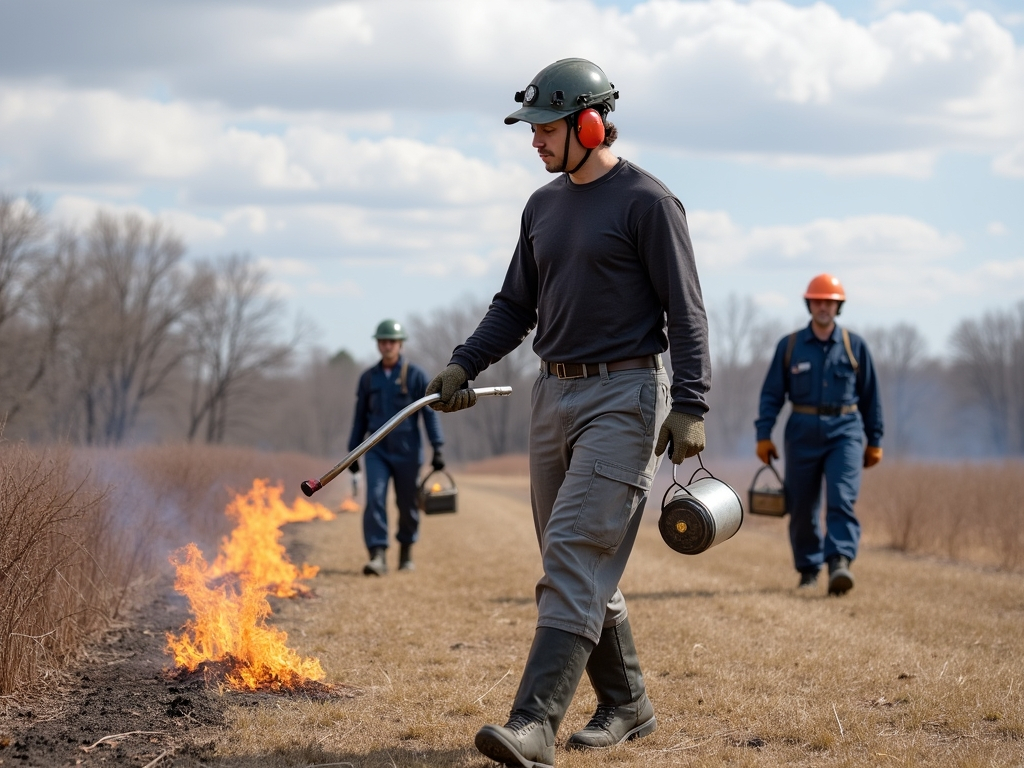
Her predominantly Indigenous team has conducted prescribed burns—controlled fires intended to reduce fuel loads that can intensify wildfires.
They have also extinguished smaller fires before they spread, using equipment purchased through grants and fundraising. In some cases, they have arrived ahead of provincial crews and then worked alongside them.
When a major wildfire struck Fort Nelson in 2024, Leverkus and 40 team members stayed behind. The province contracted them to remove flammable materials and assist with suppression efforts.
She also organised structural protection courses to teach residents how to defend buildings from embers that can rapidly ignite entire neighbourhoods.
"Our community includes mechanics, carpenters and skilled problem-solvers," Leverkus said. "And many of us are willing to stay."
Cam Allen, a 70-year-old former helicopter pilot from Fort Nelson who once battled fires from the air, recently completed Leverkus’ course to learn ground-based suppression skills and understand how to respond if flames approach his town.
He pointed to the example of a California resident who stayed behind during a wildfire and protected his home with a garden hose while surrounding houses burned.
"It makes you think—if 100 people, or even 1,000, had done the same, how much more might have been saved?" Allen said.
However, not everyone who defies evacuation orders survives. During major wildfires in Los Angeles, 29 people lost their lives, including some who had remained behind despite official warnings.
Leverkus’ team does not have formal recognition from the provincial government, and its existence highlights ongoing tensions in fire-prone regions between officials enforcing evacuations and residents determined to stay.
Recently, wildfire crews in British Columbia had to rescue a man whose home became encircled by flames after he refused to leave the Village of Clinton.
In a recent briefing, the province’s emergency management minister repeated that anyone under evacuation order must leave immediately.
"We may not be able to reach you if conditions worsen," warned Minister Kelly Greene, emphasising that evacuation orders are issued only as a last measure to protect lives.
Paul Kovacs, a researcher at the University of Western Ontario and head of its Catastrophic Loss Reduction Institute, said Canada’s relatively low wildfire fatality rate is partly due to its strict evacuation policies.
He noted that the “stay and defend” philosophy is strongly discouraged within Canada’s academic and emergency management communities, unlike in some countries such as Australia.
"When managing a wildfire, protecting human life comes first," Kovacs said.
He added that rural and remote communities should play a significant role in shaping protective strategies and reinforcing homes against fire risk. However, he stressed that such preparations should occur well before a blaze is actively threatening the area.
A spokesperson for British Columbia’s Ministry of Forests said community-organised groups may be temporarily contracted during active wildfires, but only if provincial firefighting resources in the area have been exhausted.
The ministry also reported that the number of full-time BC Wildfire staff has grown by 56% in recent years, alongside seasonal hires, to address the rising number of fires.
Leverkus said she is exploring options to gain official recognition for her programme so that trained residents can assist without risking penalties for remaining in evacuation zones.
Safety, she emphasised, is central to the training. Participants learn to anticipate fire behaviour and identify at least two secure evacuation routes.
Not everyone who completes the training chooses to stay during a wildfire, she said. Those who do operate under clear command structures, including instructions on when to withdraw.
"Anyone who wants to stay and defend must understand the risks—to themselves and to their families," Leverkus said.
She hopes the initiative will eventually serve as a model for rural and remote communities across Canada, creating dependable local response teams nationwide.
As for Wigwas, he plans to challenge his evacuation fine in court.
"If I’m punished for protecting my home and end up with nothing left, then I might as well be behind bars," he said.