How Australia blends cutting-edge technology with Indigenous wisdom to combat wildfires
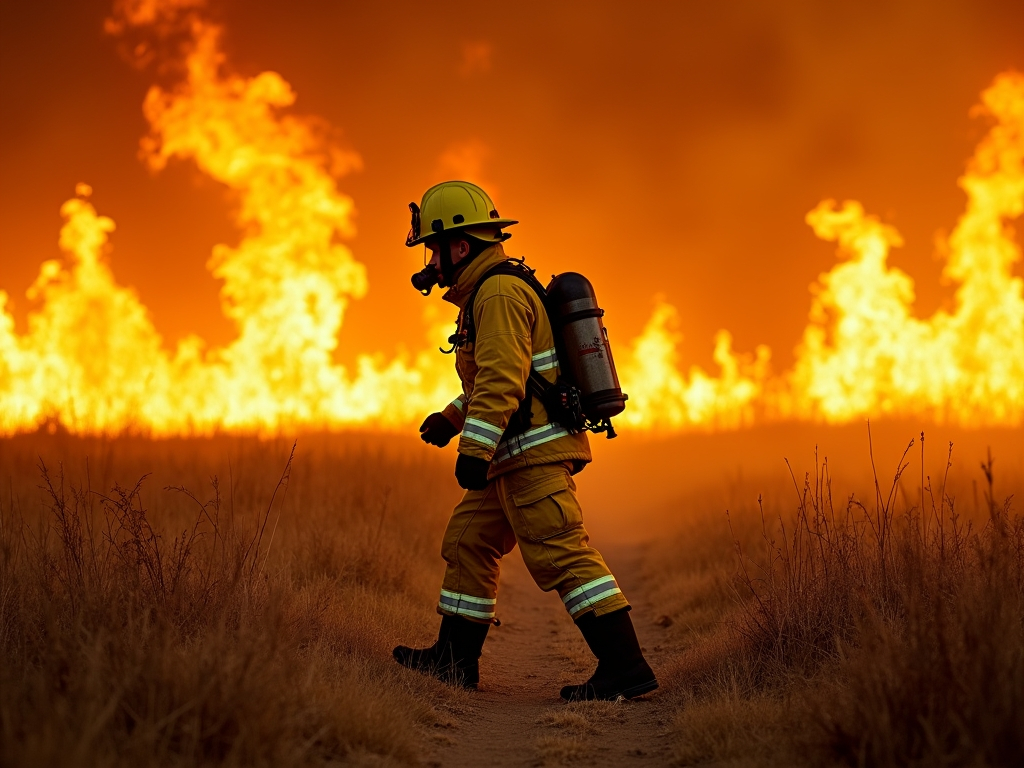
The wildfires sweeping across Europe feel deeply personal to Professor Marta Yebra, even though she now lives thousands of kilometres away.
Born in Spain and now based in Canberra, the bushfire specialist has devoted much of her career to helping Australia – one of the most fire-exposed nations on Earth – better confront its own destructive blazes.
She leads the Bushfire Research Centre of Excellence, created after Australia’s catastrophic 2019–20 Black Summer fires, which burned an area comparable in size to the United Kingdom.
At the centre, researchers explore how tools such as satellites, drones and artificial intelligence can improve early fire detection, complementing the practical expertise of seasoned firefighters.
Yet technology is only part of the solution. Equally vital is the deep reservoir of knowledge developed in Australia over tens of thousands of years and handed down through generations.
In this respect, Australia holds a distinctive strength.
Fire has long been embedded in Indigenous culture, long before European settlement in the 18th century. Only recently has the broader community begun to fully recognise the value of this enduring wisdom.
Yebra has led a groundbreaking initiative that blends ancient Indigenous knowledge with advanced satellite analysis to identify landscapes most vulnerable to ignition.
Satellite imagery measures “fuel moisture content” — an indicator of how much combustible material, such as dry grass, leaves, shrubs and bark, is present. However, these readings alone cannot tell the whole story.
This is where people like Adrian Webster play a crucial role.
Raised on the south coast of New South Wales, Webster learned from his elders how to interpret the land — or “country,” the term Indigenous Australians use for their ancestral homeland.
Drawing on Indigenous ecological understanding — from the colour and scent of plants to the density of tree cover — he helps validate and interpret the satellite data gathered by Yebra’s team.
“She had remarkable data, but without context on the ground it lacked meaning,” he explains.
“Through an Indigenous lens, though, it becomes a living map. If you understand it properly, it can lead you straight to places that are primed to burn.”
For Webster, evaluating the landscape means getting physically involved with it.
“We examine what’s happening beneath the surface and then everything rising up beyond the canopy,” he says.
Yebra notes there has been a “striking alignment” between Webster’s local insights and the satellite findings, highlighting the power of combining Indigenous knowledge with Western science.
The team is now seeking further funding to expand the project and collaborate with Indigenous communities in designing land protection and fire management strategies.
For Webster, the mission is about “giving our mother — the Earth — her voice back.”
Another example of traditional knowledge shaping modern practice is Australia’s approach of fighting fire with fire.
Cultural burning is an age-old Indigenous method of caring for the land while sustaining a spiritual bond with it.
This includes lighting “cool burns” — low-intensity, carefully managed fires that create a mosaic pattern across the landscape, preventing dangerous fuel accumulation.
“In Europe, land management hasn’t historically included this cultural dimension,” Yebra explains.
In Spain, scientists have attributed the severity of recent fires to a significant build-up of combustible vegetation.
“Watching Spain suffer is painful, but not unexpected,” Yebra says. “Climate change is increasing the frequency of extreme fire weather throughout southern Europe.”
She believes Europe, now enduring some of its worst fires in decades, can draw valuable lessons from Australia’s experience.
“We’ve spent decades living with large, high-intensity bushfires,” she says. “A major shift in our approach has been moving from reacting to fires to anticipating them and acting sooner.
“The earlier risks are identified or ignitions detected, the more choices firefighters have.”
Webster agrees that one key lesson is proactive action.
“If you wait, fuel builds up. That makes fires bigger and harder to control,” he says.
“Indigenous communities understood that, so we burned regularly. That prevented massive fires from taking hold.”
The tradition of cool burning stretches back some 60,000 years. Before lighting a fire, Webster carefully assesses the area, looking for natural signs of moisture and oil content to ensure the burn remains controlled.
“The environment provides the answers,” he says. “There’s a balance point — enough moisture to slow the fire, enough oil to let it move steadily.”
A more contemporary strategy in Australia is the prescribed burn, also called hazard reduction burning. These planned operations, often conducted during cooler months, are now being introduced in parts of Europe.
Superintendent Andrew Shurety of Fire and Rescue NSW says this approach is especially critical along expanding urban fringes.
As suburbs push further into bushland, hazard reduction burns have become firefighters’ primary preventive measure, given that bushfires are inevitable.
However, Shurety notes that longer fire seasons and increased rainfall in cooler months are narrowing the safe window for carrying out such burns.
Another tactic designed to deprive fires of fuel is “backburning,” where controlled flames are ignited ahead of an advancing wildfire to remove vegetation and slow its progress.
This method is gaining traction internationally, as Queensland firefighter Damian Hatfield observed.
When he travelled to Alberta, Canada, to assist during its worst wildfire season on record, backburning was not widely practised. A year later, attitudes had shifted.
“By 2024, backburning was much more prominent,” he says, noting Canadian crews were readily incorporating it into their strategies.
Drones have also revolutionised Australia’s firefighting efforts, according to Trent Curtin of the NSW Rural Fire Service.
“Crews can arrive, launch a drone within minutes, assess the fire’s behaviour and make informed decisions before larger aircraft even arrive,” Curtin says.
Drones also transport equipment, ignite backburns and assist in evaluating fire damage.
Meanwhile, forecasters are warning of a potential super El Niño, raising concerns about extreme heat and drought in the coming season.
“The outlook suggests a severe fire season ahead,” Yebra says.
Jason Heffernan, chief officer of Victoria’s Country Fire Authority, shares that concern. Memories of the deadly 2009 Black Saturday fires remain vivid.
“We’re preparing for what could be a very significant summer,” he says.
He observes that fire seasons are starting earlier and extending longer. “Australia’s landscape is naturally fire-adapted,” he adds.
Still, as wildfires intensify worldwide, Heffernan emphasises the importance of international cooperation.
“No single fire service can manage this alone. Strong, trusted networks are essential,” he says, alongside agreements to share resources across borders.
One challenge, he explains, is deciding when to request assistance — too late and it’s ineffective, too early and resources may be misallocated.
Recently, France made its first formal appeal for Australian firefighting support, deploying crews and aircraft to combat record-breaking blazes during an intense heatwave.
Australia frequently exchanges specialist teams with the United States and Canada, particularly highly trained crews experienced in remote and rugged terrain.
Requests from Europe have historically been rarer, though this may shift as global cooperation strengthens.
While ecosystems and climates differ, Heffernan notes a common trend: “We’re witnessing major fires in regions that previously had little or no history of them.”