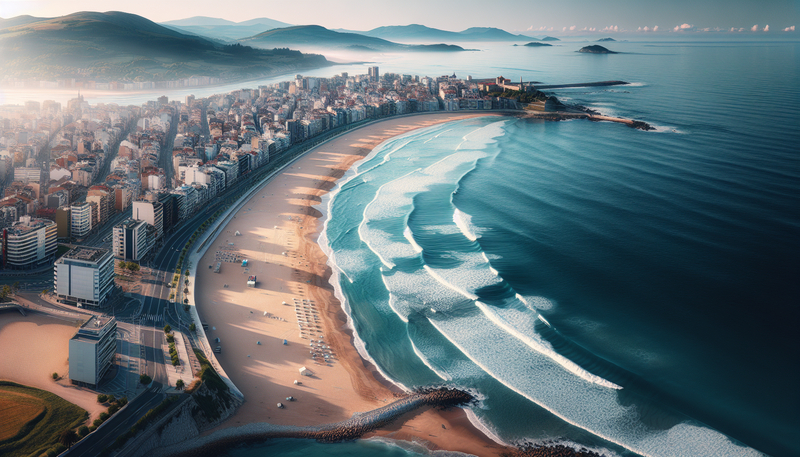
Young campaigners in the Maldives face the growing climate crisis threatening their island homeland
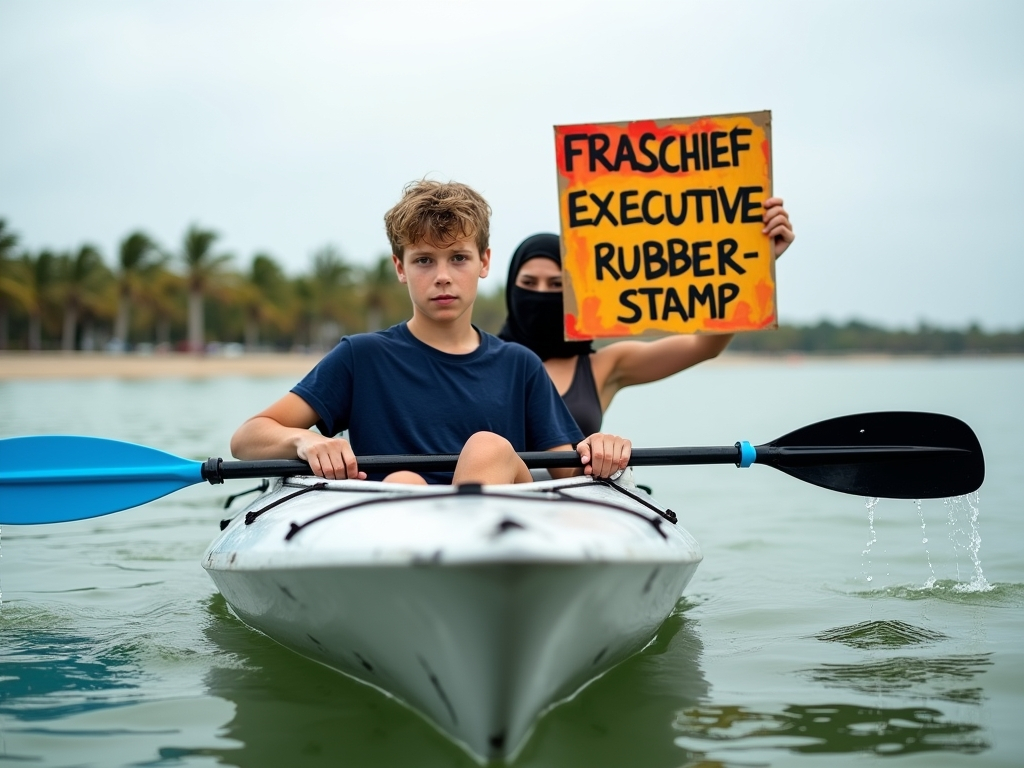
ADDU CITY, Maldives (AP) — Recently, a group of Maldivian youth kayaked across a lagoon to protest land reclamation that was encroaching on protected mangrove wetlands within a UNESCO biosphere reserve. On a stretch of newly filled land, they spray-painted the word “ECOCIDE” to underscore what they see as irreversible environmental harm.
The nonprofit Project ThimaaVeshi — meaning “self and surroundings” — represents a rising wave of young activists in the Indian Ocean archipelago. They are confronting environmental challenges that shape their everyday lives, from shrinking coastlines and mounting plastic waste to ecosystems strained by rapid development.
In the southern city of Addu, members have zeroed in on large-scale development, recording its effects on wetlands and coral reefs. Meanwhile, in the densely populated capital of Male, other youth-led groups are addressing plastic debris clogging streets, gathering spots and popular swimming areas.
A young demonstrator holds a placard during a Project ThimaaVeshi rally opposing reclamation work that is damaging mangroves off Addu City, Maldives, June 3, 2026. (AP Photo/Sophia Nasif)
A young demonstrator holds a placard during a Project ThimaaVeshi rally opposing reclamation work that is damaging mangroves off Addu City, Maldives, June 3, 2026. (AP Photo/Sophia Nasif)
“Ecocide in Addu” is written across reclaimed land by Project ThimaaVeshi during a protest against continuing reclamation efforts in Addu City, Maldives, June 3, 2026. (AP Photo/Sophia Nasif)
“Ecocide in Addu” is written across reclaimed land by Project ThimaaVeshi during a protest against continuing reclamation efforts in Addu City, Maldives, June 3, 2026. (AP Photo/Sophia Nasif)
Working alongside surfers and local volunteers, the youth groups organize cleanup drives, disentangling fishing lines from coral reefs and collecting piles of discarded plastic bottles. They also run awareness campaigns to inform young people about their right to live in a safe and healthy environment.
What binds them together is the recognition that climate change and environmental degradation are no longer distant possibilities but present realities.
High-rise buildings crowd the skyline of Male, the capital of the Maldives, June 19, 2026. (AP Photo/Sophia Nasif)
High-rise buildings crowd the skyline of Male, the capital of the Maldives, June 19, 2026. (AP Photo/Sophia Nasif)
Yoohaa Ibrahim Saeed and Mariyam Ulfa Ahmed, members of the youth group Ripple, remove a fishing line tangled around coral during an underwater cleanup with the Aloha Ufaa Surf Club off Hulhumale, Maldives, June 27, 2026. (AP Photo/Sophia Nasif)
Yoohaa Ibrahim Saeed and Mariyam Ulfa Ahmed, members of the youth group Ripple, remove a fishing line tangled around coral during an underwater cleanup with the Aloha Ufaa Surf Club off Hulhumale, Maldives, June 27, 2026. (AP Photo/Sophia Nasif)
The Maldives has often portrayed itself as a frontline nation in the fight against climate change and rising seas. Yet officials argue that development sometimes requires compromise. Activists counter that environmental safeguards are moving too slowly to protect vulnerable ecosystems.
Scientists warn that, because of sea level rise, as much as 80% of the low-lying country south of India and Sri Lanka could become uninhabitable within the next half-century.
Youth push back against a sense of helplessness
Members of Project ThimaaVeshi join Veshi Saafu, a collective of older women advocating for environmental protection, to protest reclamation projects on World Environment Day in Addu City, Maldives, June 5, 2026. (AP Photo/Sophia Nasif)
Members of Project ThimaaVeshi join Veshi Saafu, a collective of older women advocating for environmental protection, to protest reclamation projects on World Environment Day in Addu City, Maldives, June 5, 2026. (AP Photo/Sophia Nasif)
“In the beginning, it was just us and our belief that we could make a difference,” said Yameen Maumoon, 21, a co-founder of Project ThimaaVeshi.
Maumoon and fellow co-founder Mishal Mushahid first became involved as student representatives collaborating with the Addu City council. After finishing high school, their informal circle of friends evolved into an organized movement and a registered nonprofit.
In Male and nearby Hulhumale, another youth collective called Ripple — currently seeking official registration — emerged when friends grew frustrated by the accumulation of trash in the places they frequented.
“We were joking while playing Minecraft about starting TikToks and cleaning up our island,” said co-founder Mariyam Maasha Waheed. What began as casual conversations turned into real action as their cleanup videos gained attention online.
Today, Ripple hosts weekly cleanup efforts and campaigns against single-use plastics, partnering with other groups to ensure the waste they gather is recycled.
Ahmed Akif Ali of Ripple holds up a plastic bottle recovered during an underwater cleanup with the Aloha Ufaa Surf Club off Hulhumale, Maldives, June 27, 2026. (AP Photo/Sophia Nasif)
Ahmed Akif Ali of Ripple holds up a plastic bottle recovered during an underwater cleanup with the Aloha Ufaa Surf Club off Hulhumale, Maldives, June 27, 2026. (AP Photo/Sophia Nasif)
Organizers say they aim to make environmental engagement approachable and community-driven rather than overwhelming.
Yania Hussain Ishan, co-founder of a newer group called Barnacles, was inspired to act after preparing a school presentation about conservation. Barnacles emphasizes climate education and nurturing leadership among young people.
Ishan said constant messaging about a climate crisis has left many in her generation feeling powerless, a sentiment the group hopes to counter.
The groups have faced criticism over their youth
Mangroves border the shoreline of Hithadhoo Island, part of a UNESCO Biosphere Reserve, as land reclamation activity continues behind them in Addu City, Maldives, June 5, 2026. (AP Photo/Sophia Nasif)
Mangroves border the shoreline of Hithadhoo Island, part of a UNESCO Biosphere Reserve, as land reclamation activity continues behind them in Addu City, Maldives, June 5, 2026. (AP Photo/Sophia Nasif)
The activists’ age has drawn skepticism, including remarks from some officials suggesting that youthfulness equates to inexperience. Members of all three groups say they have been told their efforts are futile and that small-scale cleanups cannot resolve national environmental challenges.
At a public forum last year, the country’s climate change minister, Ali Shareef, said young people can be overly emotional and are not always ready for major decision-making roles.
The activists acknowledge they cannot solve the Maldives’ environmental crises on their own. Still, they argue that inaction while awaiting large-scale reforms is not acceptable. Their goal is to foster a generation aware of its rights and prepared to carry responsibility forward.
“We are choosing what kind of ancestors we want to be,” Ishan said. “We are protecting our home and ensuring that future Maldivian children can stand on these shores, gaze at the ocean and feel the same sense of belonging and safety that shapes our identity.”
Members of Ripple participate in an early morning beach cleanup organized by the Ministry of Youth at Dhiraagu Beach in Hulhumale, Maldives, June 12, 2026. (AP Photo/Sophia Nasif)
Members of Ripple participate in an early morning beach cleanup organized by the Ministry of Youth at Dhiraagu Beach in Hulhumale, Maldives, June 12, 2026. (AP Photo/Sophia Nasif)
___
The Associated Press’ reporting on climate and environmental issues is supported financially by several private foundations. The AP maintains full editorial control over its coverage.