Norman Rockwell people-watched in the West Wing lobby. Now those drawings are on view for the public
WASHINGTON (AP) — For over four decades, a series of sketches by American illustrator Norman Rockwell depicting scenes from the White House visitors’ lobby hung inside the West Wing, viewed by every president from Jimmy Carter through Donald Trump.
Now, the artwork will be accessible to the public for the first time after a nonprofit group purchased the sketches for more than $7 million when they were placed up for auction following a family disagreement over ownership.
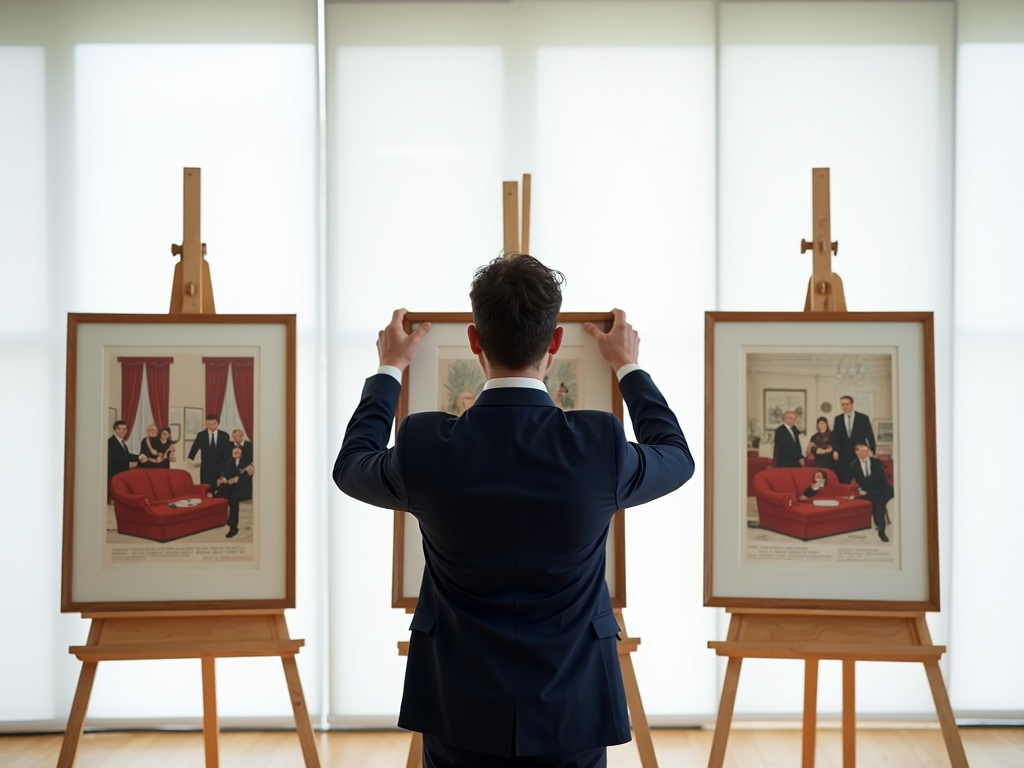
The four drawings, created in the 1940s and collectively titled “So You Want to See the President!”, portray Americans from varied backgrounds waiting to meet President Franklin D. Roosevelt during World War II. The images show U.S. senators, military officers, journalists and even a reigning Miss America seated in the West Wing reception area as they anticipate being ushered into the Oval Office.
The White House Historical Association said it invested heavily to ensure the sketches would not disappear into a private collection, according to its president, Stuart McLaurin. The works will be on display through June 2027 at the association’s “The People’s House” education center near the White House.
“Because so many presidents, first ladies, senior staff and distinguished visitors from around the world have seen these sketches, we believed the American public should have the chance to experience them as well,” McLaurin said. “That is why we moved forward with acquiring them.”
The artwork had been offered for sale by a grandson of the White House official who originally received the sketches as a personal gift from Rockwell.
Rockwell is celebrated for capturing American life
Best known for his illustrations of everyday American scenes that frequently appeared on the covers of the Saturday Evening Post, Rockwell spent long stretches observing activity from a chair in the West Wing lobby, carefully studying the people who passed through, McLaurin explained.
After a fire destroyed Rockwell’s Vermont studio and consumed his initial drawings, he returned to the White House to recreate and expand upon the scenes he had witnessed.
“These works blend his recollections from the first visit with impressions from the second,” McLaurin said. “They showcase a cross-section of military personnel, White House aides, members of Congress and journalists — the same types of individuals who still move through that West Wing space today.”
The first vibrant sketch begins outside the White House gates, where photographers gather along West Executive Avenue. It also features Stephen Early, a former journalist who became President Roosevelt’s third press secretary, speaking with reporters. Nearby, members of the press sit in red leather chairs reading newspapers, including Rockwell himself, depicted with a pipe and relaxed posture.
The next illustration presents Miss America — identified as Rosemary LaPlanche, who held the title in 1941 — wearing a yellow gown and sash while seated on a red sofa beside her publicist. Close by, a Scottish officer in a kilt is seated as a Secret Service agent stands watch.
In the third scene, Sens. Tom Connally of Texas and Warren Austin of Vermont converse on a red couch, observed by a U.S. Navy WAVES officer. Generals Joseph W. “Vinegar Joe” Stilwell and Edwin M. “Pa” Watson are shown shaking hands for photographers, while an aide pushing Roosevelt’s lunch cart is pursued by Fala, the president’s dog.
The final drawing depicts additional uniformed service members in discussion, culminating in an aide opening the Oval Office door, offering a glimpse of the president inside.
“It’s like peering into a small aquarium of personalities,” McLaurin said. “We become quiet observers of what life was like in that specific moment of history.”
They were originally a gift to Roosevelt’s press secretary
Rockwell created the sketches for Stephen Early and presented them to him after their publication in the Saturday Evening Post in November 1943, during the height of World War II, McLaurin said.
Early, who died in 1951, first displayed the works in his West Wing office and retained them for years afterward. In 1978, a relative transferred the sketches to the White House, where they remained on view throughout the West Wing for more than 40 years, at times hanging in a hallway just steps from the Oval Office.
The ownership dispute emerged in 2017 when Thomas Early, one of Stephen Early’s sons, noticed the drawings during a televised interview with President Donald Trump, according to court documents.
William Elam III, Stephen Early’s grandson, maintained that his mother had received the sketches from her father before his death and that ownership was later passed down to him.
The drawings had been placed in the White House in 1978 under an agreement stipulating that they would be returned to Elam upon request. In 2022, the White House complied and returned the artwork.
A federal appeals court resolved the matter in May 2025, affirming a lower court’s decision in Elam’s favor. Following the ruling, he offered the sketches for sale.
Association describes the sketches as ‘priceless’
Researchers at the association have examined the individuals portrayed in the sketches to uncover their backgrounds, McLaurin said. The exhibition will also feature interactive digital elements designed to animate the figures and provide visitors with deeper context.
The association is still considering the long-term future of the sketches once the exhibit concludes in June 2027. They could travel to other institutions and might eventually return to display at the White House, McLaurin noted.
“When we learned they were available, our board agreed this was an acquisition we needed to pursue,” he said.
Founded in 1961 by first lady Jacqueline Kennedy and funded entirely through private contributions, the association does not receive taxpayer money. McLaurin said there was concern the sketches might command an even higher price than the $7.25 million ultimately paid — the largest sum the organization has spent on a single artwork in support of its mission to preserve and showcase items reflecting American history and culture.
“To us, their value goes beyond any dollar amount,” McLaurin said. “They are truly priceless.”