The “Holy Maid of Kent” who foretold the death of King Henry VIII
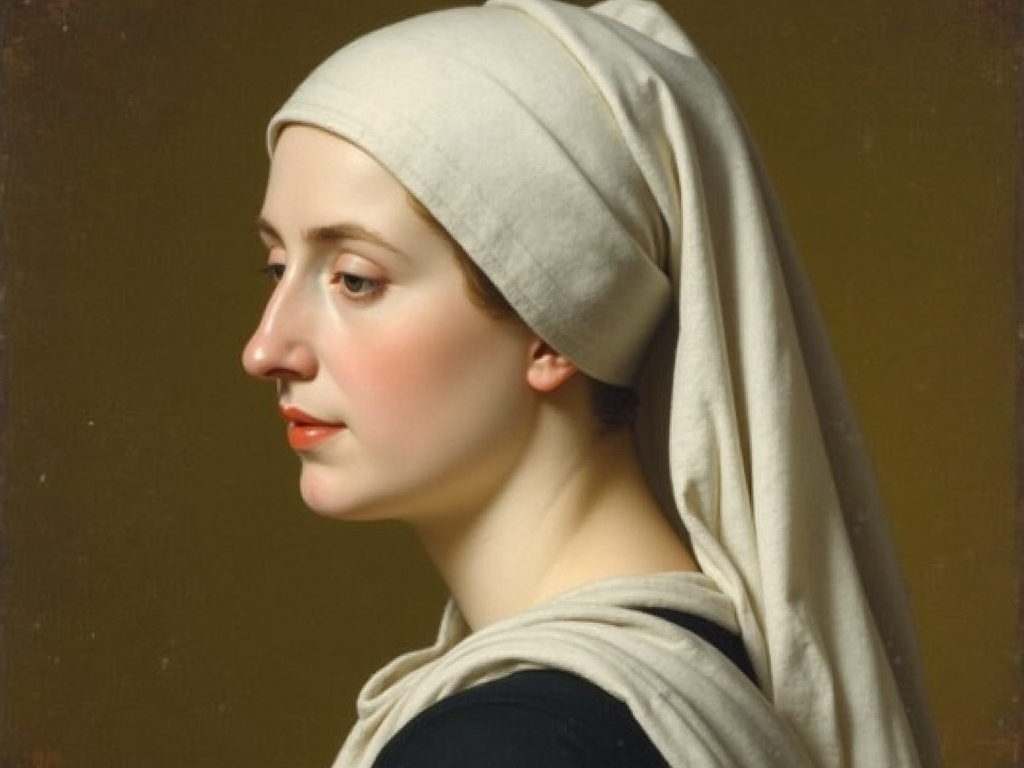
In the 16th Century, a domestic servant named Elizabeth Barton rose to fame as a revered visionary – but when she challenged her king, she met a brutal fate. Was she a fraud, or a courageous heroine of Tudor England?
In a quiet Kent village in 1525, Elizabeth Barton, then working as a household servant, was struck by a serious illness. During bouts of delirium, she reportedly recited passages of Scripture. Soon afterward, she began falling into trance-like seizures, delivering impassioned religious prophecies. News of her strange experiences spread rapidly, drawing crowds eager to witness the mysterious young woman.
Warning: This article contains details some readers may find upsetting.
After collapsing into a prolonged public trance that allegedly ended with her sudden recovery, Barton was proclaimed a true visionary. One observer among the many who gathered described her appearance in unsettling terms, noting that her face seemed distorted, her tongue protruding, and her eyes appearing almost torn from their sockets.
Barton later entered a small nunnery near Canterbury, and her influence expanded dramatically across Tudor England. High-ranking churchmen, nobles, and even King Henry VIII sought her counsel. Yet as her prophecies grew increasingly political, they set the stage for her eventual downfall. A recent historical reassessment in Heroines of the Tudor World reconsiders her legacy and importance.
Her growing fame coincided with the English Reformation, a period of religious upheaval marked by the break between Catholics and Protestant reformers. By the 1520s, reformist ideas from mainland Europe had reached England, challenging the authority of the Pope and criticizing the wealth and power of the Catholic Church.
For many Catholics, these changes were alarming. Supporters saw Barton as a divinely inspired voice who could defend their faith. Her revelations were shared widely, both orally and in written form, and she was treated with seriousness and respect by believers regardless of doubts about their authenticity.
Among her admirers were influential clerics and prominent figures, including Cardinal Wolsey and the Archbishop of Canterbury. Her reputation eventually reached Sir Thomas More, the king’s lord chancellor, who expressed a desire to see for himself the remarkable virtue he had heard attributed to her for years.
However, More later cautioned her in writing, advising her never to speak about the king or matters concerning his private affairs.
For a time, Barton enjoyed Henry VIII’s personal favor, meeting him on several occasions. They initially shared a devotion to Catholicism, as Henry remained committed to the faith for much of his life. But when Henry sought to annul his marriage to Catherine of Aragon in order to remarry and secure a male heir, he clashed directly with Catholic teaching. Barton’s prophecies condemned any break with Rome, and she strongly defended Catherine, even warning the Pope of divine punishment should he side against her.
Some leading Catholics believed Barton could influence Henry and possibly deter him from a course they found deeply troubling. This has led certain historians to argue that she served as a tool of conservative churchmen, manipulated to promote their agenda.
Others reject that interpretation, suggesting instead that the image of Barton as a mere puppet was shaped by her enemies. They describe her as a gifted and charismatic woman who may have taken an active role in resisting Henry’s divorce rather than simply echoing others’ views.
Female mystics advising rulers were not unheard of in medieval Europe. England had known notable visionaries in the previous century, though none achieved Barton’s level of widespread recognition. Her prominence may have stemmed from the increasingly political nature of her prophecies.
Unlike many mystics who focused on moral or spiritual matters, Barton addressed urgent political issues. Her background made her rise even more extraordinary: she had been born into service, far from the elite circles that typically produced influential religious figures. In a society where women rarely held political authority unless they were queens or aristocrats, sanctioned prophecy offered one of the few avenues for female intervention in public affairs.
Barton used that opportunity boldly. She declared that Henry would die within seven months if he married Anne Boleyn, and further warned that he would lose his crown within a month of such a union. She offered no explanation of how these events would unfold, but her statements were unmistakably provocative.
Such claims were dangerous. Under the Treason Act of 1351, predicting the king’s death amounted to treason. For a young woman of humble origins to confront the monarch in this way was an extraordinary act of defiance.
Alarmed by her warnings, Henry and Anne visited Barton in Canterbury in October 1532 while traveling to Calais, hoping to secure her silence. Henry reportedly offered to elevate her to the position of abbess if she would cease speaking against his marriage, while Anne proposed a place for her within her household. Barton refused both offers, angering the king. Nevertheless, Henry married Anne in January 1533.
As time passed, it became evident that Barton’s dire predictions were not materializing.
She was arrested and taken to the Tower of London, where Thomas Cromwell, the king’s chief minister, oversaw her interrogation. There, she confessed that her visions had not come from God. Whether this admission reflected the truth or was extracted under pressure remains uncertain.
On 20 April 1534, Barton and six loyal supporters, including her confessor Edward Bocking, were executed at Tyburn. They were hanged and then beheaded. Barton was only 28 years old.
Her head was placed on a spike above the south gate of Old London Bridge, displayed as a warning to others. This grim practice, common between the 14th and 17th centuries, served as a stark deterrent to those accused of treason. Barton is believed to have been the only woman subjected to this particular posthumous punishment.
Despite the grim manner of her death, Barton’s story carries lasting significance. A young, relatively uneducated woman from Kent succeeded in attracting widespread attention and articulating concerns shared by many ordinary people during a time of profound religious upheaval.
Yet her own voice has largely been lost. None of her original writings, nor those of her followers, are known to survive. Cromwell ordered hundreds of printed copies of her recorded revelations seized and destroyed, and later publications about her were similarly suppressed.
As a result, what remains comes mainly from official state documents and hostile accounts shaped by the emerging Protestant establishment, which portrayed her as a fraud.
This negative image has heavily influenced later histories, contributing to her relative obscurity. Whether Elizabeth Barton was a genuine prophet, a political actor, or something in between may never be fully known. Her life, however, continues to provoke debate about faith, power, and the risks of speaking against a king.