'A spellbinding sensation that overwhelms you with delight': The remarkable tale of 96 Tears, America’s most unexpected one-hit wonder
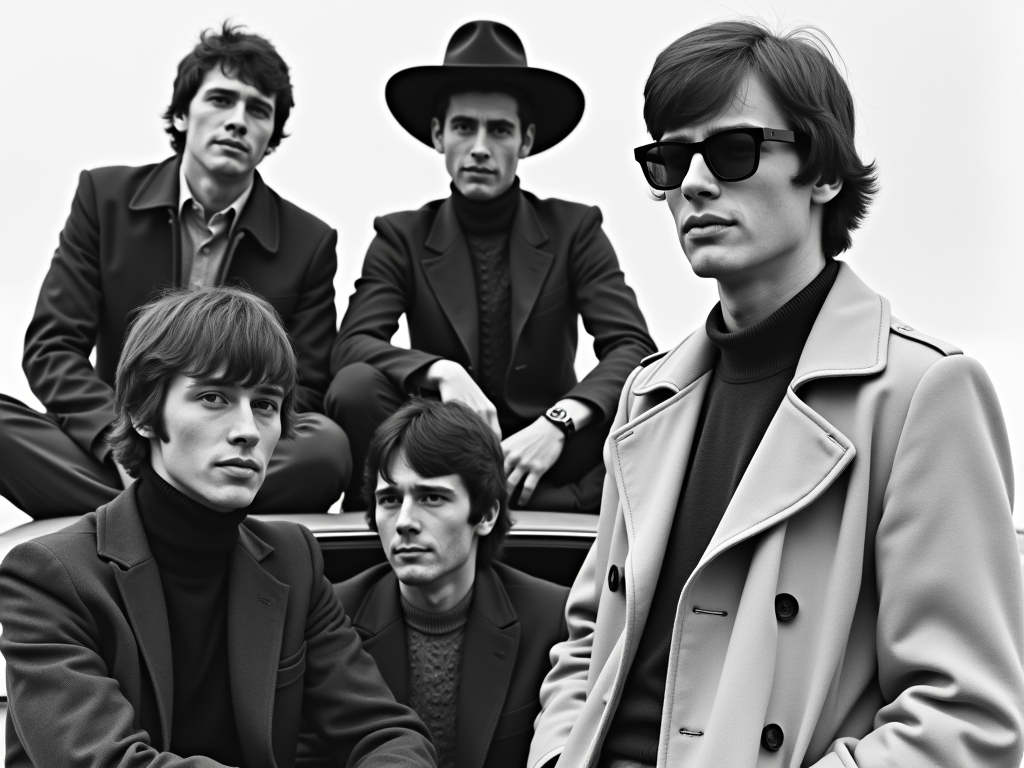
In 1966, a Mexican-American teenage band released one of the era’s most unexpected smash singles and, in the process, helped lay the groundwork for garage rock, a style that would inspire musicians for generations.
The oddest chart-topper of 1966 may not have been 96 Tears by ? and the Mysterians. That distinction could just as easily go to Staff Sergeant Barry Sadler’s solemn military anthem The Ballad of the Green Berets or the New Vaudeville Band’s theatrical throwback Winchester Cathedral.
Yet 96 Tears was arguably the most improbable number one of them all: a raw, lo-fi debut by a group of Tejano teenagers from small-town mid-Michigan, recorded in a modest home studio and issued by a tiny Tex-Mex label. “We were just kids,” guitarist Bobby Balderrama later recalled. “People would point and say, ‘There’s the guy with the hit record,’ and I’d wonder if they meant someone else.”
Unlike some of the era’s novelty hits, 96 Tears was no joke record. It was a stark, two-minute portrait of teenage heartbreak and simmering resentment, sung with cool detachment over a ghostly, insistent organ riff. There were no elaborate promotional tricks behind it—just a stark sound and undeniable attitude.
The song climbed steadily on the strength of radio play and genuine audience response. Released 60 years ago, 96 Tears spent nine weeks in the US top 10, including one week at number one. By the end of 1966, it ranked as Billboard’s second biggest single of the year, trailing only California Dreamin’ and outperforming major releases by The Four Tops, The Supremes, The Rolling Stones and The Beatles.
Despite its success, the band is widely remembered as a one-hit wonder. A follow-up single and debut album reached modest chart positions, but later releases failed to gain traction. By 1969, before some members had even finished school, ? and the Mysterians had broken up.
Still, 96 Tears found renewed life as a foundational garage rock anthem, embraced by countless stripped-down bands in basements and clubs. Punk pioneer Legs McNeil once described it as a strong contender for the first true punk rock song. In 2003, a panel of critics ranked it among the greatest jukebox singles ever recorded.
“Garage rock wasn’t labeled as a genre until years after its first wave had faded,” explains ethnomusicologist José Vicente Neglia. In the early 1970s, critics disillusioned with the grandiosity of mainstream rock began rediscovering rough-edged regional bands from the mid-60s. Inspired by the British Invasion, hundreds of American teenagers had formed groups that delivered gritty interpretations of pop and R&B. Some earned local fame through AM radio, and a handful—like Louie Louie by the Kingsmen—broke through nationally.
The peak year for these garage one-hit wonders was 1966. Bands such as the Count Five, Syndicate of Sound and the Shadows of Knight all reached the top 10, while other raw-sounding acts scored chart-toppers. Yet even the most straightforward hits of the time sounded polished compared with the stark minimalism of 96 Tears.
Neglia suggests that later revivalists sometimes romanticized these early groups, but ? and the Mysterians came close to embodying the ideal: youthful, rough around the edges, rooted in a tight-knit local scene, yet driven by big pop ambitions.
Garage historian Seth Bovey places 96 Tears in a category he calls “unhinged frat-rock,” alongside Wild Thing, Louie Louie and Wooly Bully. “The lyrics can seem almost absurd,” he notes, “but their simplicity and repetitive drive give them a hypnotic, celebratory energy.”
Bay City, Michigan—later known as Madonna’s hometown—was once defined by the scent of beet sugar processing plants. Those factories drew Mexican migrant workers from Texas, many of whom eventually settled in Michigan for industrial jobs. Bobby Balderrama’s family was among them. With steady employment at General Motors, they bought a farm between Bay City and Auburn. The family garage would become central to the Mysterians’ story.
The band took its name from a 1957 Japanese science-fiction film. Originally a trio—Balderrama, his nephew Larry Borjas on bass and drummer Robert Martinez—they rehearsed surf instrumentals in that garage.
After their first show, Robert’s older brother Rudy joined as frontman. Soon calling himself Question Mark, he brought flamboyant stage moves, songwriting ideas and magnetic charisma, quickly becoming the group’s focal point. The band added British Invasion covers and played teen dances, since they were too young for club gigs.
Keyboard prodigy Frankie Rodriguez soon joined, adding the Farfisa organ that would define their sound. In 1965, Borjas and Robert Martinez left for military service. Around that time, Balderrama, Rodriguez and Question Mark—still teenagers—sat down to write what would become their breakthrough hit.
Rodriguez devised a simple but unforgettable organ riff. Balderrama added guitar parts, and Question Mark supplied lyrics he had already written: “Too many teardrops / For one heart to be cryin’ / Too many teardrops / For one heart to carry on.”
Musically, the track revolved around a basic two-chord structure punctuated by sharp, repetitive organ figures. The result was both eerie and infectious, urging listeners to move even as it conveyed emotional sting.
With a solid line-up and a standout original song, the band approached local manager Lillie Gonzalez.
Lillie and her husband Joe owned a grocery store in nearby Saginaw and had experience running a small record label in Texas. In April 1966, she booked the Mysterians into a makeshift studio set up in a house rec room in Bay City. After literally shifting furniture to make space, they recorded 96 Tears. It became the second release on the Gonzalezes’ new Pa-Go-Go label. The first pressing totaled just 500 copies, and the band members themselves delivered records to local radio stations.
Airplay in Bay City and Saginaw soon spread to Detroit. Within weeks, the single topped Detroit’s charts and attracted the attention of a larger label, which began promoting it nationally. By September, 96 Tears had entered the Billboard Hot 100; by late October, it was number one across the country.
Success, however, proved fleeting. The lead single from their second album, a cover of Can’t Get Enough of You Baby, was reshaped to echo their signature organ sound. It charted modestly, but subsequent releases failed to replicate the magic. Members gradually departed.
Question Mark retained the band’s name and continued touring with new line-ups. By 1969, a reassembled version of the group was sharing bills with imitation acts posing as famous British bands—a sign of how far fortunes had fallen.
Their legacy, though, was just beginning. In 1972, guitarist Lenny Kaye compiled Nuggets, a collection of obscure 60s garage singles that reignited interest in the genre. The album proved hugely influential, especially among emerging punk musicians, and sparked a wave of similar compilations. By the early 1980s, a garage revival was underway, led by bands who embraced the raw energy of their predecessors.
Like the original movement, later garage scenes flourished in regional pockets. Michigan produced its own revival in the late 1990s, with bands such as The Dirtbombs, The Detroit Cobras and The White Stripes carrying forward the stripped-down aesthetic. The unmistakable organ riff of 96 Tears remained a touchstone for the state’s rock lineage.
Reflecting decades later, Frankie Rodriguez admitted he never expected the song to travel so far. “I didn’t think 96 Tears would go anywhere,” he said in 2023. “But it turned out to do pretty well.”