Eat, Pray, Love – and set off! How Elizabeth Gilbert and her readers took over the world
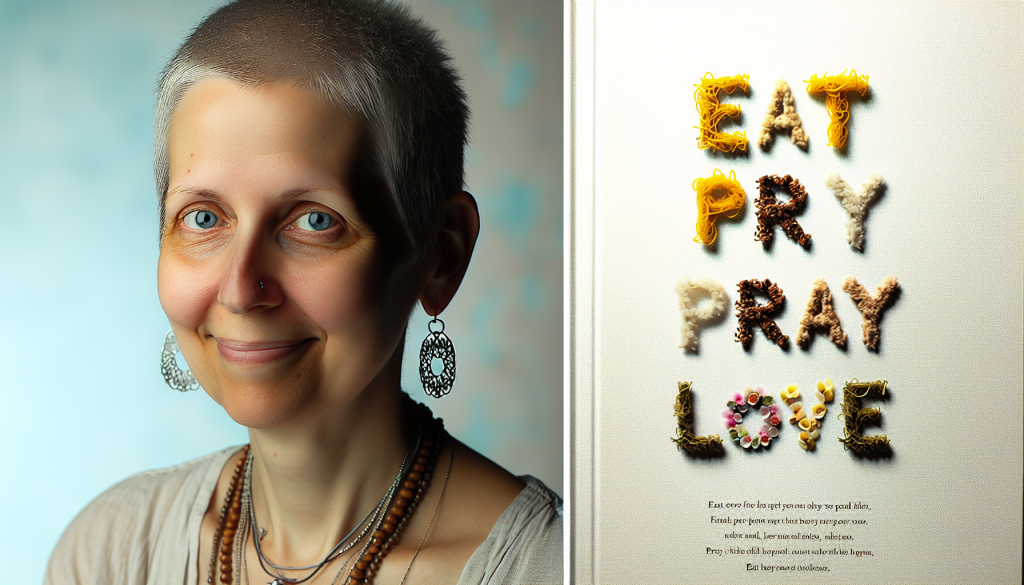
It was only when she arrived in San Diego that Elizabeth Gilbert understood how dramatically her life had shifted. She had left home as the author of a modestly successful memoir published the year before, “Eat, Pray, Love,” a deeply personal blend of travel writing, confession, and self-reflection chronicling her post-divorce journey through Italy, India, and Indonesia. While touring to promote the paperback edition, Gilbert remembers speaking to intimate crowds of “10, 15, 20 people.”
This time, on her way to another event, she noticed lines stretching “three deep around the block.” Bewildered, she asked her driver what was happening. “Is there a concert tonight? Some big event?” she recalled asking. His reply stunned her: the crowd had gathered for her.
In that instant, “Eat, Pray, Love,” which marks its 20th anniversary this week, stopped being a private, idiosyncratic project — “I truly thought no one would want to read this, but I had to write it anyway” — and became a worldwide phenomenon. The story escaped the confines of its pages and began unfolding in real time, in hotels, cafés, spas, and beaches where readers embarked on their own quests for reinvention.
‘A human permission slip’
In 2019, Gloria Caseiro, originally from Portugal and living in New Jersey, found herself newly divorced and newly retired after raising two children. Unsure what to do next, she picked up a copy of “Eat, Pray, Love.” The message felt clear. “I thought, now it’s my turn to go to all the places I’ve never seen,” she says. At 51, she took her first solo trip — to Italy.
Stories like hers — more than the millions of books sold or the $200 million earned by the 2010 film adaptation starring Julia Roberts and Javier Bardem — explain the book’s lasting cultural impact. Friends have described Gilbert as a “human permission slip,” someone who gave countless women implicit approval to travel simply for the joy of it.
Gilbert points to an old blues lyric: “When a man gets the blues, he grabs a train and rides; when a woman gets the blues, she hangs her head and cries.” Historically, she notes, women often didn’t have the option of grabbing that train.
By the book’s release in 2006, society liked to believe it had become “easy” for women to travel alone for pleasure. In truth, that sense of ease reflected how restrictive the past had been. Only in recent decades had many countries stopped treating solo female travelers as liabilities — denying them hotel rooms without a male companion or refusing them financial independence.
At the same time, globalization and more accessible transportation opened distant destinations to broader audiences. Mobile phones, SIM cards, and translation apps made navigating unfamiliar streets far less intimidating.
Among women traveling alone during those years, one word surfaced repeatedly: safety. A smartphone meant you no longer had to unfold a paper map that signaled vulnerability. A quick message home after landing replaced the long wait to find a phone. Independence felt more secure than ever before.
“Freud famously asked, ‘What do women want?’” Gilbert says. “Apparently, many of them want a year to travel the world, eat good food, fall in love, and have an adventure.”
For many readers, the idea of extended travel had once seemed out of reach. Careers and families consumed their time; trips revolved around children or obligations. When the opportunity for solo travel finally appeared, hostels no longer appealed — yet the desire for connection remained.
“At first, dining alone felt awkward,” Caseiro admits. She worried people pitied her. “But it turned out to be joyful and liberating,” she says. What began as discomfort evolved into freedom.
The three-word mantra that became a rallying cry
In the early 2000s, Elizabeth Lahiff, a recent American graduate working in Mexico, heard someone remark, “You’re doing that ‘Eat, Pray, Love’ thing.”
Curious, she found a copy of the memoir.
“When I read it, everything clicked,” she says. “It reassured me that I was on the right path.”
Like Gilbert, Lahiff had once envisioned a polished career in Manhattan. Instead, the monotony of her entry-level consulting job left her questioning her ambitions.
She resigned and accepted a short-term contract in the Marshall Islands, a destination she previously knew nothing about.
Twenty years later, Lahiff lives in Dushanbe, Tajikistan, working in international development — a life worlds away from her small-town upbringing in upstate New York.
“Solo travel expands your sense of what’s possible,” she says. “It’s the closest feeling to pure freedom because no one expects anything from you.”
The book continued to resonate before, during, and long after such journeys. Caseiro still keeps her original copy, now thick with pressed flowers, train tickets, and handwritten notes. What started as a travel guide has become a keepsake.
Readers wrote so many letters describing their own adventures that a collection of their stories was eventually published, documenting how deeply the memoir had shaped personal decisions.
Today, “Eat, Pray, Love” exists almost independently of its source. Gilbert recalls hearing about two women who met while traveling solo in Thailand. One described her trip as her “Eat, Pray, Love year.” When asked if she meant the book, she replied: “What book?”
Marketing to the ‘Eat, Pray, Love’ generation
The memoir also became a blueprint for a new travel industry. Retreat centers and luxury wellness resorts began promising spiritual renewal without discomfort — meditation without austerity, healing without hardship.
The phrase “Eat, Pray, Love” turned into shorthand for a curated escape. A resort in Bali might not guarantee romance, but it could offer picturesque yoga sessions, organic meals, and a carefully crafted atmosphere of transformation.
For Sasha Astiadi, who grew up partly in Bali, the book’s influence was unmistakable — even though she has never read it or watched the film.
She witnessed firsthand how the island transformed as waves of visitors arrived, spending significant sums on retreats that were financially out of reach for many locals. Some residents rebranded themselves as spiritual guides to meet demand.
“Bali isn’t a movie set,” she says. “There’s traffic, bureaucracy, mosquitoes, and daily realities visitors don’t always expect.”
Astiadi’s own travels began when she earned a scholarship to study in the United States. After time in Texas, she realized education could open doors beyond Indonesia. Her studies later took her to China, Hungary, and the United Arab Emirates. She now works as a web developer in Berlin.
Yet her global mobility has not been effortless. Despite speaking six languages, she says she often faces additional scrutiny at borders due to racial profiling, while Western travelers move through more easily.
Passport privilege plays a role as well. Some nationalities enjoy visa-free access to most of the world, while others encounter more restrictions.
Astiadi notes that returning home must be carefully timed; staying away from Europe too long could jeopardize her residency status. Childhood dreams of visiting London remain complicated by visa requirements.
“For me, spiritual growth comes from overcoming obstacles,” she says.
When the book ends, but life keeps going
Gilbert’s memoir concluded with a romantic partnership that felt like a fairy-tale ending. In reality, life unfolded in more complex ways. Years later, she separated from her husband, entered a new relationship, and endured profound personal loss — experiences she later explored in subsequent writing.
“I wrote ‘Eat, Pray, Love’ at 34,” she reflects. “That’s young to think you’ve figured everything out.” While the cinematic version of her story reached a tidy conclusion, her real life continues — imperfect and evolving.
Still, the spirit of the book endures for readers like Merridith Ng.
Ng, originally from Maryland, now lives in New Zealand. Her own journey began with travel to Italy. “Once you realize how much exists beyond your home country, something shifts inside you,” she says.
In New Zealand, Ng deepened her spiritual life and met the man who would become her husband. They now have three daughters, the eldest named Siena in tribute to Italy, where her wanderlust first took root.
“My mother was stunned when I told her I wanted to marry someone across the world,” Ng recalls. “But she let me follow my dream.”
When Ng first moved abroad, communication meant postcards and expensive phone calls. Today, video chats make distance feel smaller. Though she travels less for leisure now, her work supporting international students draws on her own memories of navigating unfamiliar territory.
One day, she hopes to share the “Eat, Pray, Love” film with her daughters as a doorway into her own story — how a young woman from the United States met someone far away and built a life across oceans.
Gilbert once worried readers were trying to replicate her path too precisely — eating at the same restaurants, visiting the same ashram, seeking the same healers. She encouraged them to chart their own routes instead.
Eventually, she came to a realization: even if someone retraced every step exactly, the experience would still be uniquely theirs. The taste of pizza, the feeling of meditation, the spark of connection — all would differ from person to person.
“Even if you try to be me,” Gilbert says, “you’ll still end up being yourself.”