How King Charles Rescued Scotland’s Lost Treasure
Best known as the Royal Family’s summer retreat, Balmoral Castle ranks among Britain’s most celebrated royal residences. Yet far fewer people are aware that King Charles III is also closely connected to another extraordinary estate in the south of Scotland.
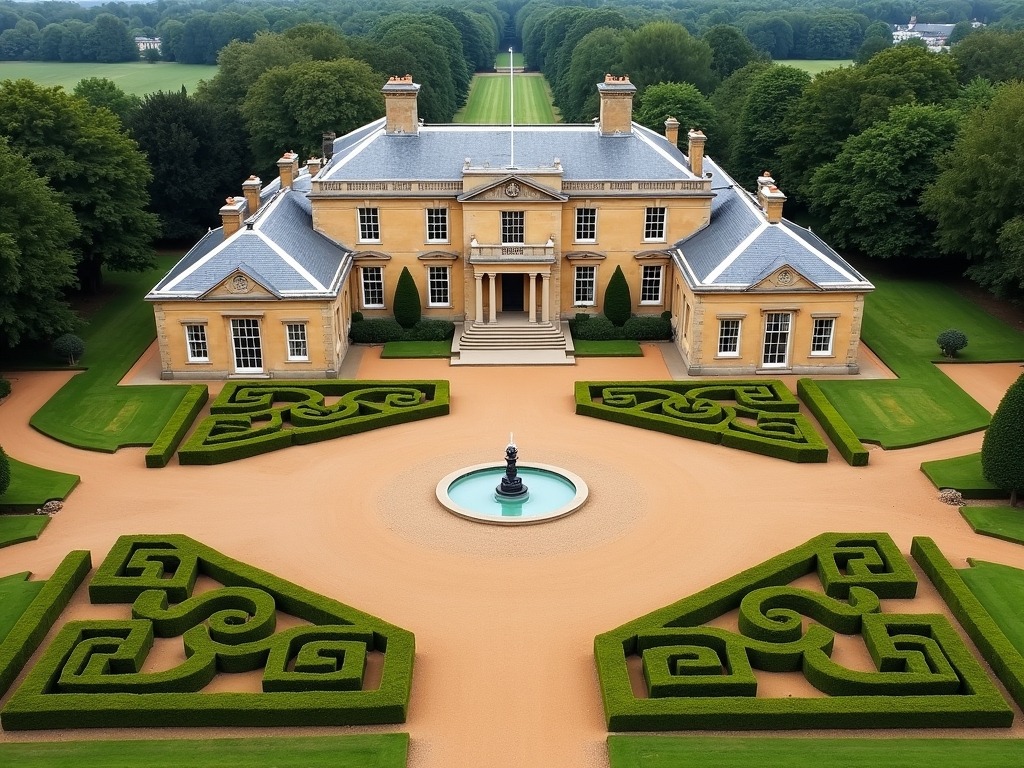
Several hours south of Balmoral, close to the former mining town of Cumnock in a largely overlooked part of East Ayrshire, Dumfries House stands quietly within 2,000 acres of rolling countryside. Despite its imposing Palladian mansion, remarkable collection of Thomas Chippendale furniture and extensive landscaped grounds, the estate remains surprisingly under the radar — even among many Scots.
The property narrowly avoided dispersal in 2007 when the Marquess of Bute placed Dumfries House on the market and prepared its contents for auction. Priceless pieces were already being transported to London when Charles, then Prince of Wales, learned of the imminent sale. He spearheaded a £45m rescue effort to secure the house and its collection for the nation.
Reflecting on the intervention at the time, he explained that once he understood the severity of the situation, he felt compelled to act to prevent an irreplaceable treasure from being lost.
The rescue achieved more than the preservation of an 18th-Century mansion and its furnishings. In the years that followed, the estate evolved into the headquarters of The King’s Foundation and a practical showcase for the King’s long-held principles: heritage-led regeneration, hands-on education and environmentally conscious communities. Today, visitors can tour the house, roam the expansive grounds and even stay overnight at this quietly remarkable royal estate.
Completed in 1759 for William Dalrymple-Crichton, the 5th Earl of Dumfries, the house later passed through marriage to the Marquesses of Bute. Over generations, its owners invested heavily in its refinement. It became one of the first Scottish houses fitted with electricity, while its elegant symmetry reflects the vision of renowned architects Robert and John Adam. Furniture commissioned from Thomas Chippendale remains one of its greatest distinctions, with around 50 surviving pieces forming an unparalleled showcase of his craftsmanship.
During my visit, local guide Joanne Morris began our tour in a sitting room that contained an unexpected personal detail: watercolours painted by the King, many portraying Royal Lochnagar and the landscapes surrounding Balmoral. From there, we moved through a sequence of rooms that unfolded like a series of ornate caskets, revealing 18th-Century floral carpets, glittering Murano chandeliers and portraits by Sir Henry Raeburn, who once painted King George IV. In the grand hall, Flemish tapestries and intricate plasterwork featuring birds, foliage and thistles completed the spectacle.
“In this sitting room alone, there is furniture valued at around £45m,” Morris explained as we entered one of the mansion’s highlights. She added that His Majesty considers clocks to be the heartbeat of a house — a belief reflected in the presence of 38 grandfather clocks throughout the property, some dating back to 1711.
Beyond the mansion walls, the estate’s Victorian walled gardens were in full bloom, with fountains playing and hedgerows neatly trimmed. I wandered through the five-acre Queen Elizabeth II Walled Garden and explored the arboretum, home to roughly 500 species of trees. Crossing the stone Adam Bridge and an ornamental Chinese-style bridge over the Lugar Water, it was hard to imagine how close the estate had once come to being dismantled.
Yet Dumfries House offers more than architectural splendour. It serves as the flagship educational site of The King’s Foundation, embodying the King’s ambition to revive traditional crafts, create employment pathways and strengthen local communities. Apprentices train here in skills ranging from stonemasonry, blacksmithing and joinery to glazing, horticulture and textile production. The estate also hosts a cookery school and a centre dedicated to health and wellbeing.
In a region that experienced economic hardship after the decline of mining, the estate’s revival has had a visible impact. What was once marked by limited opportunity now attracts approximately 10,000 students each year to study and train on-site.
Later, education qualifications coordinator Mel Wright guided me through the training complex. We passed an open timber yard and facilities including the Cook School, Textile Centre, Engineering Centre and Jameel House for World Traditional Arts. Although classes were not in session during my visit — and these areas are not typically included on standard tours — the workshops and classrooms revealed the estate’s dynamic second chapter as a centre for vocational excellence.
Wright emphasised the importance of safeguarding skills that might otherwise disappear, noting that the region once had a thriving textile industry that has since faded. The King’s Foundation, she explained, aims to open new pathways while preserving heritage techniques.
She also described the pride felt locally for the transformation of the estate, highlighting that many of the traditional crafts taught there are inherently sustainable and environmentally responsible — reflecting King Charles’s long-standing commitment to working in harmony with nature.
Dumfries House is not an isolated example of this philosophy. The King’s Foundation operates at other locations across Britain, applying a similar approach that combines conservation with education, job creation and regional renewal.
Among these projects is The Castle & Gardens of Mey in Caithness, mainland Britain’s most northerly inhabited castle, where efforts are focused on promoting sustainable tourism. At Highgrove Gardens in Gloucestershire — the private residence of King Charles III and Queen Camilla — community engagement has become central, with programmes in heritage crafts and design offered to learners of all ages.
According to Wright, such initiatives present a forward-looking vision grounded in respect for tradition and the natural world, while equipping new generations with practical expertise.
Further afield, The King’s Foundation has also taken on the historic Hillview Estate in New South Wales, Australia. Drawing inspiration from Dumfries House, the charity intends to transform the former vice-regal summer residence into its first international hub dedicated to education and training in heritage crafts.
Nearly 20 years after it stood on the brink of dispersal, Dumfries House has emerged as one of Britain’s most unexpected royal destinations. Its stately rooms and flourishing gardens tell only part of the story; at its heart lies a working institution devoted to teaching, preserving and advancing traditional skills. What was once nearly lost has been reshaped into a living example of renewal and purpose.