Could this be Italy's most Scottish town?
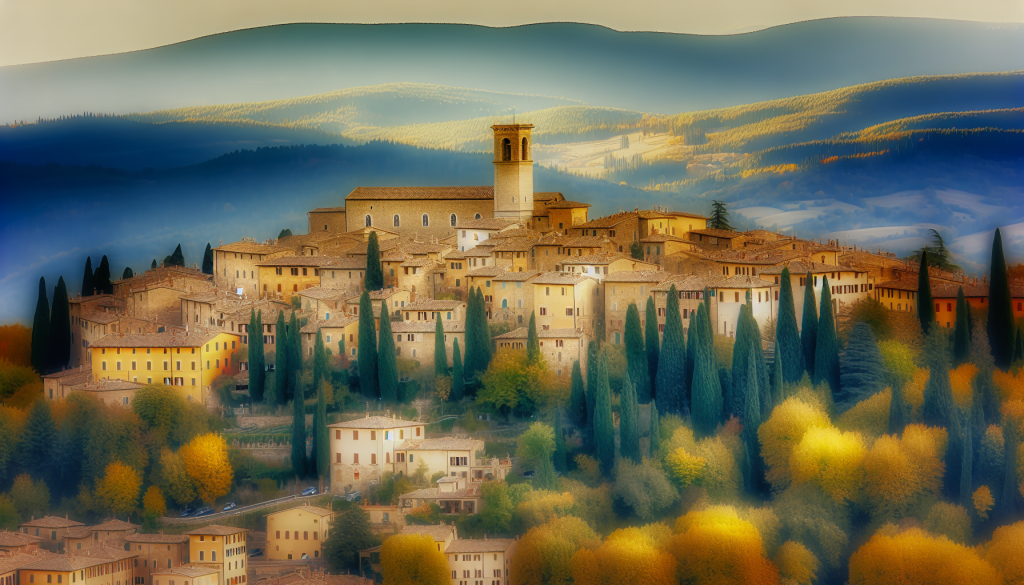
Nestled in the serene Tuscan hills, the town of Barga has a heartfelt bond with Scotland—so much so that it boasts its own tartan and even celebrates with a fish and chips festival, making it an unexpected Scottish enclave in Italy.
Located in the Serchio Valley, surrounded by the Apuan Alps and the Apennine forests, Barga surprises visitors with its unique cultural blend. Wandering through its medieval streets, one might notice the Scottish Saltire fluttering over cobbled alleys infused with the scent of blooming wisteria. The melodic tones of Italian are occasionally interspersed with Scottish accents. And during the right time of year, you can hear the haunting sound of bagpipes or even join in the celebration of Robert Burns with a taste of haggis.
Local trattorias feature fish and chips on their menus year-round—a nod to Barga’s Scottish ties. Many residents can trace their roots to Glasgow or the Ayrshire towns of Ardrossan and Largs, which adds a deeply personal layer to the cultural fusion this town embraces.
Tourism material proudly refers to Barga as "Italy's most Scottish town," and visiting feels like stepping into a fairytale-like vision of Tuscany. When I arrived, golden sunlight lit up the skyline, the nearby mountains shimmered, and the streets were tranquil. The town’s Renaissance stone structures and pastel-toned villas stood as a contrast to the bustle of Glasgow I left behind.
“We wanted to understand how deep the ties really go,” explained Maria Elisa Caproni, a historian and the town’s librarian, who offered to guide me through Barga’s Scottish-Italian heritage. “Out of 9,000 residents, about 60% have some Scottish background. That’s astonishing.”
Caproni herself shares this narrative. Her grandfather’s family left the valley in the early 1900s, seeking work in Scotland. After establishing themselves in the shipbuilding and lumber sectors, many, like her family, returned to Barga, bringing with them elements of Scottish life and tradition. During my visit, I noticed artistic pieces from Scotland and even a red telephone box. At the edge of town, a sign announced twinning partnerships with several East Lothian communities just outside Edinburgh.
Historically, Barga held strategic importance due to its location along key medieval routes to Rome. Over the centuries, Lucca, Pisa, and Modena vied to control it. In 1332, it chose to ally itself with Florence in exchange for protection, a move that secured Barga autonomy yet allowed for reduced taxation under Florentine rule. The town’s Duomo, the Cathedral of San Cristoforo, remains a striking testament to its privileged past, with its grand limestone façade and symbolic carvings thought to indicate links to the Knights Templar.
“Barga stood as an isolated stronghold of Florentine influence,” Caproni said as we entered the old town through Porta Reale, the gateway bridging modern and medieval Barga. “That’s only the beginning of the story.”
Over the next 500 years, the town endured as its political affiliations shifted between Florence and neighboring powers such as Lucca and Modena. The unification of Italy in 1861, however, disrupted its economic standing. As traditional industries like silk production lost ground, many Barghigiani emigrated to the United Kingdom and the United States. For many, Scotland’s west coast was where they found new opportunities, some even abandoning plans to continue to America.
Italian migrants soon became embedded in Scottish society, opening restaurants, ice cream parlours, and chip shops—like the renowned Nardini’s in Largs. The link between the two places became cyclical, with people and memories flowing back and forth over the decades.
Illustrative of this connection is the restaurant Giro Di Boa, owned by Riccardo Orsucci from Barga and his wife, Adele Pierotti from Glasgow. This couple represents the harmonious blend of cultures, having lived in both countries and raised their family across both worlds.
“It’s common to hear perfect Glaswegian or Ayrshire accents here,” Pierotti chuckled. “Sometimes it confuses locals—you could forget you're in Italy.” Caproni recalled how, at one point, Scots' speech was so widespread that shops posted signs saying, "Qui si parla italiano" to clarify that Italian was spoken inside.
The pair met in the 1970s in Glasgow’s Casa d’Italia, an immigrant social club. Around that time, Orsucci opened a restaurant that uniquely hosted a Burns Supper every January 25th. Today, Giro Di Boa continues this tradition, possibly the only restaurant in Tuscany to do so. “It’s a way to keep the heritage alive,” Orsucci said.
The restaurant’s chalkboard menu features dishes such as Sicilian-style octopus and pistachio-topped swordfish—alongside the unmistakable "fish and chips" in English. Each August, Barga celebrates this culinary crossover at the Sagra del Pesce e Patate, a two-week festival drawing locals and visitors to enjoy fried fish, thick chips, and, in keeping with local tradition, plenty of Chianti wine. Through these shared meals, stories of departure and return are remembered and retold.
Another layer of cultural synthesis comes via the arts. Scottish painter John Bellany found inspiration in Barga’s scenic streets and vibrant palette. His works, while housed in Edinburgh’s National Galleries, are also honored in a dedicated gallery within Barga, the town he considered a second home.
“When Bellany moved here, his artwork lit up—filled with bright reds, greens, and yellows,” said Mayor Caterina Campani when we met. “He captured something essential about Barga, and in doing so, helped us evolve into a town of artists. Each year, new galleries open, and there’s a deep emotional and economic connection to Scotland. Many Italian-Scot descendants now own holiday homes here. Scotland is in our blood, and we wear it proudly.”
But the connections don’t stop with culture and cuisine—they're woven into everyday life. Barga boasts its own tartan, colored in red, white, and green to reflect Italy’s national flag. Even football plays a unifying role. On Via Borgo, the local amateur football club, Gatti Randagi (Stray Cats), wears green and white hoops—the same as Glasgow’s Celtic FC. These small symbols reflect a broader longing: that the ties uniting Barga and Scotland continue to grow stronger despite an increasingly divided world.