The Vienna graveyard where rare wildlife and rich biodiversity flourish
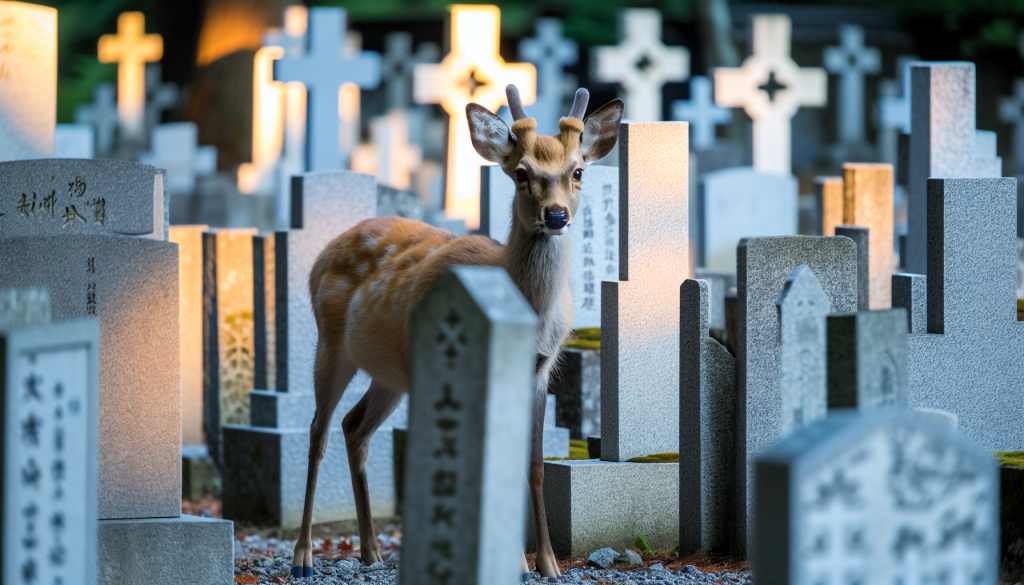
In Vienna, one of Europe’s largest cemeteries is quietly becoming a sanctuary for wildlife – while continuing to honor the dead.
Legends like Beethoven, Schubert, and Brahms rest here, alongside Hedy Lamarr, the film star and inventor, and Austrian music icon Falco. This historic ground holds not only human legacy but also thriving life forms.
Wander the Vienna Central Cemetery at dawn and you may witness the rustling of fur rather than fading echoes – not spirits, but European hamsters darting among the stones. With round cheeks and quick movements, these endangered animals have found unexpected refuge here.
The hamsters inhabit a peaceful area called the Park of Peace and Power to the north of the grounds. Trails etched into the soil give away their presence. Once treated as pests, these creatures are now on the brink of disappearing. Years of rapid urban expansion and industrial agriculture have nearly wiped out their habitats. Experts warn they could vanish entirely by 2050. Yet, in this unusual home, they’ve found survival. Groundskeepers take care not to disturb their burrows, and visitors often leave treats. During the cold season, when food is scarce, the hamsters resort to munching on waxy grave candles.
Cemeteries actually serve as hidden refuges for nature in cities. A 2019 review identified over 140 protected species living in burial grounds worldwide – including rare orchids in Turkey and disappearing prairie plants in Eurasia.
With their calm atmosphere and minimal development, cemeteries have avoided much of the upheaval that transformed nearby urban landscapes. This makes them vital step-stone habitats, offering wildlife passage through shrinking city green spaces otherwise fragmented by concrete and steel.
Thomas Filek, a researcher at the University of Natural Resources and Life Sciences in Vienna, studies the wild residents of this 2.4-square-kilometre cemetery. During a walk through the grassy fields, he points out the hamsters' burrows. “Our gardeners are adapting their maintenance to support nature. Letting grass grow is one simple way,” he explains. “It all begins with plants – they feed insects, which in turn attract birds, and so on.”
Since 2021, Filek has led a project titled Biodiversity in the Cemetery, involving citizen scientists to record local flora and fauna in Vienna and beyond. The initiative receives thousands of wildlife sightings each year across Austrian cemeteries.
The cemetery hosts not only hamsters but also European Green Toads, Alpine Longhorn Beetles, and even the endangered European Ground Squirrel. The striking Eurasian Hoopoe bird, endangered in Austria, has also settled here. Since the study began, over 240 species have been identified within the grounds.
This niche research area often focuses on tiny corners of cemeteries, making broader comparisons difficult. Still, Filek says the public's help is invaluable. “People usually notice birds or mammals, not the little things,” he notes. University students fill this gap by investigating less visible creatures for their dissertations.
Long before this project, nature lovers and birdwatchers regularly visited the cemetery. On one recent visit, the air was filled with birdsong and squirrels bounded over gravestones. Filek lifts a few boards from the grass to reveal bustling insect life beneath – a glimpse into the cemetery’s miniature ecosystems. While larger animals like deer and foxes avoid busier areas during the day, they’re known to roam the quieter zones.
Ingo Kowarik, an urban ecologist formerly at Technische Universität Berlin, compares cemeteries to patchworks of habitat. His study of Berlin’s Weißensee Jewish Cemetery showed how woodland, meadow, and field species can coexist in a single space. Even tombstones and mausoleums mimic rocky outcrops for some plants and animals.
Still, the built environment can mislead. A 2007 study found that polished black headstones in Hungary attracted dragonflies mistaking them for water. Additionally, some cemetery practices — like embalming and traditional burials — can affect soil and air quality, especially when not carefully managed.
Near the hamsters’ habitat, the Vienna cemetery has set aside a meadow for natural burials. Next to neat rows of headstones lies forest patches marked by trees that double as grave markers, often frequented by wildlife. Kowarik highlights how cemeteries protect natural features even as modern life encroaches.
Filek’s own journey began as a young biology teacher curious about the wildlife in his city. “Few of us get to visit remote rainforests,” he says. “I wanted to show my students that wonder exists right here.”
The turning point came when he spoke with Florian Ivanič, a veteran cemetery landscaper. In 2011, Ivanič transformed 10 acres of disused land into a wild garden. There, nature takes the lead, with rock piles and ponds providing shelter for various species.
“I wanted a space dedicated to animals,” Ivanič says. “Designing parks is easy, but leaving places untouched has its own value.”
Filek immediately saw promise in partnering with Ivanič, whose passion for the grounds was unmistakable. When Filek proposed turning cemeteries into biodiversity hotspots, Ivanič supported the idea wholeheartedly.
That collaboration has now turned into action. The team has added birdhouses, feeders, and set aside areas for wild plants and insects. Grasslands are left unmown in some parts to encourage pollinators. These approaches, Filek insists, can be replicated elsewhere. “You just need to make space,” he says. “Even behind headstones.”
Educational signs throughout the cemetery describe the resident species and why they matter. For visitors, guided tours now explore the hamsters’ favorite spots. “People are beginning to realize what a treasure they have,” says Filek. “It’s a joint effort – staff, locals and scientists working toward a shared goal.”
The results are visible. Along with the Eurasian Hoopoe, new animals have appeared, drawn by the welcoming environment. Five hoopoes now frequent the area, and nesting boxes have been installed to encourage more. A recent visitor even confirmed a sighting of the European Ground Squirrel – proof that this green oasis continues to inspire life.
Whenever new graves are planned near hamster colonies, cemetery staff consult with Filek to minimize disruption. Only eco-friendly burials are permitted in those sensitive zones.
However, blending ecological goals with public expectations isn't always simple. “Some visitors prefer tidier spaces,” Kowarik explains. “But those carefully maintained areas also support certain species. The beauty of cemetery biodiversity is that there's room for all kinds of habitats.”
Economic concerns can also conflict with conservation. In Berlin, many cemeteries are privately run and increasingly rely on alternative funding. With fewer people choosing large burial plots, some cemeteries sell unused land, putting green space at risk. Kowarik argues for public backing. “Green spaces are vital. Public investment is necessary to keep cemeteries functioning both as places of reflection and as ecological sanctuaries.”
In Vienna, however, nature continues to play a central role. “A cemetery is more than a place of mourning,” says Lisa Pernkopf of Friedhöfe Wien GmbH, which manages the city's cemeteries. “These green spaces help our city’s climate and preserve its biodiversity.”
Filek hopes parts of the cemetery will eventually receive formal environmental protections. He’s already in discussions with city officials. “We know what biodiversity we have here,” he says. “Now it’s time to protect it — and ensure it’s protected for the future.”