Why people in Estonia welcome strangers into their backyards every summer
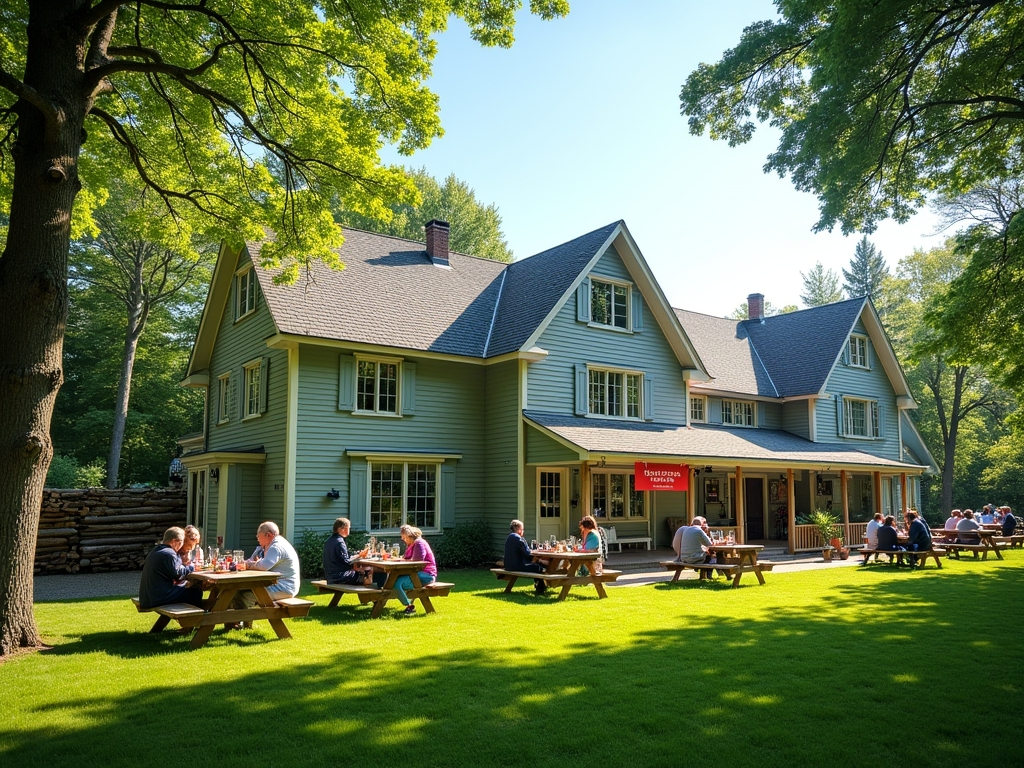
Every summer, private gardens, garages and even apartment windows across Estonia transform into one-day cafés welcoming anyone who wanders by.
Under a large canopy, strangers line up for lunch. Nearby, garden beds brim with cucumbers, strawberries, garlic and courgettes, while an apple tree casts shade over a table set with rye bread, homemade pickles and a steaming pot of seljanka, a rich tomato-based soup with ham and smoked sausage. Visitors choose from a modest printed menu, then carry their bowls to shared tables where they sit and eat together.
It may resemble a rural café, but it is actually the backyard of Heiki Kalvik on the edge of Kehra, a small town about 45 minutes east of Tallinn. Each summer, he turns his home into a temporary restaurant.
"I'm very outgoing, and I love cooking. Hosting people makes me happy, and I take pride in our garden," Kalvik explains as more guests arrive through the gate.
Kalvik is one of roughly a dozen locals participating in Kehra’s annual Kodukohvikute Päev, or “home café day.” For one day in July, residents open their gardens, courtyards and garages as pop-up eateries. Elsewhere in town, Karolin Vahtre has transformed a garage behind her Soviet-era apartment building into a casual café, serving tempura sushi rolls, chanterelle quiche, chocolate cake and French fries to anyone who stops in.
Between April and September, more than 150 similar events take place across Estonia. What began as a small initiative has grown into a cherished tradition. Some cafés feature rented tents and neatly arranged tables, while others are as simple as a lemonade stand run by children. Together, they offer visitors a rare look into everyday Estonian life.
The tradition started on Hiiumaa, Estonia’s second-largest island, in 2007. Local tourism advocates were searching for a way to draw visitors outside the busiest summer weeks.
They found inspiration in Kärdla, the island’s capital, long associated with coffee culture. In the 19th Century, a broadcloth factory managed by a Baltic German baron employed workers from Central Europe who regularly drank coffee. Local residents adopted the custom, and Kärdla inhabitants were eventually nicknamed kohvilähkrid, or “coffee flasks,” because they carried coffee to the fields instead of the more common sour milk or beer.
Fifteen households joined the first Hiiumaa café days in 2007. Today, the three-day celebration held each August draws thousands of visitors, with dozens of temporary cafés serving homemade dishes and drinks throughout the island.
Hiiumaa Museum is among the few participants involved every year since the beginning. It recreates a 19th-Century café inside its Long House, once the residence of the factory’s managers. Director Kauri Kiivramees believes the tradition reflects more than culinary enthusiasm; it echoes the island’s long-standing openness to strangers.
According to Kiivramees, even an “island of introverts” values community ties. In earlier times, helping outsiders was essential, especially when shipwrecked sailors or unexpected visitors arrived and required assistance.
Historically, Estonia’s small rural communities have formed the backbone of society, both on the islands and the mainland. Although modern life has reduced dependence on neighbors, communal practices such as talgud — once organized for haymaking or barn building, now often for village clean-ups — continue. Home café days carry that same cooperative spirit, which explains how quickly the idea spread beyond Hiiumaa.
In Setomaa, in south-eastern Estonia, pop-up café days are held each year on the second weekend of August, highlighting the region’s distinctive heritage.
"One reason we launched Kostipäiv was that in summer there weren’t many occasions where people wore traditional clothing or served traditional dishes like sõir, our homemade cheese," says Liis Kogerman, a board member of the organizing group Seto Küük.
The event has become a hallmark of the area, with some cafés drawing up to 1,000 guests. While a few have evolved into permanent restaurants, most hosts simply appreciate the chance to cook and welcome visitors without the demands of running a full-time business.
A similar enthusiasm can be found in Tartu, Estonia’s university city. There, Inga Kulmoja runs a one-day café dedicated to her passion for homemade ice cream. Living in an old wooden house without a yard, she lowers portions of ice cream from her third-floor window down to the street below.
"It’s very simple," she says, noting how different it is from her usual work as an entrepreneur in artificial intelligence. "We use cash only, and the signs are written on reused paper. We bought some rope and have two buckets — one for the ice cream and a smaller one for money. I don’t even use a machine; I make everything in the freezer."
Though she spends most of the day scooping ice cream and managing the buckets, Kulmoja enjoys watching the queue grow, especially when familiar faces return each year. She believes many people feel a quiet pride in showing others how they live and what they can create — a small pleasure in being, briefly, the center of attention.
Oleg Pun and Iryna Topilina moved to Estonia from Ukraine in 2019 but hosted their first café in 2022, after Pun’s parents relocated to Estonia because of the war. Encouraging them to join their village’s café day seemed like a good way to connect with neighbors.
Topilina remembers how deeply touched they were by the turnout. Estonians from nearby homes came to show support, and some even brought extra chairs and furniture when they noticed seating was scarce.
Now the family collaborates each year during Kalamaja Days, welcoming guests into their garden. This summer, they served cabbage varenyky — Ukrainian dumplings prepared from a nearly century-old family recipe — along with green borscht made from locally foraged sorrel and nettle, cooked over an open flame.
For outsiders, Estonia’s home café days may feel like hidden festivities. Yet they are among the rare occasions when private gates swing open, family recipes are shared and visitors are invited into the everyday rhythm of local neighborhoods.
As Kalamaja Days organizer Katrin Aedma puts it, yards are usually closed to passersby. But on this day, people open both their gates and their hearts.