At home, at school and in hospital: the toll of Russian strikes on hundreds of Ukrainian children
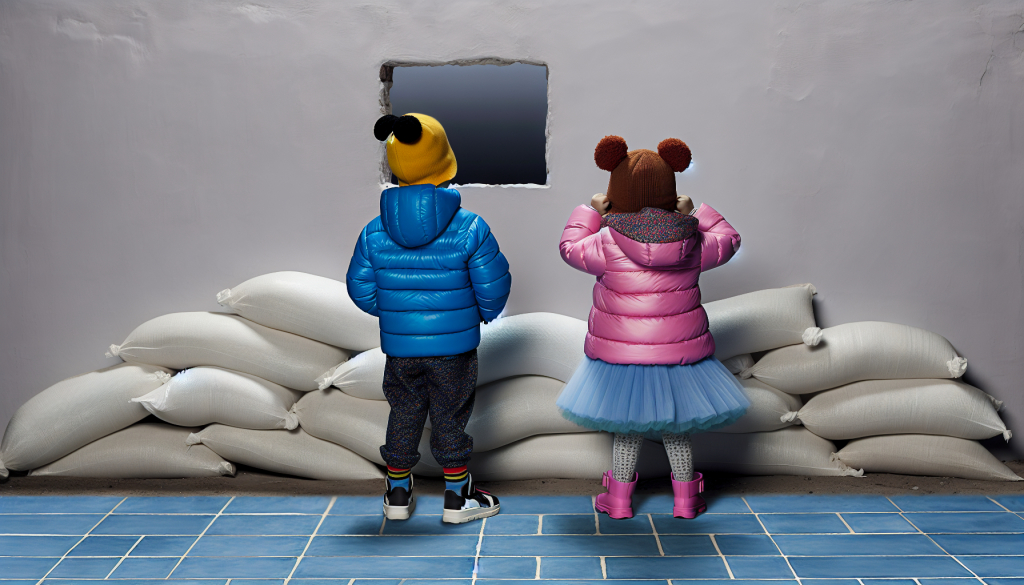
On the evening of May 18, four-year-old Mark Ifiemenko was at home with his parents in Vasylkiv, a town just outside of Kyiv, Ukraine. Explosions echoed nearby, prompting Mark’s mother to quickly lead him and his grandparents to the lower floor of their two-storey house in search of safety.
It was later confirmed that during the night, Russia had carried out one of the largest assaults on Ukraine since the full-scale invasion began. Over 270 drones and missiles reportedly entered Ukrainian airspace.
The family took shelter in a room located deep within the house, believing it would offer the most protection—a safety tactic familiar to many Ukrainians. Meanwhile, Mark’s father, Sergey, went to the kitchen to shut off the gas. As he did so, a drone, roughly the size of a compact car, struck their home.
“Everything was covered in smoke and debris—I could barely breathe,” recalls 31-year-old Sergey, who had just returned from military duty the week before. “I shouted for my family and rushed to their room.”
“I found my parents first—they were injured. I asked where my wife, Anna, and Mark were. My mother told me Anna was gone. When I looked down using a flashlight, I realized I was standing over my wife’s body. A shard from the drone had struck her head. Even in death, she was wrapped around Mark, shielding him as he wept,” he shares.
Sergey lifted his son from Anna’s final embrace and, despite the ongoing danger, carried him to a relative’s house nearby before going back to help his injured parents. The next morning, Mark was taken to Ohmatdyt children’s hospital in Kyiv, where he spent 10 days in intensive care, much of the time unconscious.
Mark survived, Sergey says, because of his mother’s selfless act. But he sustained serious injuries: fractures to his skull, facial trauma, and loss of vision in one eye. His recovery, both physical and emotional, will be long and difficult.
Recent months have seen a troubling increase in child casualties in Ukraine. Between March and May, 222 children were reported killed or injured, contributing to a total of 2,889 since the invasion began. The United Nations warns the actual figures are likely higher due to ongoing verification delays.
Ukrainian human rights advocates argue that these strikes are intentional and call for stronger international condemnation. “Under international humanitarian law, targeting civilian sites—particularly schools, hospitals, and areas with children—is a war crime,” explains Daria Kasyanova, head of the Ukrainian Child Rights Network.
Amnesty International has also recorded multiple cases of indiscriminate Russian attacks that resulted in civilian casualties, noting that such actions are in direct violation of wartime laws and amount to war crimes.
Even if the fighting ends, the presence of unexploded ordnance and landmines across Ukraine will remain a deadly threat. The UN highlights that children are especially vulnerable to these hazards, likely facing danger for years to come.
For children like Mark who have survived, the effects of war are lasting. According to a recent survey by Unicef, one in five Ukrainian children has suffered a personal loss — a family member or close friend. Sergey says, “He still asks for Mamusya—it means mommy—and misses her dearly. I told him the truth: that she loved him with all her heart and gave everything for his safety. I told him she’s now his guardian angel.”
In addition to frequent hospital visits and being fitted for a prosthetic eye, Mark struggles with sleep and learning. “It’s hard on him. He’s just a little boy. Loud noises make him jump—anything that reminds him of drones terrifies him.”
Kasyanova, who also works with children without parental care, says the war’s toll goes far beyond physical injuries. “Beyond the heartbreaking casualties, children are losing their sense of safety, structure, and normalcy. Their lives are shaped by fear, loss, and instability,” she says.
Daily life—both at home and in school—has been severely impacted for millions. For children under three, violence and displacement are all they’ve ever known. “Many have learned remotely for years now because their schools are no longer standing or are unsafe due to continuous shelling,” says Kasyanova. “It’s a traumatic way to grow up.”
Some Ukrainian children have been living amid conflict their entire lives. More than eleven years have passed since the initial invasion of eastern Ukraine. “There are teenagers who have never known peace. Their childhoods are defined by war, loss, and displacement,” Kasyanova explains.
She warns that if this psychological damage goes untreated, it can lead to long-term issues—affecting learning, relationships, and trust. In severe cases, trauma may even be carried into future generations. Sergey, now home permanently to raise Mark, says his goal is simple: to give his son the happiest life possible, no matter the scars he bears.
“No child in Ukraine deserves to grow up with war. They’ve done nothing to suffer like this. No one deserves it,” says Sergey.