Australia does not ‘need or want Russian fuel’, Chris Bowen says, following Trump deal to buy diesel from Putin
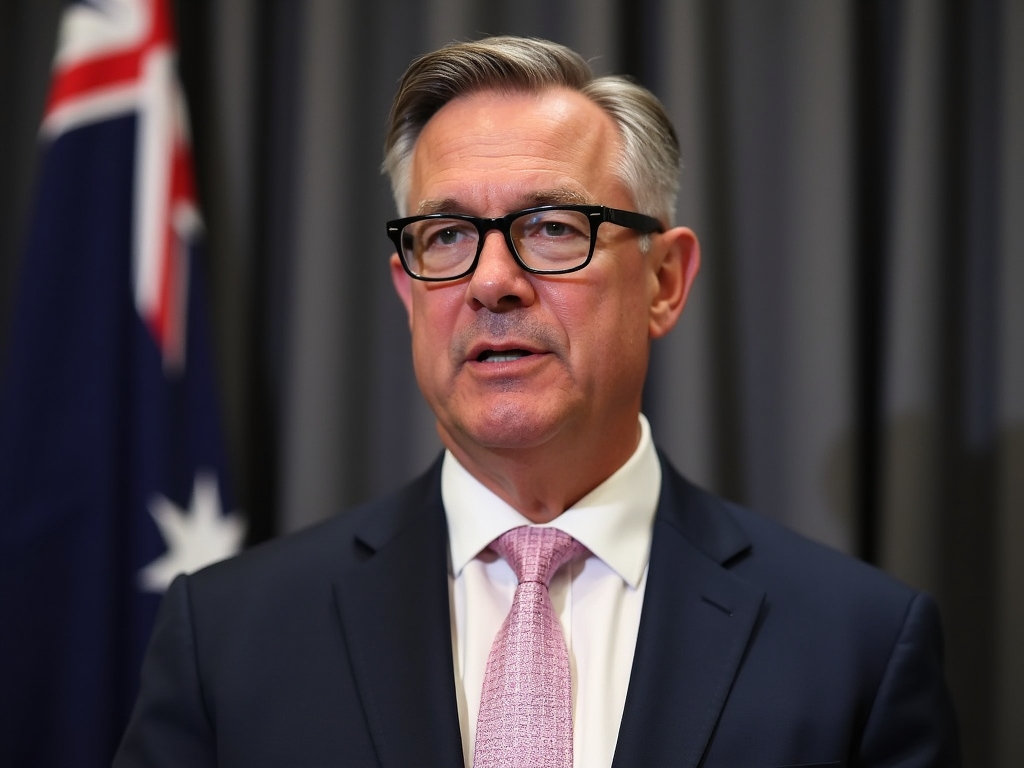
Australia’s energy minister has said Russia must not be allowed to benefit from its “illegal and immoral invasion of Ukraine” after US president Donald Trump announced an agreement with Vladimir Putin to purchase Russian diesel.
Energy and climate change minister Chris Bowen said on Saturday that Australia neither needed nor wanted Russian fuel, as he provided an update on the nation’s fuel stockpiles.
However, One Nation leader Pauline Hanson said it was important for countries to cooperate where possible to secure essential resources, declining to rule out Australia entering a similar arrangement.
Trump said in a social media post on Saturday morning Australian time that, following a “highly successful discussion” with Putin, Russia had agreed to immediately send 300,000 tonnes of diesel to US and international markets. He said this would be followed by 500,000 tonnes in November, eventually rising to 3m tonnes depending on the state of Russia’s diesel refineries.
The agreement drew criticism from Democrats as well as some Republicans. Trump is facing political pressure over elevated diesel prices in the US ahead of next month’s midterm elections.
Ukraine’s president, Volodymyr Zelenskyy, said the arrangement “plays into Russia’s hands”, giving Moscow greater capacity to continue its war, show less regard for the United States and cause further global damage.
Speaking at his regular Saturday morning briefing on Australia’s fuel reserves, Bowen, who is due to lead talks at next month’s UN climate conference in Turkey, said: “We don’t need or want Russian fuel in Australia.”
“We have put the strongest possible arrangements in place with our trading partners to make sure Russian fuel does not enter Australia.
“We do not want Vladimir Putin to profit from this conflict in the Middle East. What the United States chooses to do is a matter for the United States, but Australia will not alter its position.
“We will continue to hold the very firm view that Russia should not be rewarded for its illegal and immoral invasion of Ukraine through any arrangements arising from the Middle East crisis … the policies of other nations are matters for them.”
Asked whether she would support Australia taking action similar to Trump’s, Hanson said she wanted to see greater global oil availability.
“If fuel is being supplied around the world, because many countries are suffering from a shortage of oil, then I think it is important to work with countries where we can obtain the resources we need,” she said at a press conference during the CPAC convention in Brisbane.
“We cannot allow countries to come to a complete halt, with businesses closing and costs rising for consumers … every country needs to consider the importance of delivering oil.”
Hanson did not respond to a further question about whether that position should explicitly extend to Russian oil. In her speech to CPAC, the One Nation leader argued Australia should “produce our own fuel as the world becomes more dangerous”.
Uncertainty continues across the Middle East following Trump’s extended conflict with Iran. This week, he said he would not order further attacks on Iran before the midterm elections.
Bowen said the international environment remained difficult, but Australia had 43 days of petrol supplies and 31 days of diesel supplies, broadly in line with previous figures.
“There are 51 ships carrying fuel on their way to Australia, and 3.2bn litres of different fuel products have been secured under contracts for delivery over the next four weeks.”
Bowen said he had met senior Saudi Arabian representatives in Fiji while preparing for the UN climate talks in Turkey.
“We are clearly continuing to see attacks in Saudi Arabia,” he said. “But I am confident the Saudi Arabian government is taking measures to keep fuel moving as effectively as possible.
“We will maintain the approach we have taken throughout this crisis, working closely with trading partners in south-east Asia and elsewhere, including India and Saudi Arabia, while working closely with domestic refiners to ensure they are operating at full capacity.
“I also remain in frequent contact with the chief executives of Australia’s domestic refining industry.”