China has hit Trump where it hurts — rare earth metals
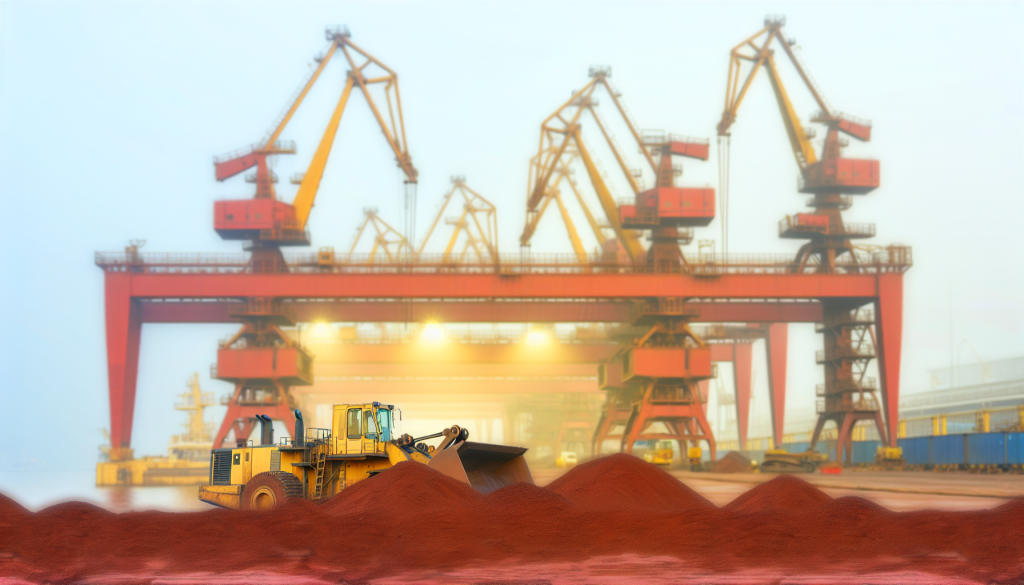
Last week, China's Ministry of Commerce issued "Notice No. 62 of 2025".
Unlike ordinary administrative updates, this one has disrupted the delicate trade truce between China and the United States.
The announcement outlined broad new restrictions on rare earth exports, strengthening China’s hold over the global supply of these key materials—reigniting concerns in Washington about China’s strategic economic position.
China dominates the rare earth processing industry, which is vital for manufacturing items like smartphones, electric vehicles, and military technologies.
According to the updated regulations, foreign companies must now seek approval from Chinese authorities for exporting goods containing even minimal amounts of rare earths. They are also required to specify how the materials will be used.
In retaliation, U.S. President Donald Trump threatened to double tariffs on Chinese imports and place further limits on the export of advanced software.
“This is a global standoff,” declared U.S. Treasury Secretary Scott Bessent. “China is targeting the world’s industrial base, and we won’t let that stand.”
China responded by stating that the U.S. was creating unnecessary panic over the restrictions on rare earths.
A representative from the Chinese commerce ministry emphasized that license applications for non-military purposes would still be approved.
This week also saw Beijing and Washington introducing new port fees on each other’s shipping vessels.
These new developments have unraveled the relative trade stability established in May, when diplomatic talks had eased tensions.
Later this month, President Trump and Chinese President Xi Jinping are scheduled to meet, and many analysts believe China's latest move has improved its negotiating position.
Dr. Naoise McDonagh, a lecturer in international business at Edith Cowan University in Australia, suggests the restrictions are likely to cause significant disruptions to U.S. supply chains.
“China’s timing has disrupted the negotiation framework that the U.S. had in mind,” he noted.
Rare earth elements are essential for items like solar panels, electric vehicles, and defense equipment.
For instance, one F-35 fighter jet needs over 400 kilograms (around 880 pounds) of rare earth components for motors, radar systems, and stealth materials.
Roughly 70% of the global supply of metals used in electric vehicle magnets come from China, according to Natasha Jha Bhaskar of Newland Global Group.
Researcher Marina Zhang from the University of Technology Sydney explained that China’s dominance is the result of years of strategic planning and investment in talent and research capabilities.
Although countries like the U.S. are investing in alternative sources, they are still far from reaching China's scale of production.
Australia, which holds significant rare earth deposits, is seen as a potential alternative supplier. However, its lack of processing infrastructure makes the process more expensive, said Ms. Zhang.
“Even with a coordinated effort by the U.S. and its allies, it would take no less than five years to reduce dependence on China,” she estimated.
These new Chinese restrictions build upon earlier export rules introduced in April, which initially caused global shortages. Although temporary deals with Europe and the U.S. provided relief, supplies remain tight.
China's latest data shows that rare earth exports dropped by over 30% in September compared to the same month last year.
Despite the reduction, analysts believe China’s broader economy remains largely unaffected.
According to NYU's Professor Sophia Kalantzakos, rare earth exports account for less than 0.1% of China's $18.7 trillion GDP.
Still, their strategic importance far outweighs their economic value, providing China with significant leverage in ongoing discussions with the U.S., said Prof. Kalantzakos.
Even as U.S. officials express frustration, Bessent has stated that talks with China could still move forward.
“I think China is willing to talk, and I’m hopeful tensions can be dialed down,” he said.
China’s Foreign Minister Wang Yi echoed similar sentiments during discussions with the CEO of U.S. private equity firm Blackstone, calling for effective dialogue and healthy bilateral relations.
According to Prof. Kalantzakos, these latest developments are part of Beijing’s strategy to gear up ahead of the trade talks.
Ms. Bhaskar agrees, calling rare earth controls China’s most powerful short-term negotiating tool.
However, Professor Jiao Yang from Singapore Management University believes the U.S. might counter with strategic offerings of its own.
Lowering tariffs could appeal to Beijing, especially as China’s manufacturing sector grapples with the impact of the trade war, said Prof. Jiao.
Recent figures reveal China’s exports to the U.S. have fallen by 27% compared to the previous year.
Washington also has the option to impose stricter trade measures aimed at stalling China’s technological advancements, added Prof. McDonagh.
For example, the U.S. has already stepped in to block Chinese access to top-tier semiconductors like those produced by Nvidia.
Still, experts suggest that such steps may only delay China’s progress—rather than halt it altogether.
“Trying to slow China’s tech rise won’t be enough to shut it down,” Prof. McDonagh explained.
He added that China's long-term vision allows it to endure economic challenges if that furthers its strategic objectives.
“China can push through higher costs due to U.S. controls," he said.
"But if China stops rare earth exports, it could bring global industries to a halt. That’s the real pressure point."