Nearly three-quarters of UK’s popular plug-in hybrid cars cannot use rapid chargers
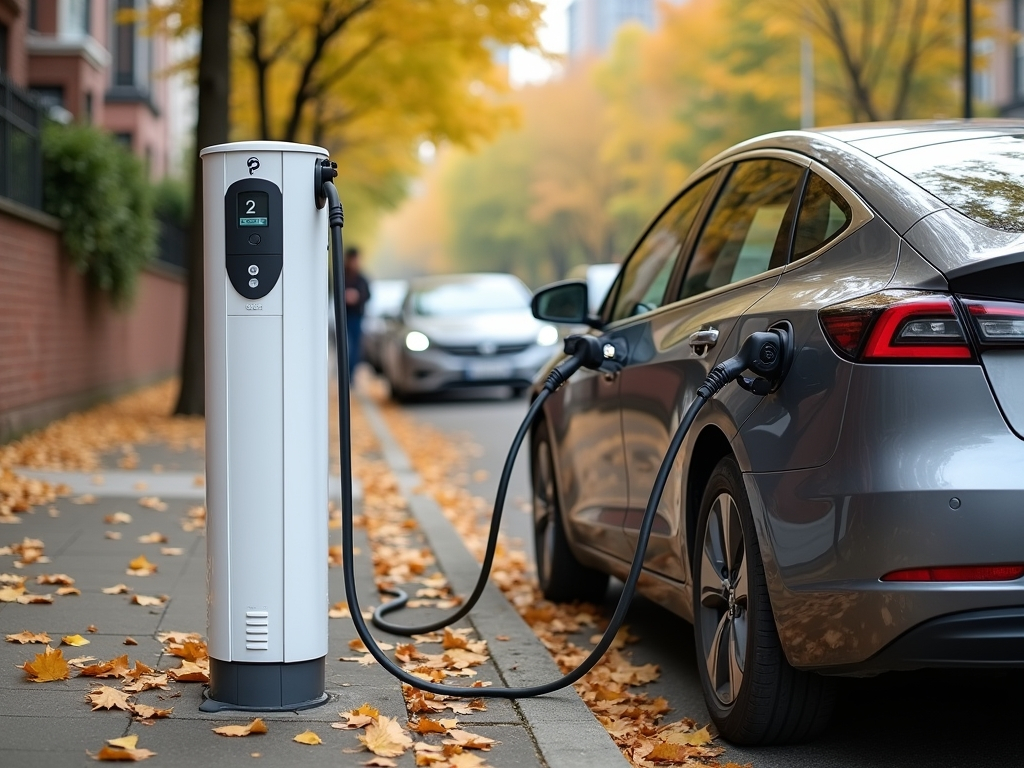
Research has found that three-quarters of the UK’s 20 best-selling plug-in hybrid electric vehicles (PHEVs) are unable to use rapid public chargers, prompting fresh criticism that many function largely as “petrol cars carrying a heavy battery”.
These vehicles combine a rechargeable battery with a combustion engine and have been marketed by manufacturers as a bridge between conventional cars and fully electric models. They are intended to offer electric driving for shorter journeys while retaining petrol power for longer trips.
However, analysis from charging industry organisation ChargeUK found that just 26% of sales among the 20 leading PHEV models relate to vehicles capable of using rapid chargers rated at 50kW or above. The list includes models such as the Jaecoo 7, Ford Kuga and Hyundai Tucson.
Rapid chargers, often found at motorway stops and other major routes, can add substantial battery range within 20 to 30 minutes. Vehicles without this capability must charge at lower speeds, potentially leaving drivers waiting for several hours during a journey. As a result, some hybrid owners may simply continue using petrol power instead.
Shane Brennan, chief executive of ChargeUK, said: “A plug-in hybrid that is rarely connected to a charger becomes an expensive petrol vehicle carrying around a large battery. Drivers who cannot recharge quickly on public networks can easily develop a dependence on petrol.
“Ministers should not be persuaded that expanding PHEV sales is a significant route towards electrification. The supposed compromise offered by PHEVs risks becoming a serious policy mistake.”
Several studies have concluded that plug-in hybrids produce far more climate-warming emissions in everyday use than their official test figures suggest. Nevertheless, the government last year gave manufacturers greater scope to count PHEV sales towards electric vehicle targets.
PHEVs were the fastest-growing category of vehicle in the UK last year. Official figures show that 227,000 were registered, an increase of almost 35% compared with 2024. Another 180,000 have been sold during the current year so far.
Other models in the top 20 include the BYD Seal, MG HS and BMW 3 Series. None of these vehicles is capable of using rapid charging equipment.
In a recent review of the zero-emission vehicle mandate, the government acknowledged that PHEVs are driven electrically much less often than official assumptions indicate. It said the emissions calculation method “substantially overestimates electric driving, because many owners do not charge regularly, resulting in real-world CO2 emissions that are higher than published figures”.
Even so, ministers are expected to further soften targets for fully electric vehicle sales when a consultation on revisions to the mandate ends in October. The changes follow sustained pressure from vehicle manufacturers. Nissan recently indicated that it could reconsider a £170m investment in its Sunderland plant if the rules are not relaxed.
None of the 20 leading PHEV models can access ultra-rapid chargers, the quickest category of charging infrastructure, which can add meaningful range within minutes. Rapid charging begins at 50kW, while ultra-rapid charging starts at 150kW.
Rapid and ultra-rapid units account for roughly one-quarter of public charging locations in the UK, based on government statistics. However, because they deliver power at much higher speeds, they provide most of the network’s overall charging capacity.
In comparison, every one of the 20 top-selling fully electric cars last year could use rapid chargers, while 64% were compatible with ultra-rapid charging facilities.
The findings follow changes in carmaker pricing last month. Manufacturers increased discounts on petrol-powered vehicles, including hybrids, while reducing incentives for electric cars as they approached annual sales requirements for EVs.
Autotrader reported that average discounts on petrol vehicles advertised through its platform rose to 11.9% in September, from 11.3% in August. Discounts on EVs declined from 11.1% to 10.7%, largely because firms including Mercedes-Benz and MG reduced their offers as they moved closer to meeting their yearly zero-emission vehicle obligations.
A government spokesperson said ministers were pursuing a practical policy that allowed motorists to select plug-in hybrids. The spokesperson added that, in real-world conditions, the vehicles still produce around 40% less carbon pollution than the average petrol or diesel car.