Black vultures are killing livestock as they move north — climate change plays a role in their expansion
EMINENCE, Ky. (AP) — Allan Bryant keeps a close watch overhead while tending to a newborn calf resting beneath the trees beside its mother. After a few shaky attempts, the calf rises to its feet, beginning its first steps as it looks to nurse.
In the sky, two birds glide in slow circles. Bryant, hoping they’re not black vultures, breathes a sigh of relief when he realizes they’re only turkey vultures — distinguishable by their red heads and less threatening demeanor.
“Honestly, black vultures are some of the ugliest creatures I’ve ever seen,” Bryant said. “It’s easy to dislike them.”
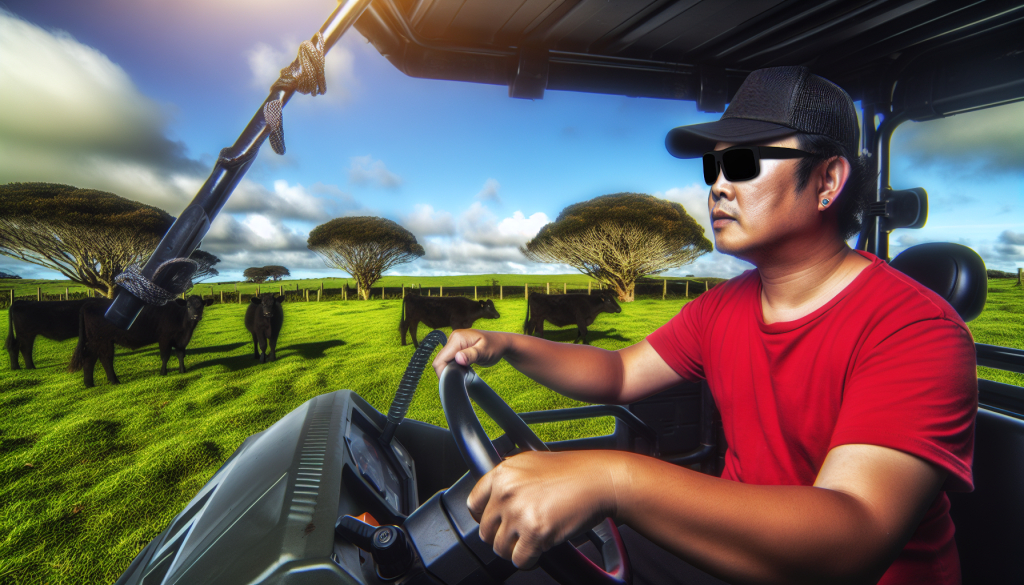
Allan Bryant herds his cattle across a pasture on Friday, Oct. 17, 2025, in Eminence, Ky. (AP Photo/Joshua A. Bickel)
Black vultures, known for feeding on decaying animals, are also reported to attack weak or newborn livestock. While they weren’t always a concern in this region, Bryant now often sees them appearing shortly after calves are born. He hasn’t lost any calves for several years, but remembers times when they were killed by vultures. He now takes precautions to deter them.
One method he uses involves hanging a dead black vulture — the display is meant to scare off others of its kind. It's required under his permit from the Kentucky Farm Bureau, which gives him the legal right to kill a limited number of the birds annually. The hanging bird keeps others away for a short time, but they usually return, he explained.
The issue may worsen as black vultures move further north, a trend partly attributed to a warming climate. Various agricultural advocates are pushing for legislation to allow farmers to legally remove more of these federally protected birds. Still, scientists caution that more studies are necessary to better grasp how vultures affect livestock and what broader ecological consequences may result from killing them.
A mother cow stands beside her newborn calf on Friday, Oct. 17, 2025, in Eminence, Ky. (AP Photo/Joshua A. Bickel)
Warmer winters are changing where vultures live
Once mainly found in the southern United States and further into Central and South America, black vultures have extended their reach northward and into areas like the desert Southwest. Andrew Farnsworth, a visiting researcher at Cornell Lab of Ornithology, explained how bird migration is evolving.
Shorter, milder winters caused by global climate shifts are helping these birds adapt to places they once couldn’t survive in. In addition, human developments — particularly in suburban and open rural areas — provide steady sources of food, such as roadkill and vulnerable livestock. Calving season on cattle farms is a predictable feast.
“Birds are incredibly resourceful and have excellent memory when it comes to food,” Farnsworth said.
Even though black vultures fall under the protection of the Migratory Bird Treaty Act, they don’t migrate much. Instead, they breed and slowly establish themselves in new areas.
How farmers are responding to the threat
Tom Karr, a cattle rancher near Pomeroy, Ohio, lost a calf to black vultures years ago. Hoping to avoid further losses, he shifted his calving season later in the year. But the birds, which once left during colder months, now linger year-round.
A black vulture flies overhead on Monday, Sept. 29, 2025, in Cincinnati. (AP Photo/Joshua A. Bickel)
On her farm in Hillsboro, Ohio, Joanie Grimes keeps newborn calves near the barn where it’s easier to protect them. Managing a herd of 350 cow-calf pairs, her family has contended with black vultures for over 15 years. Avoiding remote fields in the early days of calving has helped them reduce problems.
Over in Milton, West Virginia, Annette Ericksen has seen black vultures around her Twin Maples Farm for years but hasn’t lost animals yet. To prepare for calving and lambing, she brings animals into the barn and employs guard dogs — Great Pyrenees — to patrol the property and ward off predators.
With a smaller-scale operation, she can closely monitor her animals. "Any loss would significantly hurt our small farm," she shared.
Young calves graze in a pasture on Friday, Oct. 17, 2025, in Eminence, Ky. (AP Photo/Joshua A. Bickel)
Regional cattle associations and state farm bureaus frequently assist ranchers with permits that allow for the limited killing of black vultures. These permits require careful record-keeping.
“The tough part is, vultures may show up and cause damage before you even secure your permit,” said Brian Shuter of the Indiana Beef Cattle Association. Farmers note that each calf could be worth anywhere from several hundred to a couple thousand dollars, depending on the breed.
New bill would reduce red tape for farmers to shoot vultures
In March, members of Congress proposed a bill aimed at giving farmers the authority to kill or remove black vultures when livestock are threatened, without the usual paperwork delays. Support for the bill has been strong within the farming community, and the National Cattlemen’s Beef Association applauded lawmakers for progressing the legislation.
Andrew Farnsworth, however, cautioned against removing the birds without deeper insight into the consequences. He noted that black vultures play a vital role in ecosystems by consuming dead animal matter.
“Killing vultures could open the door to other, potentially more problematic species,” he said. Although their predation can be gruesome, research hasn’t shown that they cause an unusually high number of livestock deaths.
Still, for many ranchers, doing nothing isn’t an option.
“They’ll literally eat the animals alive,” Karr said. “It’s horrifying to watch.”
Black and turkey vultures soar together in the sky above Cincinnati on Friday, Sept. 26, 2025. (AP Photo/Joshua A. Bickel)
___
The Associated Press’ reporting on climate and environmental issues is supported by several private foundations. AP holds full responsibility for all editorial content.