How Switzerland lost a fifth of its ice in just five years
Swiss glaciers are shrinking at an alarming pace as winters bring less snow and Europe experiences exceptionally high summer temperatures, scientists have warned. The country, long associated with Alpine scenery and ski resorts, has lost almost one-fifth of its glacier ice in only five years.
A report released on Thursday by the Swiss Glacier Monitoring Network (GLAMOS) and the Swiss Academy of Sciences’ Commission for Cryosphere Observation found that Swiss glaciers lost 5.5 percent of their ice volume during the hydrological year ending on September 30, 2026. Since 2021, their combined ice volume has declined by close to 20 percent.
What have scientists discovered?
During September, a GLAMOS research team travelled to 23 Swiss glaciers to measure how much ice had melted and how much snow had accumulated by the end of summer.
At the Scex Rouge glacier in the western Swiss Alps, researchers examined a measuring pole installed in the ice in July. The pole, roughly four metres (13 feet) tall, was intended to help scientists track changes in the glacier’s surface.
By early September, around three metres (10 feet) of the pole had emerged from the ice. This meant the glacier had lost three metres of ice during August and September alone, even without counting the intense heat earlier in June and July, at an altitude of nearly 3,000 metres (9,843 feet).
The researchers said the scale of the melt shows that recent summer conditions are incompatible with the long-term survival of many small Alpine glaciers.
Why are glaciers in Switzerland losing ice?
The report found that the average thickness of Swiss glaciers fell by between 2.5 and four metres in 2026. In some areas near glacier tongues, the lower and narrower extensions of glaciers, the ice thinned by up to 10 metres over the summer.
Scientists linked the dramatic losses directly to rising temperatures driven by human-caused climate change. Switzerland experienced its hottest summer on record, while low winter snowfall left glacier surfaces with little protective snow cover before the heat arrived.
Although every glacier in the country has been affected, the change is especially clear among smaller glaciers. Many are retreating rapidly, and some have vanished entirely. Larger glaciers are also losing huge amounts of ice, even if they remain visually striking.
Between July and September alone, Swiss glaciers lost an estimated 2.2 trillion litres of water, or about 581 billion gallons, according to the researchers.
That amount exceeds four times the annual drinking-water use of all Swiss households. Scientists say the continuing decline could eventually place pressure on Switzerland’s water resources.
What does this mean for Switzerland?
Glaciers are central to Switzerland’s image, winter-sports industry and Alpine tourism economy. Tourism employs about 4 percent of the country’s workforce, and many destinations depend on snowy landscapes and reliable mountain conditions.
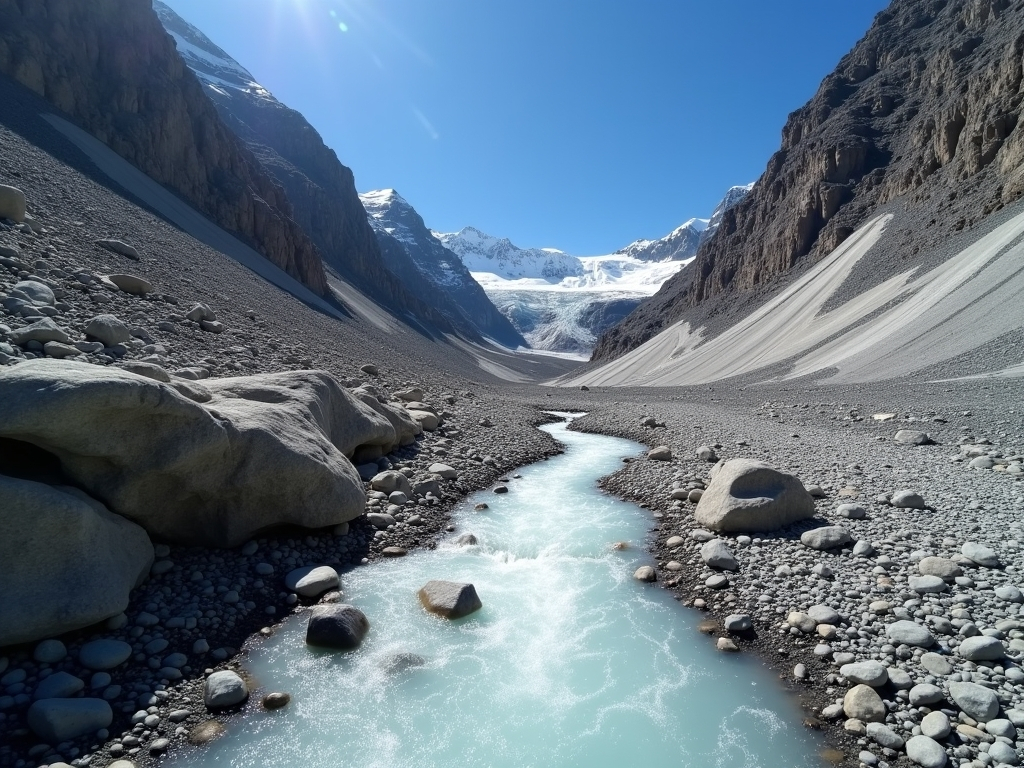
As glaciers retreat, mountain views are changing as well. Landscapes that were once dominated by bright snow and ice are increasingly marked by exposed grey rock and dark debris.
Glacier meltwater is also economically important. It helps replenish reservoirs used for hydropower generation and feeds major European rivers. This water is particularly valuable during warm, dry summers, when demand can be high.
For now, glaciers still provide water at times when it is most needed. But as their ice reserves diminish, that ability will gradually disappear, reducing an important natural source of summer water.
Glaciologists note that glaciers can initially release more water as rapid melting accelerates. Eventually, however, there is less ice left to melt, and summer water flows begin to fall.
That turning point has already been reached in the European Alps. In the years ahead, Alpine glaciers are expected to contribute progressively less water during the warmer months.
Retreating glaciers can also increase natural hazards, including unstable slopes, rockfalls and glacial lakes. Much of the melted ice ultimately reaches the sea, meaning glacier losses in Switzerland and elsewhere also contribute to rising sea levels affecting coastlines worldwide.
Is there a solution?
Scientists say the most effective way to preserve remaining glacier ice is to stabilise global temperatures by cutting greenhouse gas emissions as quickly as possible.
Climate projections for the European Alps indicate that rapid emissions reductions could still save about one-third of Switzerland’s current glacier ice. Under a scenario of strong continued warming, however, more than 90 percent of glacier volume could disappear by 2100.
The outlook is not identical everywhere, as glaciers in some parts of the world may be more resilient than those in the Alps.
Even so, future emissions will strongly determine the global outcome. With limited warming, the world could lose roughly one-quarter of glacier mass by 2100. With higher warming, losses may approach half of all glacier ice.
Changes would continue beyond 2100 because glaciers respond slowly to temperature shifts. How much ice survives will depend heavily on future warming levels, and every additional 0.1 degree Celsius makes a difference.