Mürren: The breathtaking traffic-free village accessible by gondola
Tucked high in the Swiss Alps, this centuries-old village once felt worlds away from modern life. But now, thanks to an engineering marvel—the steepest cable car on the planet—visitors can swiftly reach the secluded town of just 430 people.
On a chilly morning in December 2024, I boarded a picturesque train for a three-hour journey from Geneva to Lauterbrunnen, a charming alpine village nestled between Interlaken and the majestic Jungfrau range. From here, I was only one step away from accessing Mürren, a mountain retreat famously absent of cars.
Historically, inhabitants of Mürren would descend by mule to gather goods from the valley below, a trip that took hours each way. In 1891, a small mountain train connected Mürren to Grütschalp and from there to Lauterbrunnen via a funicular. Then in 1965, a cable car line was completed, linking Mürren to the neighboring village of Gimmelwald above the valley floor.
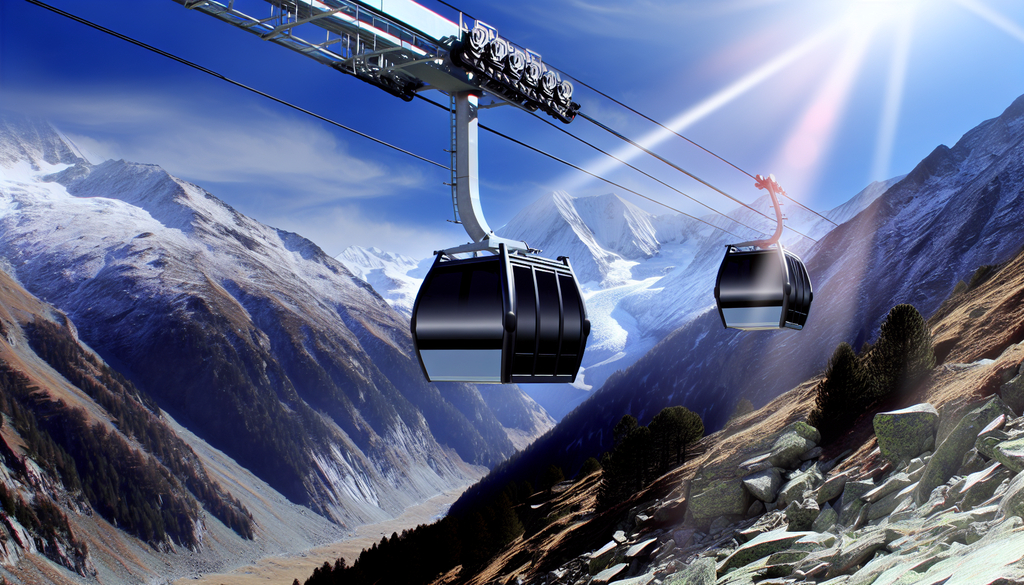
But on the day of my visit, this once isolated mountaintop village gained a dramatic new connection. The Schilthornbahn—now officially the steepest cable car in the world—opened its doors, carrying passengers 775 vertical meters through panoramic alpine scenery in just four minutes, transforming how the world reaches Mürren.
After parking at Stechelberg, I soon found myself lifting skyward in a glass cabin, suspended above fairy-tale cottages while craggy peaks and frosted pines passed by. We glided up the Mürrenfluh cliffside with grace, barely feeling the 159.4% incline—steeper than Norway’s Loen Skylift—until my ears signaled the change in altitude.
Mürren is perched at 1,638m on a natural shelf below the Schilthorn summit (2,970m), gazing over the Lauterbrunnen Valley. Dating back to the 13th Century, its weathered stone and timber homes cling dramatically to cliffsides. Because of its dramatic topography, no road has ever reached this village.
"Taking a cable car to school may sound odd to most, but for us, that was everyday life," shared local Michael Abegglen. "While you can find most basic services in the village, trips to the valley are still necessary for appointments or errands—we each have our car parked down there."
Abegglen explained that the village’s tight-knit nature is a source of strength. "When you’re raised in a place like this, you practically know every neighbor. It’s a closely bonded community. Some visitors even come back year after year and become like family."
At the Hotel Alpenruh, where I stayed, the balcony’s panoramic view swept across the iconic trio of alpine peaks: the Eiger, Mönch, and Jungfrau. Mürren is refreshingly walkable, with narrow lanes leading to rustic eateries, warm bars, local craft shops and family inns.
The stately Hotel Mürren Palace, constructed in 1874, is a highlight. Once considered Switzerland’s first luxury mountain hotel, it has hosted celebrities like Rita Hayworth and was once a gathering spot for the international elite. As snowflakes danced outside, I took refuge in the Eiger Guesthouse pub, enjoying a steaming mug of spiced glühwein.
Despite its small footprint, Mürren has become renowned for winter sports. British adventurers discovered it in the 1800s and were enchanted by both its scenery and its slopes.
"My great-grandfather Henry Lunn first visited Mürren in the 1890s and instantly fell in love with the place," said Bernard Lunn, a local skier. "Soon he began bringing British tourists to experience the unrivalled drama of the Eiger, Mönch, and Jungfrau. My grandparents, Arnold and Mabel, settled here and helped shape its ski culture—Arnold launching the first competitive slalom races in 1922 while Mabel co-founded the Ladies' Ski Club."
Arnold's influence didn’t stop there. In 1924, he inaugurated the Kandahar Ski Club, and by 1930, Mürren opened Switzerland's very first official ski school. The village also hosted the inaugural Alpine World Ski Championships in 1931.
Today, the slopes are crisscrossed with 54km of snowy trails, all interconnected by lifts and gondolas. When conditions are ideal, adventurers can ski the full 16km descent from the Schilthorn peak to Lauterbrunnen far below.
"My favorite winter ritual is a coffee on the mountaintop followed by a long ski downhill with friends," said Alan Ramsay, a gregarious Scotsman who has lived in Mürren for over 25 years. Ramsay also helps coordinate the International Inferno, the world’s largest amateur ski contest, which sets up shop in Mürren every January (21–24 January 2026).
Still, there's more to Mürren than skis and snow. Between June and September, it becomes a haven for paragliders, who soar above waterfalls, teal-colored lakes, and jagged peaks. Trails covered in wildflowers and grazing sheep make it a scenic paradise for nature lovers.
"The mountains change character with each season," noted Belinda Bühler, a dedicated trail runner born and raised in Mürren. "In winter, they’re cloaked in white. By summer, you can already smell the freshness of spring as vibrant flowers bloom and the sunshine transforms our meadows."
Her biggest tip for off-season visitors? "Hit the trails. Even a short walk leads you to total solitude and a sense of connection with nature. I'm a lifelong resident but still feel like a tourist—snapping photos and soaking in the silence. It’s an experience beyond words."
Bernard’s wife, Julia Lunn, who organizes guided walks for women and families, added, "Tourists don’t visit for the shopping or the sights. They come to reconnect—to wander on snowshoes, splash in alpine ponds or simply admire the silence and beauty that Mürren offers."
Taking Ramsay’s recommendation to heart, I opted to enjoy one such joy. I picked up a classic wooden sled from the Intersport rental shop and caught the funicular to Allmendhubel, launching point of a 3km sledge run featured in the 1969 James Bond movie On Her Majesty’s Secret Service. After some warm-ups, I flew down the snowy trails of Blumental Valley, flanked by pine trees and snowy chalets, grinning wide like a child on a snow day.
"Growing up here, I didn’t realize just how special it was," confessed Bühler. "Back then, it felt small, even boring. But after seeing the world and returning, I fell in love with Mürren anew. The sense of peace and freedom is indescribable. Each morning still feels like waking inside a postcard."
Even after just 48 hours, I could begin to understand exactly what she meant.
--
If you enjoyed this article, subscribe to The Essential List – a curated round-up of stories, videos, and must-read news, delivered to your inbox twice a week.
For more travel features from the BBC, follow us on Facebook, X (formerly Twitter), and Instagram.