Olivia Rodrigo’s festival brings women and girls together around nonprofits supporting their well-being
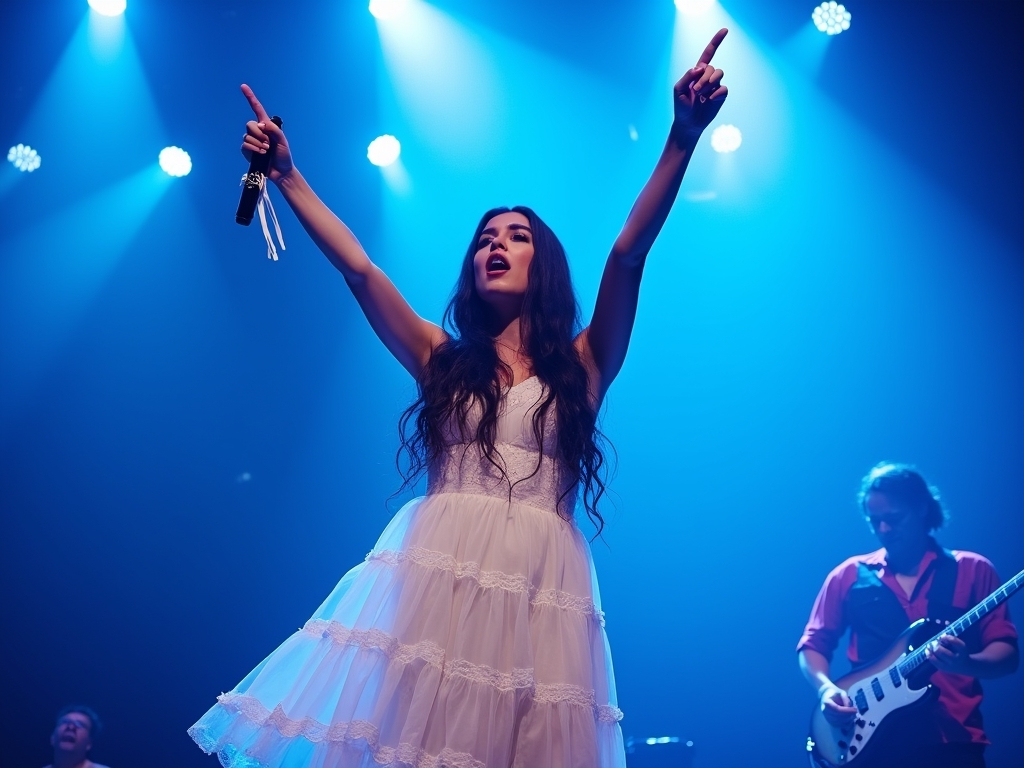
Drawing on the DIY pop-rock feminist spirit of the 1990s, Olivia Rodrigo turned a benefit concert into a major fundraising effort for women’s well-being, bringing her young fan base into the movement and generating $20 million.
Daisy Chain Fields featured a women-centered lineup that included queer pop performer Chappell Roan, rising rapper Doechii and riot grrrl trailblazers Bikini Kill, all supporting women’s health, workplace rights and legal protections. Before Saturday’s festival in Irvine, California, Rodrigo said the event had already secured enough funding for a $10 million gift to 10 nonprofit groups, including Planned Parenthood, the National Women’s Law Center and Black Mamas Matter Alliance.
Philanthropist Melinda French Gates added a further $10 million through Pivotal Ventures during an unexpected appearance at the beginning of Rodrigo’s set. She called Rodrigo “a force” and commended her for “showing a new generation how much their voices matter.”
Speaking Friday with representatives from the participating organizations, Rodrigo said the artists and advocates involved in the festival gave her optimism amid what she described as a “regression of women’s rights.”
“That’s actually why I fell in love with the name ‘Daisy Chain,’” she said Friday. “It served as a reminder of how individual parts can come together to create something strong and unbreakable.”
At 23, Rodrigo has built a career turning the anger and uncertainty of contemporary relationships into hit songs that blend the confessional appeal of Taylor Swift with the edge of Alanis Morissette. Her influence makes her especially well positioned to connect Gen Z audiences with nonprofit groups, which often find it difficult to reach younger supporters who may favor less formal forms of giving.
Festival attendees understood that connection.
“People don’t join together and mobilize unless they feel connected to the group that is mobilizing,” said Grace Slevin, 24. “What’s better than music?”
Large-scale benefit shows have long helped raise millions for causes ranging from disaster relief and hunger response to refugee assistance and public health emergencies. Still, it has been years since a young artist with Rodrigo’s reach assembled so many peers around the issue of gender justice.
The event arrives as the federal government considers changes to family planning grants used by reproductive health providers for contraception and treatment of sexually transmitted infections. Funding for some organizations, including certain Planned Parenthood affiliates, was temporarily held before being restored.
For Slevin, an Orange County resident involved in anti-sex-trafficking advocacy, Daisy Chain Fields reflects the idea of becoming “who you needed when you were younger.” She welcomed the chance for fans to learn directly about the nonprofit partners rather than simply being asked to donate.
Daisy Chain Fields created a “philanthropy village” where participating organizations could meet attendees. Fans could gather pins from individual booths while learning about local health services connected to Planned Parenthood or honoring care workers through the National Domestic Workers Alliance.
Slevin said younger audiences look for that kind of real commitment rather than what she described as “pseudo-sort-of-progressiveness.”
“They can see just how deeply intertwined the music is with the cause,” she said. “It’s not just, like, a second thought.”
Do you get déjà vu? Rodrigo’s project echoes a 1990s feminist movement
Rodrigo drew inspiration from Lilith Fair, the women-focused touring festival that raised $10 million for charitable causes between 1997 and 1999. Sarah McLachlan, who created the event in response to music industry assumptions that women artists could not successfully perform back-to-back, was named as a special guest at Daisy Chain Fields.
Planned Parenthood’s national director of arts and entertainment, Caren Spruch, remembered working on Lilith Fair. She said concert-based outreach has long helped organizations reach people in places where they already gather and feel engaged.
That kind of culture-changing work matters even more in the current climate, she said, as abortion clinics close in restrictive states and anti-abortion advocates pursue court cases that could narrow access to medication used in the most common form of abortion.
According to Spruch, Rodrigo speaks about reproductive health and abortion access without “shame or stigma.” Like her work with other nonprofit groups, the three-time Grammy winner also appeared in educational videos shared through Planned Parenthood’s social media.
“All of that does so much to help us normalize the whole range of reproductive health and rights,” Spruch said.
Change across generations
Melissa Shaw, 33, planned to travel from Tucson, Arizona, to the festival with her 8-year-old daughter.
They were not expecting to spend the day trying to get as close to the stage as possible. Instead, Shaw hoped her daughter would ask questions while they visited nonprofit exhibits and explored the event’s art installations. She said she valued that Rodrigo was spotlighting not only major organizations like Planned Parenthood, but also groups working on Black maternal health and access to infant formula.
Shaw said it “definitely makes me a bigger fan knowing that they’re dedicating their time to causes like these.”
“It’s really important for me as a parent to expose my daughter to celebrities who set that example,” she said.
Her daughter is a fan of Rodrigo and Roan, while Shaw grew up listening to Bikini Kill and fellow performer Santigold. She said the lineup appeared carefully selected to appeal to several age groups, and she had noticed many mother-daughter pairs discussing their plans to attend online.
The festival’s nonprofit partners also welcomed the opportunity to be part of a multigenerational gathering of women. National Domestic Workers Alliance President Ai-jen Poo said the celebratory setting offered a “powerful reminder to women everywhere of all ages that, no matter what, we have each other.”
Her organization advocates for federal workplace protections for domestic workers, who are disproportionately women, including immigrant women. Poo said she hopes to involve more young people, many of whom worry about whether they can afford to care for relatives or build families of their own.
“The only way change happens is through intergenerational connection and movements in our country,” she said. “This generation of young people has the opportunity to really change how we support caregiving for future generations.”
Philanthropy steps into the spotlight
The fundraising figure is significant, but so is the way the festival structured its support.
The charitable organizations praised the grants as unrestricted operating funds, meaning each nonprofit can determine where the money is most needed.
Angela Doyinsola Aina, co-founder of Black Mamas Matter Alliance, said this kind of support “is often the hardest kind of funding to raise and the most useful kind to receive, because it sustains the training, convening, and advocacy that make everything else possible.”
For the National Women’s Law Center, the gift provides flexibility to address budget needs while the organization pursues sex-discrimination litigation. Uma Iyer, the group’s chief external affairs officer, said the funding also lifted the spirits of employees.
“We work on really hard things every day,” she said. “It was really energizing for us and it’s been really uplifting.”
Jennifer Fahy, co-executive director of Farm Aid, said successful benefit events should include both broad audiences and the people doing frontline work. The yearly concert series, founded by Willie Nelson, Neil Young and John Mellencamp to highlight the struggles facing family farmers, marked its 40th anniversary last year.
Fahy said it has become less common for performers to donate their time and appearances without charge.
“It’s just wonderful to see an artist of that generation, that new young generation, who is embracing that opportunity that exists to do these kinds of events, to share the stage and microphone to highlight issues that are important to the artist,” Fahy said.