‘Sometimes I do cruel things – and it’s worth it’: the brilliant unapologetic art of the great Sophie Calle
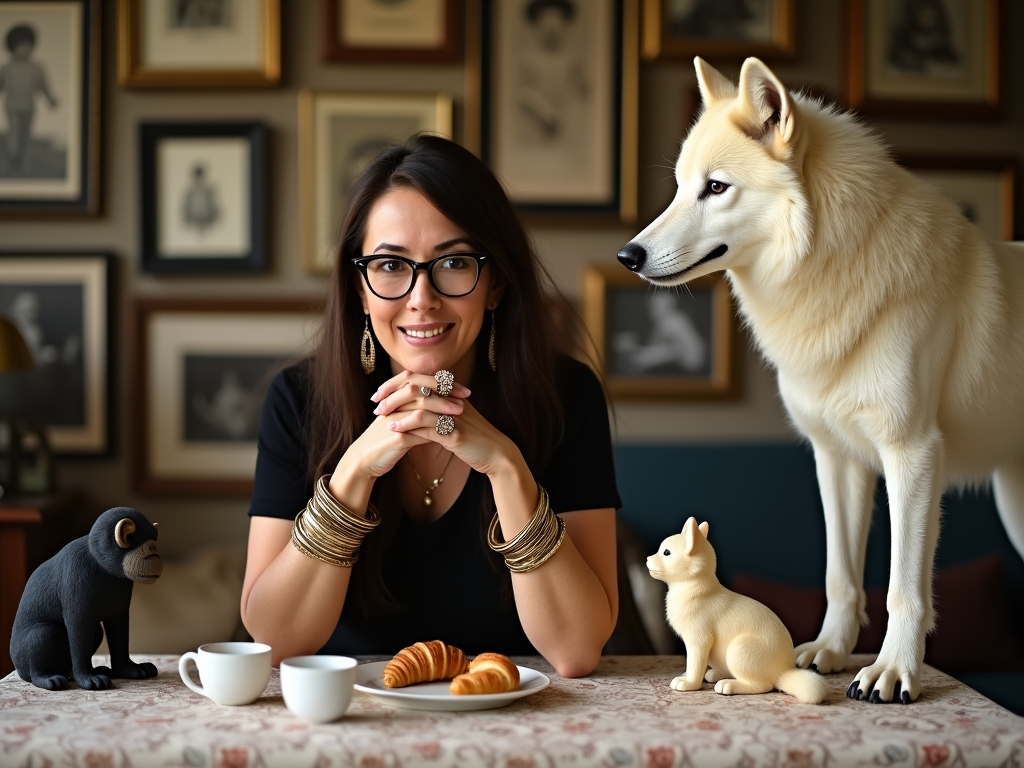
I had read enough interviews with Sophie Calle to expect a difficult exchange. France’s best-known conceptual artist has a reputation for being elusive. That is why the woman on screen surprises me: she is warm, smiling and apparently generous with herself. Large tinted glasses cover her eyes, though I imagine them sparkling behind the lenses. Then, 10 minutes into our conversation, she tells me she is fascinated by absence. When I ask what draws her to it, she replies: “Why do you live in England? Why are you wearing that sweater? I am not here to give you therapy.”
She is speaking from the Paris apartment where she has lived for almost five decades. A mirrored disco ball hangs overhead, while photographs, books and assorted boxes fill the room; I imagine the boxes holding fragments of other people’s private lives. Since the early 1980s, Calle has built a career from work that is both intimate and coolly observational, darkly comic and deeply moving. Her projects draw viewers into the lives of strangers, while also exposing parts of her own. Armed with a camera and notebook, she has asked unknown people to sleep in her bed, worked undercover as a hotel cleaner to record guests’ possessions, and contacted everyone listed in a misplaced address book to construct an unexpectedly affectionate portrait of its owner. At 72, she is preparing for her first major British exhibition in almost 20 years.
“I became an artist to charm my father,” she says plainly. He was a doctor who collected pop and conceptual art. At 26, she was, in her own words, “very lost”. He disapproved of the way she had spent her youth: hitchhiking around the world with little money and no clear plan. On returning to Paris, she looked at the art hanging in his home and thought that becoming an artist might win his approval. “I could not paint,” she says, “but I liked writing, and photography felt possible. I did not know what I was doing or where it would lead, but I felt sure of myself.”
Almost immediately, she began following strangers. “I did not know what to do with my own time,” she says. “So I thought, ‘Let’s find out what other people do with theirs.’ I liked not having to choose. It was relaxing, but it was also active.” In 1980, she pursued a man she had met at a party from Paris to Venice. She recorded his route in dated diary entries and photographed him in his raincoat as he moved through the narrow Venetian streets, unaware that a woman in a blond wig was trailing him nearby.
Her new exhibition, Something Missing?, at Turner Contemporary in Margate, gathers photographs, films and installations made between 1986 and 2024. Its subject is absence: her deceased parents, an old lover, unrealised projects. When her mother lay dying in 2006, Calle filmed her, seemingly to make certain she did not miss the final breath. Making it into art gave her a way to cope, she says. “When I am in a sad or difficult situation, I need to put some distance between myself and it, otherwise the event consumes me.”
After her father died in 2015, she decided to stop working. It felt right, she says, “for sentimental reasons”, that he should have seen everything she had made. “I travelled,” Calle says. “Then I became bored and began again.”
Alongside absence, she says she is preoccupied with death. “I talk about it more and more because I am getting nearer to it.” She has already ordered her gravestone and once commissioned her own obituary, which she inevitably revised. In 2023, she assembled a series of works that had never been completed. They will appear in Margate, allowing them to exist while she is still alive. Some concepts are abandoned because they are weak or impossible to realise, she says. Others demand too much money or time. “Sometimes I think an idea is too cruel, and it is not worth being cruel,” she says, then smiles. “Sometimes I do cruel things, and it is worth it.”
Before creating one of her most affecting early works, 1986’s The Blind, Calle feared it might be insensitive. She asked people who had been blind since birth to describe what beauty meant to them. Yet the first person she approached gave an answer that was direct and calm. “In a way, he gave me permission.” Black-and-white portraits of participants sit beside their replies, which include green, Alain Delon and sheep. Twenty-five years later, Calle invited residents of Istanbul to encounter the sea for the first time. Voir la Mer films Turkish men, women and children initially from behind, before they turn towards the camera with visibly emotional expressions.
Calle says she does not believe in regret. “There are projects I would have liked to make, but I made other ones instead.” Although she remains interested in looking and being looked at, the things that captivated her as a young artist no longer have the same force. “I would not follow a stranger for days and days now, partly because I do not have the energy,” she says. “I have worries now that I did not have when I was 26.” She knows her work has critics as well as supporters; some find it original and daring, while others consider it intrusive. She once feared that her ideas would eventually disappear, but no longer does. “If they stop arriving, it will not be dramatic. I have plenty of things to do. I will enjoy my life.”
That does not mean she is without fear. When Calle was first asked to exhibit at the Picasso Museum in Paris, she declined. She worried that the presence of the modernist giant would overwhelm her work. Only during the pandemic, when Picasso’s paintings were covered for protection, did the idea of showing alongside him begin to feel possible.
Wrapped quickly to protect them from light and dust, his famous paintings seemed less intimidating and more humorous: like lovers the morning after, awkwardly crouched beneath crumpled sheets. “I was afraid of being crushed by Picasso, but I was not afraid of his absence. That gave me another path.” In 2023, she occupied four floors of the museum and installed her own belongings there. “Everything that is here was there,” she says, motioning around her apartment. “I lived inside the exhibition.”
Except for that period of cohabitation with Picasso, Calle has always lived alone. “I do not really like couples,” she says, before mentioning that she has been seeing the same man for 25 years. “I think people in couples are usually much more entertaining when they go out alone.” She has never made art about her partner, who persuaded her to sign an agreement stating that he must leave her if she ever turns him into a project. “So it is an easy escape route if I ever want to become single again,” she says, laughing.
She has previously said she feels sorry for people who have children. Does she still think that way? “It is not a sensible thing to say, but it is what I feel. I am sure some people become incredibly happy because of children when they were not happy before. Perhaps I am defensive because I cannot change my mind now. I may as well keep insisting, even to myself, that I made the correct choice.” It is not quite the response I expect from someone who says she has no regrets. She smiles as though she understands. “But I do think I made the right choice. I like knowing that nobody depends on me.”
Which returns us to her central obsession. Could absence, I ask, carefully anticipating another sharp response, appeal to her because—as with having no dependants—it leaves room and time to make work? She half nods, then moves into a revealing detour. “I do not tell the truth,” she says, returning to the film about her mother and the distance she intentionally created between them. “I tell what happened, but what happened is not the truth. Truth has a before and an after. It has context.” I look for a clue behind the dark lenses, but her expression gives nothing away.
Something Missing? is at Turner Contemporary, Margate, from 3 October to 24 January.