Korean blockbuster "Hope" breaks the rules of monster movies
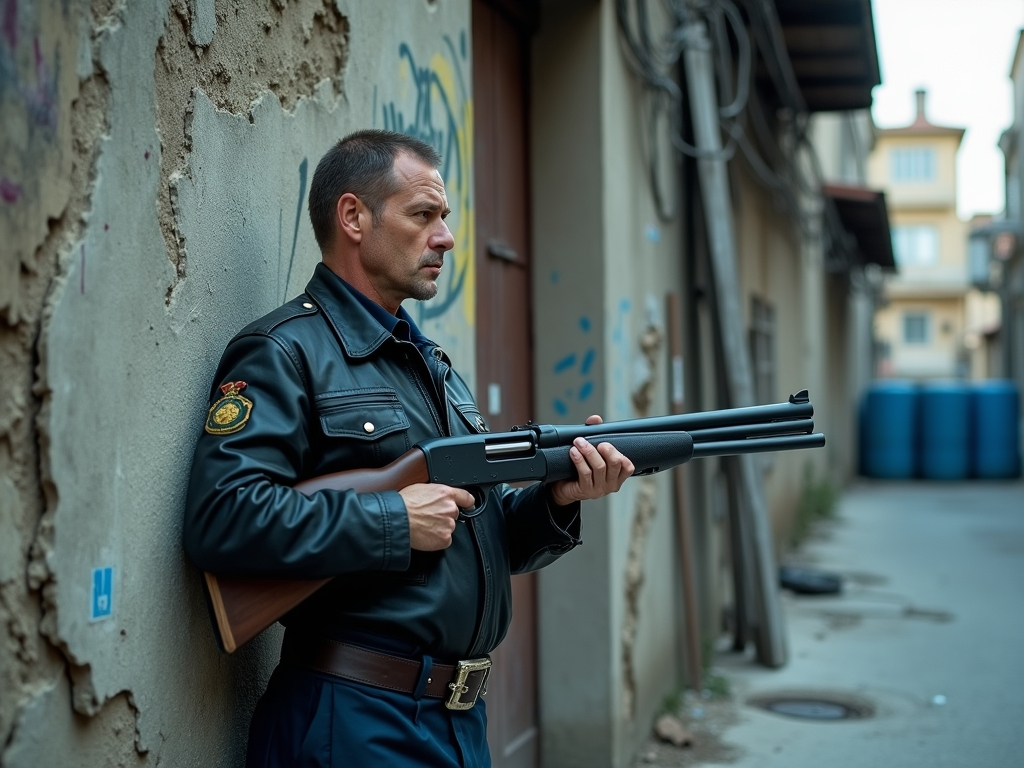
At this year’s Cannes Film Festival, “Hope,” the new film by South Korean director Na Hong-jin, sparked a considerable reaction. Known for the crime thrillers “The Chaser” and “The Yellow Sea,” the filmmaker returned with a large-scale monster story that left audiences divided. Although the movie went home without awards, some praised it as an inventive take on creature features, a bold dismantling of familiar genre conventions, and a surprisingly sharp satire. Others criticized its excessive length and the apparent absurdity of much of what unfolds onscreen. In truth, both reactions are understandable.
The story begins when an unidentified creature attacks livestock and throws a small town near the border between South and North Korea into panic. Local police officers try to determine what kind of animal they are dealing with, while hunters set out to track it down, unaware that they may soon become prey themselves. At first, it sounds like the standard premise of one of countless science-fiction thrillers about humans facing an unknown monster. Yet Na Hong-jin quickly makes it clear that he is far less interested in following the usual rules of the genre.
For instance, the director keeps the creature offscreen for nearly an hour, showing only the aftermath of its attacks and the extensive destruction left behind in the town. In another film, this slow build might test the audience’s patience, but here Na somehow turns the frantic movements of the protagonist, local police chief Beom-seok, played by Hwang Jung-min, into a tense and involving investigation. Only after this lengthy setup does the movie launch into full-scale action, which rarely slows down before the closing scenes.
Na Hong-jin is especially fond of chase sequences. Characters are constantly fleeing danger or pursuing creatures through narrow streets, wooded areas, and chaotic rural landscapes. The director shoots these scenes with an obvious affection for the visual language of video games. The camera is often placed behind the characters as they race forward, creating the impression of a third-person adventure game. In other moments, it moves directly in front of them, capturing terrified faces while the creature closes in from behind. There are also shots that resemble a first-person shooter perspective. Gunfire, explosions, car crashes, and trees collapsing in the forest complete the deliberately overwhelming spectacle.
Gradually, however, it becomes clear that this is not simply another story about humans hunting a monster. One of the most common patterns in such films is the transformation of people from helpless victims into determined hunters. At first, the characters run from the creature; then they discover its weaknesses and eventually begin to fight back. In “Hope,” the process is much messier. The humans and the creatures—of which there are apparently several—constantly switch roles, sometimes within the same scene. Someone who seemed to be a defenseless victim can suddenly become the aggressor, while a terrifying predator may find itself trying to escape those pursuing it. Step by step, the director makes viewers question whether humans truly have the moral right to see themselves as the good side.
When one looks closely at the behavior of the characters, they often seem barely more appealing than the creatures they fear. Na Hong-jin intentionally presents people in their least flattering state. The hunters greedily eat in the middle of the forest, everyone is perpetually dirty, sweaty, soaked in blood, or covered in mud, and most conversations consist of shouting, insults, and angry profanity. It is difficult to find a genuinely likable character anywhere in the film.
Beom-seok is the clearest example. Formally, he should fill the role of the classic heroic protagonist. He is the police chief, a representative of authority, and perhaps the only person capable of organizing the town in the face of an unfamiliar threat. But instead of a fearless leader, the audience gets a rude, anxious, and not especially clever man who repeatedly loses control, lashes out at others, and openly reveals his own fear. His partner and the rest of the cast are not much more sensible. As a result, there is no traditional savior ready to take charge when everything falls apart.
This is what turns “Hope” into a kind of parable about human nature and our reaction to everything unfamiliar. The beings that appear near the town are different from the local population. Their motives are unclear, their language cannot be understood, and their physical appearance inspires disgust. Yet rather than trying to understand what these creatures want, the people almost immediately decide that they are enemies who must be eliminated.
It is easy to read this as an allegory of xenophobia. The mechanism behind hostility is nearly always the same: someone speaks an unfamiliar language and looks different, therefore they are automatically treated as a threat. This is particularly relevant in a closed community separated from its northern neighbors by minefields, where residents are used to a rigid order and live under a constant sense of suspicion. The director shows how misunderstanding develops when two sides see each other through the lens of fear, while the instinct for self-preservation pushes them either to attack or to run.
Still, these ideas never prevent “Hope” from working primarily as an unrestrained science-fiction action film. Na Hong-jin does not pause for extended philosophical discussions about humanity. Instead, he repeatedly throws his characters into fresh disasters and lets viewers draw their own conclusions from the chaos. The visual effects, however, are among the film’s biggest weaknesses. During fast-moving sequences, the creatures look convincing enough, and rapid editing helps hide flaws in their interaction with the environment. In slower scenes, though, the technical limitations become far more visible. At times, it feels as if the monsters were simply placed into finished shots without much attention to lighting, textures, or physical contact with surfaces. This is especially noticeable in close-ups, where the level of detail falls short of major Hollywood productions. Although “Hope” reportedly had a budget of around $46 million, making it one of the most expensive Korean films ever made, it cannot fully match the production scale of modern blockbusters.
Even so, it is remarkable how effectively “Hope” maintains momentum across its lengthy 160-minute runtime. Despite questionable dialogue and uneven effects, the director gives the audience very little time to rest. The film slows down only near the end, but it soon becomes apparent that this pause is meant to set up a possible continuation. Na Hong-jin has already said that he wrote a script for another installment, one that would shift the focus from humans to the creatures themselves. The studio has not yet approved a sequel, however, so whether the project will move forward remains uncertain.
Ultimately, “Hope” is a highly unusual entry in the science-fiction thriller genre of humans versus monsters. On one level, it is almost nonstop action filled with shootouts, pursuits, bloody confrontations, and dark humor that manages to stay energetic even after more than two and a half hours. On another, it is a parable about fear of the unfamiliar and the mutual misunderstanding that turns fear into conflict. Naturally, not everyone will enjoy such an extended story, its imperfect visual effects, or its insistently grand sound design. But for viewers willing to accept Na Hong-jin’s chaotic rules, “Hope” offers a genuinely wild cinematic ride.