A failed scientific experiment resurfaces as a Netflix reality TV series
The Stanford Prison Experiment ran for fewer than seven days in 1971, yet its supposed lessons about human behavior shaped public discussion for generations. A new Netflix series is now returning one of psychology’s most disputed studies — along with the serious questions surrounding it — to public attention.
Led by American psychologist Philip Zimbardo, the project turned the basement of a Stanford University building into a simulated prison. From more than 70 men who replied to a newspaper advertisement seeking volunteers for “a psychological study of prison life,” Zimbardo selected 24 college students and randomly assigned them to be either prisoners or guards. The study centered on a broad question about morality, power and the conditions that lead people to harm others.
“Zimbardo was basically trying to figure out if regular people could be willing to both give and follow orders if they were placed in a particular environment, and see what was the role of the situation at producing people’s behavior,” said Catherine Sanderson, Poler Family Professor of Psychology at Amherst College and a former student of Zimbardo’s. She did not take part in the study. “What he wanted to show is that normal people can do horrible things.”
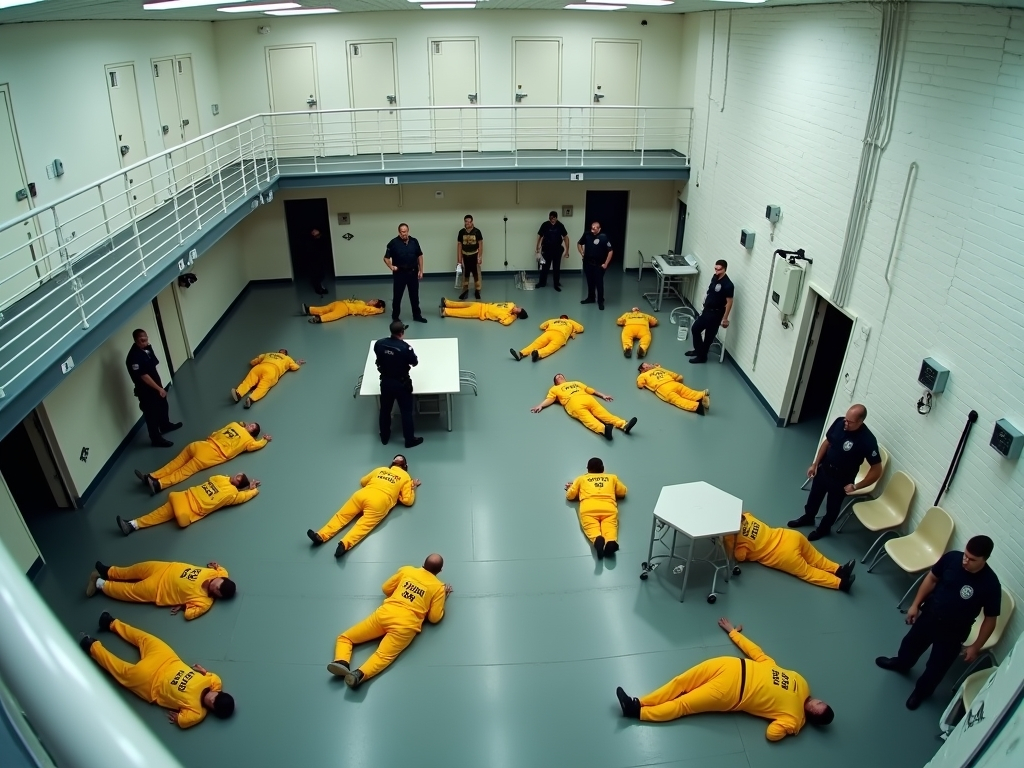
The experiment was designed to continue for as long as two weeks, but it quickly spiraled beyond its stated limits — at least in the story long associated with it. Within 36 hours, one prisoner appeared to suffer a psychological collapse. On the second day, prisoners rebelled. Guards forcefully put down the protest, using fire extinguishers, removing prisoners’ clothing and placing some of them in a dark storage area referred to as “the hole.”
The study also unfolded during a period of growing public anger over prison conditions and the treatment of incarcerated people. Only weeks after it ended, an uprising at Attica Correctional Facility in New York was crushed by authorities, leaving 43 people dead. The tragedy drew renewed attention to prisons and helped push Zimbardo’s experiment from academia into the wider culture, where it remained highly influential.
Over time, however, the Stanford Prison Experiment’s reputation shifted sharply. Once treated as a groundbreaking window into human psychology, it is now widely viewed as a study with major ethical, methodological and interpretive problems.
“Our understanding of what happened has really evolved a lot over time,” Sanderson said. “There have been not only ethical challenges posed about the study, but also about whether the behaviors occurred spontaneously, or were rather sort of instructed by Zimbardo.”
As Netflix presents its own updated version of the premise, an unresolved issue remains at the center of the debate: Did the original study uncover something meaningful about authority, or did its organizers create the very conduct they later claimed to observe?
‘A major problem’
Zimbardo developed the prison study partly in response to the famous obedience experiments carried out by American psychologist Stanley Milgram in the early 1960s. In Milgram’s first experiment, volunteers were instructed to administer what they thought were increasingly severe electric shocks to another person for incorrect answers on a memory task. Although the person’s cries were performed by an actor, 65% of participants continued to the highest shock level.
Today, both Milgram’s and Zimbardo’s studies would likely face substantial barriers under modern research standards. Their use of deception, potential for emotional harm, conflicts of interest and limited information provided to participants would all raise serious ethical concerns.
For example, the Stanford prisoners were not told that local police would arrest them at their homes in a highly realistic fashion. After arriving at the mock prison, they were strip-searched and given loose smocks to wear without underwear. Nylon stockings were placed over their heads to imitate shaved hair.
The guards wore uniforms and reflective sunglasses that prevented eye contact. Researchers gave them wooden batons and told them not to physically injure prisoners, while also instructing them to maintain order. Zimbardo himself acted as the prison superintendent while observing and documenting the events.
As prisoners began showing clear distress early in the study, some visiting relatives said they intended to seek legal help to stop it. During the first four days, three participants were released after displaying signs of emotional strain.
On the fifth day, Christina Maslach, then a recent Stanford graduate in social psychology who later married Zimbardo, visited the mock prison and was alarmed by what she saw. Zimbardo ended the study the following day.
Later examination of recordings, photographs and participant interviews suggested that Zimbardo, who died in 2024, had a direct role in shaping the outcome. He interacted with participants, encouraged guards and, according to some accounts, made it difficult for prisoners to leave when they initially asked to do so.
“One of the hallmarks of good experimental design is that we don’t have the experimenter in charge of the study interacting with the participants,” Sanderson said. “The fact that Zimbardo was so heavily involved is a major problem, because he did have particular beliefs, expectations — one might even say goals — in conducting the study.”
At the time, though, the findings were widely praised, and Zimbardo embraced his growing visibility. “In the public eye, like lecturing to a large class, you are a performer and so must put on a good performance and learn from mistakes to be more effective next time,” he said in a 2009 interview.
According to Sanderson, Zimbardo was an especially forceful public speaker. “The Stanford prison study had brought him a lot of fame, and he was very charismatic,” she said. “This sort of lure meant that people weren’t paying a lot of attention to maybe some of the details about what actually happened.”
Still, evidence of his involvement weakened the broader claims he made about authority, cruelty and human nature.
“I think there is certainly a general view that good people can do bad things under particular circumstances, such as being anonymous, or being ordered to do so,” Sanderson said. “However, the Stanford prison study is not a good example of evidence for that.”
The criticism is part of a wider reassessment within psychology about whether major findings can be trusted. In 2015, researchers attempted to repeat 100 studies from leading psychology journals. Only 36% produced statistically significant results, compared with 97% of the original findings. This so-called replication crisis highlighted problems including small samples, publication pressure and incentives to produce dramatic conclusions instead of reliable evidence.
The first major reworking of the Stanford study delivered a very different result. Yet that effort, commissioned by the BBC, also changed important aspects of the original design.
Alternate outcome
The BBC aired its own version of the project in 2002 as a television program titled “The Experiment.”
The research included 15 male volunteers — six guards and nine prisoners — housed in a prison constructed on a film studio lot. Unlike the guards in the Stanford experiment, they did not become openly tyrannical. The prisoners instead confronted the guards and gradually gained influence. Later, the participants even formed a more cooperative shared community.
Stephen Reicher, Bishop Wardlaw Professor of Psychology at the University of St. Andrews in Scotland, conducted the research with Alex Haslam, then a psychologist at the University of Exeter. Reicher said the contrasting outcome was partly because the guards did not receive direction from a powerful authority figure in the way Zimbardo’s guards had.
“Normally in an experiment you are neutral,” Reicher said. “Zimbardo actually positioned himself as head guard. In broad terms, he tells them what to do. He tells them to impose power. He tells them to make people feel helpless.”
There was no equivalent leader in the BBC project. “We took seriously the notion that we should just put people in the role and see what happens. Without clear leadership, we found that the guards didn’t want to impose power, didn’t want to be brutal, and therefore they became powerless. They didn’t cohere as a group. They didn’t know what to do,” Reicher said. “Conversely, the prisoners did cohere as a group, did have a clear sense of how to act, and actually that reversed the power relations in our study.”
Although it was made for television, Reicher said the BBC project was designed and reviewed as scientific research.
“We took it through a scientific ethics committee,” he said. “We designed it as we would any other study. We didn’t just film what people did, we did surveys every day. We even took hormonal data.”
Yet even after the prisoners organized a more egalitarian system, they were unable to control the broader setting. “So they felt more and more helpless, and they became more and more attracted to a strong man, to authoritarianism,” Reicher said. “What we found was that the failure of groups to be able to control their own environment makes them attracted to authoritarian regimes, which I think is actually quite an important message given what’s going on in the world today.”
Reicher argued that Zimbardo’s claim that harmful situations can turn good people into cruel ones can be dangerous. “When you look at examples of brutality in history, afterwards those responsible nearly always try to deny accountability. The excuse is they were only following orders, they couldn’t help it,” he said. “The explanation given by Zimbardo is not only scientifically wrong; it is socially and morally dangerous because it gives perpetrators an out.”
Theater vs. science
Debates about abuse, responsibility and prison power became especially urgent in 2004, when photographs of US troops and Iraqi detainees at Abu Ghraib prison near Baghdad horrified the public. The images were often compared with the Stanford experiment. Zimbardo became a prominent voice during the scandal, arguing that the abuse could not be explained only by blaming a small number of individuals.
He testified for the defense in the case of an Abu Ghraib guard, and later expanded his views in the 2007 book “The Lucifer Effect: Understanding How Good People Turn Evil.” In it, he argued that any act committed by another person, no matter how terrible, could potentially be committed by any of us under particular situational pressures.
Renewed interest in the experiment also inspired a 2015 Hollywood film, “The Stanford Prison Experiment,” starring Billy Crudup. Zimbardo served as a consultant, and the movie generally follows his account of what happened.
One of the strongest attacks on Zimbardo’s work came soon afterward. In 2018, French historian Thibault Le Texier, an associate researcher at the Centre for European Sociology and Political Science in Paris, released a French-language book about the experiment. He later summarized his case in a 2019 paper titled “Debunking the Stanford Prison Experiment.”
Le Texier reconstructed the study’s timeline after spending weeks reviewing Stanford archival materials, including recordings, written transcripts and other documentation.
“From the very beginning, the Stanford Prison Experiment was organized and planned as a show,” Le Texier said. “It was more theater than science.”
He argued that Zimbardo acknowledged offering broad guidance to guards, but that he and other researchers actually gave them much more detailed instructions about their expected behavior. In Le Texier’s view, the guards were effectively handed a model for how to perform their roles.
“They’ll have no privacy at all, there will be constant surveillance—nothing they do will go unobserved,” Zimbardo said during a recorded orientation for guards. “They will have no freedom of action. They can do nothing and say nothing that we don’t permit. We’ll take away their individuality in various ways.”
According to Le Texier, Zimbardo’s influence makes it impossible to draw firm scientific conclusions from the experiment. “The only scientific conclusion you can draw is a reminder that scientists can do really bad science,” he said.
Le Texier also contended that Zimbardo made it difficult for prisoners to withdraw and deliberately imposed harsh conditions. “They couldn’t read, they couldn’t watch TV, they couldn’t go to the toilets at night, they had absolutely nothing to do during the day, the conditions were harsher than even a real prison, simply because Zimbardo was scared that if the prisoners had a good time nothing would happen, and the experiment would be a failure,” he said.
In 2018, Zimbardo issued a lengthy response to criticism, including Le Texier’s work. He defended the study’s methods, maintained that participants could leave and denied that guards had been given a script. Le Texier dismissed the response as inadequate, saying it celebrated the experiment rather than directly addressing the evidence raised against it.
Made for TV
The repeated comparisons between the Stanford study and theatrical performance eventually interested Stephen Scott-Bottom, a professor of contemporary theater, drama and film at the University of Manchester.
“My first interest was thinking of it as a constructed situation where people are being asked to play roles,” he said. “If you ask people to role play in a scenario, and then get a different group of people to play that scenario again, you’ll end up with completely different results, depending on the particular combination of personalities.”
Scott-Bottoms argued that Zimbardo and his colleagues wanted to demonstrate the power of a situation, and therefore minimized the impact of the participants’ own personalities.
For a 2020 study, Scott-Bottoms located and interviewed several original guards and prisoners, including the participant whose apparent breakdown about 36 hours into the experiment became one of its best-known moments. “The first emotional breakdown that you hear about in all the documentation was faked, by a guy who was just trying to get out,” Scott-Bottoms said.
The prisoner, Doug Korpi, also told journalist Ben Blum that his distress had been performed. Blum included the account in a broader 2018 critique of the experiment. Korpi said he wanted to leave because he was not allowed to study for an upcoming graduate school admissions exam and feared falling behind.
Scott-Bottoms said Zimbardo’s position inside the mock prison appeared partly focused on ensuring the experiment remained dramatic. “I regard him as a media artist as much as a scientist,” he said. “He was very good at finding an angle or a hook to get your attention, so that you’ll listen to the thing that he really wants to talk about, rightly or wrongly.”
One month after Zimbardo died in October 2024, a three-part documentary, “The Stanford Prison Experiment: Unlocking the Truth,” premiered on National Geographic. It featured one of his final interviews.
In the documentary, a number of former guards and prisoners dispute Zimbardo’s version of events. Some call him “a salesman,” “kind of a clown” and “a huckster,” while repeatedly associating the experiment with the word “fraud.”
Dave Eshleman, the guard who became known as “John Wayne” for his aggressive behavior, described his participation as “an acting job.” He spoke about preparing himself to get into character before entering the prison. He also said the guards were led to believe they were helping researchers study prisoners rather than serving as subjects themselves: “If it was made clear to us that we were there to be studied, not to help study prisoners, we would have acted completely differently,” he said.
In his interview, Zimbardo responded that Eshleman and others needed to explain their own actions and that claiming they were acting was an easy way to do so. He suggested they could no longer separate improvisation from genuine sadistic impulses. Zimbardo said the fact that participants fell into their roles supported “the validity of the experiment.”
He also openly described the study in theatrical terms: “I thought about the experiment as an improvisational drama — the basement yard, it was the stage, the actors were prisoners and guards with different uniforms and the video camera was the audience.”
The Netflix series “The New Stanford Prison Experiment,” filmed inside a real prison and spread across six 45-minute episodes, does not recreate the original study in a straightforward way. Its creators say they are not attempting to carry out a scientific experiment.
“If we were simply recreating the original experiment, that would be unconscionable,” said executive producer Jane Lipsitz. “But this is a different time, with different participants, different safeguards and, ultimately, a very different journey.”
“It felt like the right time to revisit that question with a new generation and ask whether power inevitably changes us — or whether we’re capable of resisting the roles, the rules and the systems we’re placed into. What we discovered during this process was something we never saw coming,” she added.
The producers said they established several protections for participants, including psychological screening and a safe word that allowed anyone to leave immediately. The 30 participants, including three women, are also substantially more diverse than the groups in either the original Stanford study or the BBC project.
The guards are separated into two teams and receive early training in which they are told to “take control.” Yet unlike the BBC revisitation — and unlike a conventional scientific study — the Netflix production is heavily managed and changes its rules dramatically as it unfolds, producing results designed more for entertainment than realism.
More than 50 years later, Reicher said the original experiment still contains issues worth discussing despite its many defects. The new series may itself demonstrate the study’s continuing cultural power.
“The study is still in the textbooks. There are also still people who reject it entirely. And there are others who say there are things to learn from it, specifically about the role of leadership,” Reicher said. “In the end, in any study, you don’t describe everything. You describe what you think is important.”