How three years of Israel’s devastating war have transformed Gaza
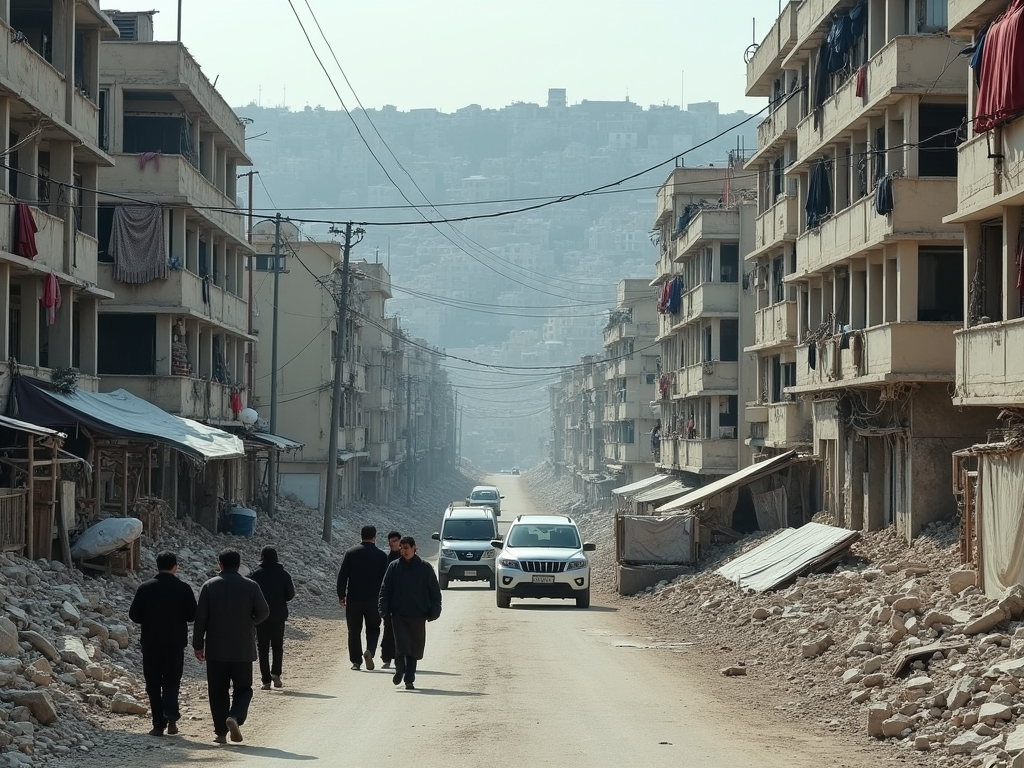
Gaza City, Gaza Strip – Three years after Israel began its war on Gaza following the Hamas-led attack on Israel on October 7, 2023, the Palestinian territory has been altered almost beyond recognition.
Israel’s prolonged air and ground campaign has wrecked large areas of the Gaza Strip, flattening homes and neighbourhoods while causing extensive damage to infrastructure, public services and essential facilities.
Recommended Stories
• list 1 of 3Israel’s deadline to shut UK consulate draws closer
• list 2 of 3In Gaza, recovering from trauma remains out of reach
• list 3 of 3Palestinian journalists reshape reporting amid Gaza’s destruction
The war has devastated the lives of roughly two million people. Repeated displacement and evacuation orders have uprooted households and entire communities, while Gaza’s Ministry of Health says more than 74,245 Palestinians have been killed.
While a “ceasefire” was declared in October 2025, suffering has continued. The Ministry of Health reports that 1,462 Palestinians have been killed since it came into effect, as Israeli attacks and military operations have persisted throughout the Strip.
Years of conflict have crippled education, healthcare and the economy. Securing food, clean water, shelter and other basic needs has become a constant struggle for much of the population.
Surviving daily life
For Gaza’s residents, the war has changed not just their homes and neighbourhoods, but the way they manage every ordinary task.
For many Palestinians, the basic foundations of daily life — a permanent home, running water, electricity and transportation — have disappeared.
In September, the UN said that 94 percent of Gaza’s population still urgently needed shelter and household support. About 65 percent of households were living in tents or improvised structures that offered little protection from heat, rain or wind after being driven from their homes by attacks or evacuation orders.
Many families also lacked sufficient mattresses, lighting, cooking items and sanitation facilities, according to the United Nations.
Obtaining water has become another routine hardship. In early August, 91 percent of assessed households faced moderate or severe water insecurity, up from 84 percent in June, the UN reported.
Electricity remains deeply unreliable as well. Gaza has no operational power grid, forcing hospitals, public services and households to depend on generators, fuel, engine oil and spare parts that are increasingly difficult to obtain.
Destroyed roads and damaged telecommunications systems have made travel, communication, internet access and access to vital services far more difficult.
As a result, daily life is now organised around survival. Fetching water, charging a phone, preparing food, washing and reaching medical or aid services all require time, money and planning that were once taken for granted.
Economic grief
Gaza’s economy has been shattered by the war. The loss of businesses, workshops and local industries has left countless families without income and severely reduced their ability to buy basic goods.
In September, the UN Conference on Trade and Development estimated that 92 percent of Gaza’s economic establishments had been damaged or destroyed since October 2023, while unemployment had risen to 78 percent.
GDP per capita was only $212 in 2025, about 17 percent of its 2022 level. Agriculture and industry were each functioning at just 6 percent of their former output, while construction activity had dropped to 1 percent.
The economic collapse has also made essential goods harder to afford. Limits on the movement of supplies have worsened the crisis in Gaza, where trade with the outside world has historically depended largely on crossings controlled by Israel.
Consumers have felt the consequences directly. In September, prices remained roughly 200 percent higher than they had been before October 2023, according to the UN.
With jobs and wages disappearing, much of Gaza’s remaining economic activity has come to depend on aid, borrowing and informal small-scale work. Economic researcher Rami al-Zaygh said the war had “pushed society back decades”, bringing back older trades and creating new forms of work based on simple tools and whatever materials can be found.
Many households now depend on cash support from humanitarian organisations. Physical banknotes have also become scarce, leading more people to use digital transfers and electronic wallets.
Struggle to study
The war has profoundly disrupted education in Gaza. For nearly three years, hundreds of thousands of children have had little or no regular access to face-to-face classes because schools were damaged, destroyed or turned into shelters.
UNICEF says nearly 98 percent of schools have been damaged or destroyed. By April 2026, about 700,000 children between the ages of 4 and 17 had missed nearly three consecutive years of classroom learning.
Rather than studying in regular schools, many children attend lessons in tents and temporary learning centres. Around 200,000 children have no access to education at all.
The interruption has widened learning gaps among children. The Palestinian Ministry of Education has warned of major losses in foundational skills and a deepening academic divide, with nearly three years without stable education threatening the future prospects of an entire generation.
Healthcare decimated
Gaza’s healthcare system has been driven close to total collapse.
All 36 hospitals in Gaza have been damaged, and only 19 are currently operating, according to the World Health Organization. None is functioning at full capacity.
The facilities that remain open face severe shortages of medicines, medical devices, diagnostic supplies and fuel. These shortages have disrupted cancer care, dialysis treatment and services for people living with chronic illnesses.
Opportunities for treatment outside Gaza have remained limited. Since October 2023, about 12,400 patients have been medically evacuated, but the WHO says tens of thousands more require specialised care that is not available inside the Strip.
The collapse of healthcare, alongside worsening living conditions, has also created increasingly dangerous public health risks.
In September, the WHO warned that overcrowding, poor shelter, limited water supplies and inadequate sanitation were heightening the possibility of disease outbreaks.
It said Gaza’s health system could not manage these growing dangers without sustained humanitarian access, sufficient medicines and equipment, rehabilitation of medical facilities and expanded patient evacuations.
A shrinking space
Gaza’s physical landscape has been reshaped by the war. Israeli military control and access restrictions have divided the territory, forcing Palestinians into a smaller and smaller area while separating them from homes, farmland and key facilities.
The so-called Yellow Line is a military boundary within Gaza that marks areas of Israeli deployment and restricted entry. Since it was created under the October 2025 “ceasefire”, Israel has pushed it further into populated zones, compelling more families to leave.
In September, Euro-Med Human Rights Monitor said Israeli control and access restrictions covered about 70 percent of Gaza, leaving more than two million Palestinians concentrated in less than 30 percent of the territory.
Rafah offers one of the strongest examples of this shift. Situated in southern Gaza along the Egyptian border, the city became a refuge for more than one million Palestinians displaced from other parts of the Strip during the war.
Israel’s military operation in Rafah in May 2024 displaced more than 800,000 people, according to the UN. Today, nearly all of Rafah, apart from the western Mawasi Rafah area, is under Israeli control, preventing displaced residents from returning to their homes.
On September 29, Euro-Med warned that the expansion of Israeli-controlled territory was cementing forced displacement, blocking Palestinians from reaching their homes and land, and leaving them without assurances that they could return.
Security and governance
Before the war, Hamas had governed Gaza since 2007, operating civilian institutions and security services. The war has severely disrupted those structures, leaving behind a weakened and damaged civilian administration.
In July, Hamas said it would transfer administrative authority to the National Committee for the Administration of Gaza, a Palestinian technocratic body created under the post-war plan. However, the handover has not yet occurred.
The war has also damaged the institutions responsible for maintaining public order.
Israeli forces have repeatedly struck police officers and security facilities. The UN Human Rights Office documented at least 12 attacks on police between January and May 2026, killing 53 people, including 35 officers. The UN said attacks on governance institutions had contributed to disorder and weakened civilian protection.
The Palestinian Centre for Human Rights has likewise said that attacks on police and security staff have eroded Gaza’s civilian protection system, helping create a security vacuum marked by kidnappings, property attacks and the looting of humanitarian assistance.
For Gaza’s people, three years of war have produced profound uncertainty and no clear route towards a stable future.